
Bakery spaces that can keep up with daily production
A bakery is not just a room with ovens. It is a sequence of work zones that has to move dough, trays and finished product without backtracking or heat build-up. If your team is mixing in one corner, proofing near a warm wall and cooling beside a busy doorway, production slows down fast and product quality becomes hard to hold.
We work on bakery projects across Glen Anil, Durban North, Umhlanga, Pinetown, Ballito and Pietermaritzburg, so we see the same pressures again and again: limited floor space, tight power allowances, coastal humidity and the need to keep flour, cream and baked goods in good condition through long trading hours. A sensible bakery layout should support early starts, quick cleaning and a clear separation between raw ingredients and finished product.
- Batch sizes that match daily demand, not just peak weekends
- Clear flow from receiving to mixing, proofing, baking, cooling and packing
- Enough chilled storage for butter, fillings, milk and decorated product
- Easy wash-up points for trays, bowls and pans
Typical equipment for bakery production
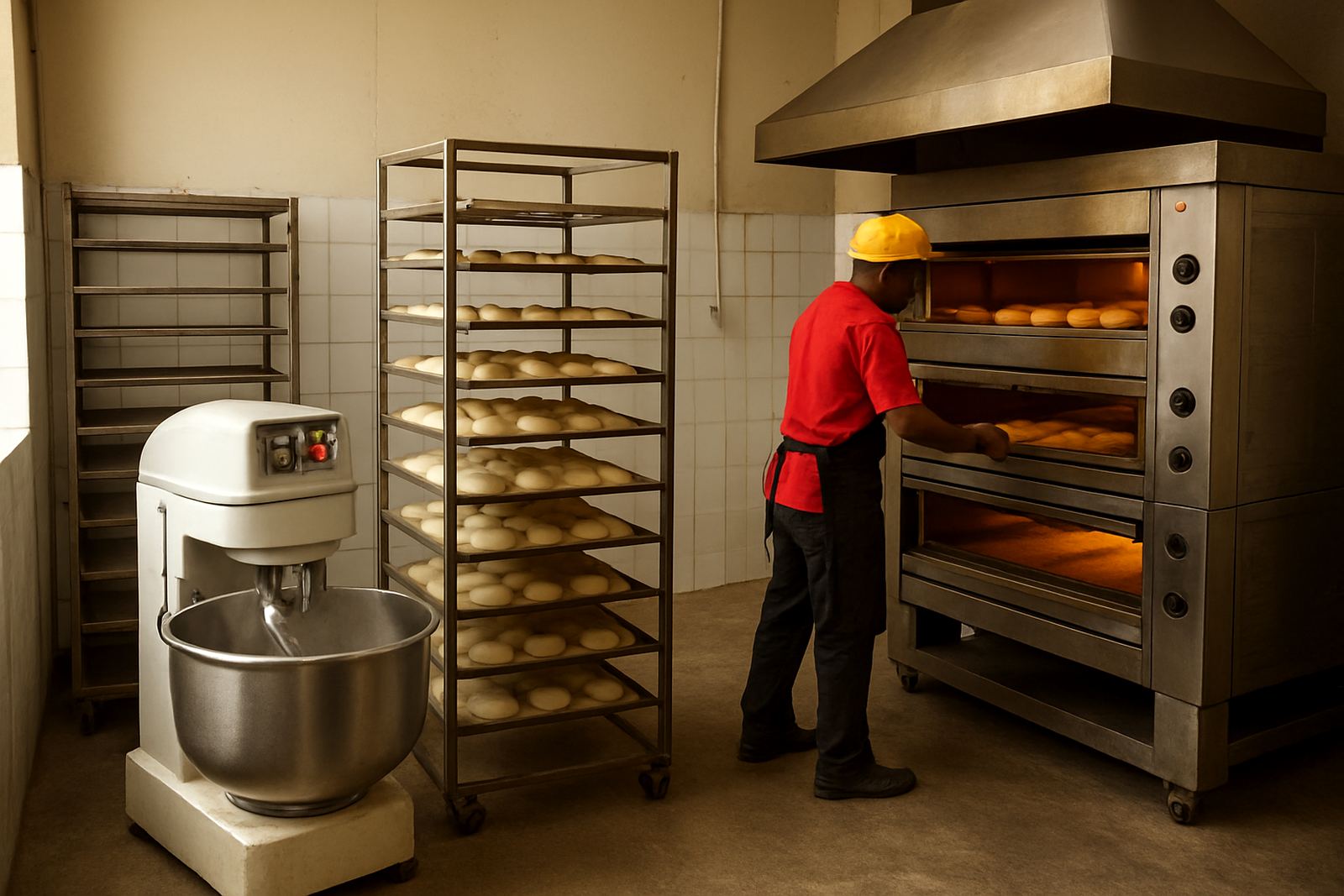
The right equipment set depends on whether you are baking bread, confectionery, cakes, pies or a mixed retail range. A small bakery may only need a spiral mixer, a planetary mixer, a deck oven and a proofer. A larger operation might also need dough sheeters, retarder cabinets, pastry fridges, cooling racks, stainless tables and dedicated storage for trays and ingredients.
For Durban and coastal KZN, we usually look closely at stainless construction, door seals and easy-clean finishes. Humidity and salt air can shorten the life of mild steel and poor quality hinges, so material choice matters. If your site suffers from load-shedding, we also plan around recovery times, temperature hold and what needs backup power first.
- Mixing: spiral mixers, planetary mixers, dough bowls and scales
- Proofing: proofer cabinets, retarder proofers and rack spaces
- Baking: deck ovens, convection ovens, rack ovens and tray trolleys
- Holding and finish: cooling racks, chilled cabinets and display fridges
Planning the layout before you buy equipment
Good bakery planning starts with process, not price lists. We begin with the menu, the target output per day, the number of staff on shift and the way product moves from raw ingredients to dispatch. Then we measure the room, check doors and access routes, and confirm whether the floor can take the weight of ovens, chillers and loaded trolleys.
Extractor planning is often overlooked in bakery spaces. Even where the heat load is lower than in a heavy cooking kitchen, ovens still create a hot working environment and poor ventilation leads to tired staff and uneven baking. We also check whether there is enough clearance for cleaning behind equipment and for safe maintenance access. If you cannot get to the back of a proofer or the side of an oven, repairs become slow and expensive.
- Keep dry stores away from sinks, drains and open doors
- Place mixers and scales in a straight, clean ingredient path
- Leave cooling and packing areas away from oven heat
- Allow for tray movement without crossing raw and finished goods
Common mistakes that cost bakeries money
One common mistake is buying ovens first and fitting the room around them later. Another is under sizing the refrigeration, which leads to warm butter, soft fillings and inconsistent product. We also see bakeries that forget about tray storage and end up stacking trays in walkways, which slows down work and creates a real trip hazard.
Power supply is another issue. A bakery can draw a surprising amount of electricity, especially when several pieces run at once. If the electrical plan was done for a general kitchen and not a production bakery, the breakers may trip when mixers, ovens and fridges all cycle together. That is a recipe for lost product and frustrated staff, so the load schedule needs to be checked early.
Cleaning is the last thing many teams think about, yet it affects compliance and daily speed. Rounded corners, proper drainage, stainless prep benches and easy access to floors save time every night. In humid weather, standing water and sugar residue can become a slip risk if the room is not planned properly.
Budget ranges for bakery fit outs in Rand
Every bakery budget depends on output, equipment mix and whether the site is a new build or an upgrade inside an operating premises. A small retail bakery with basic baking and chilled holding may start from about R180,000 to R450,000 for core equipment and practical installation. A mid sized production bakery, with multiple ovens, proofing and better storage, often sits in the R450,000 to R1,200,000 range.
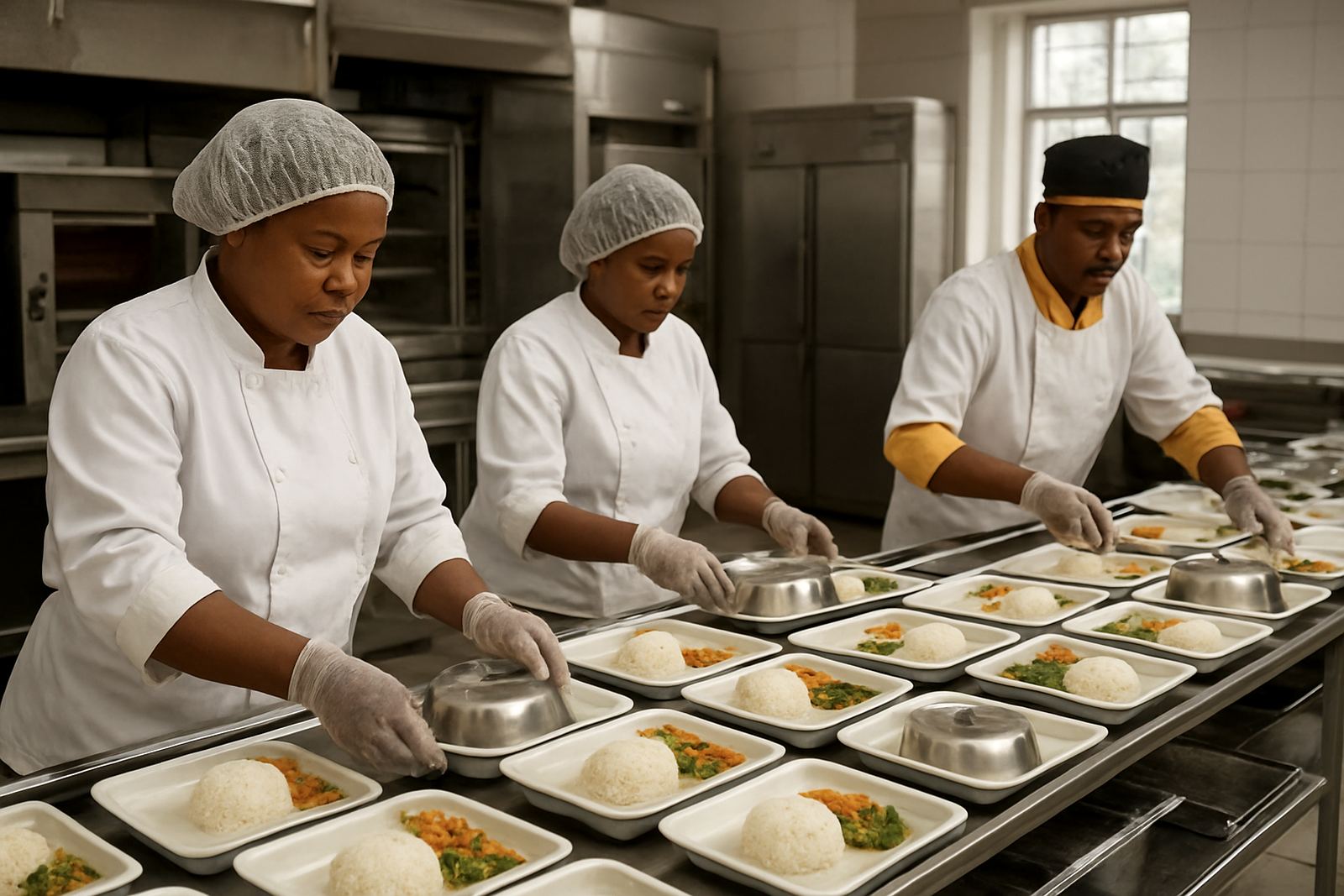
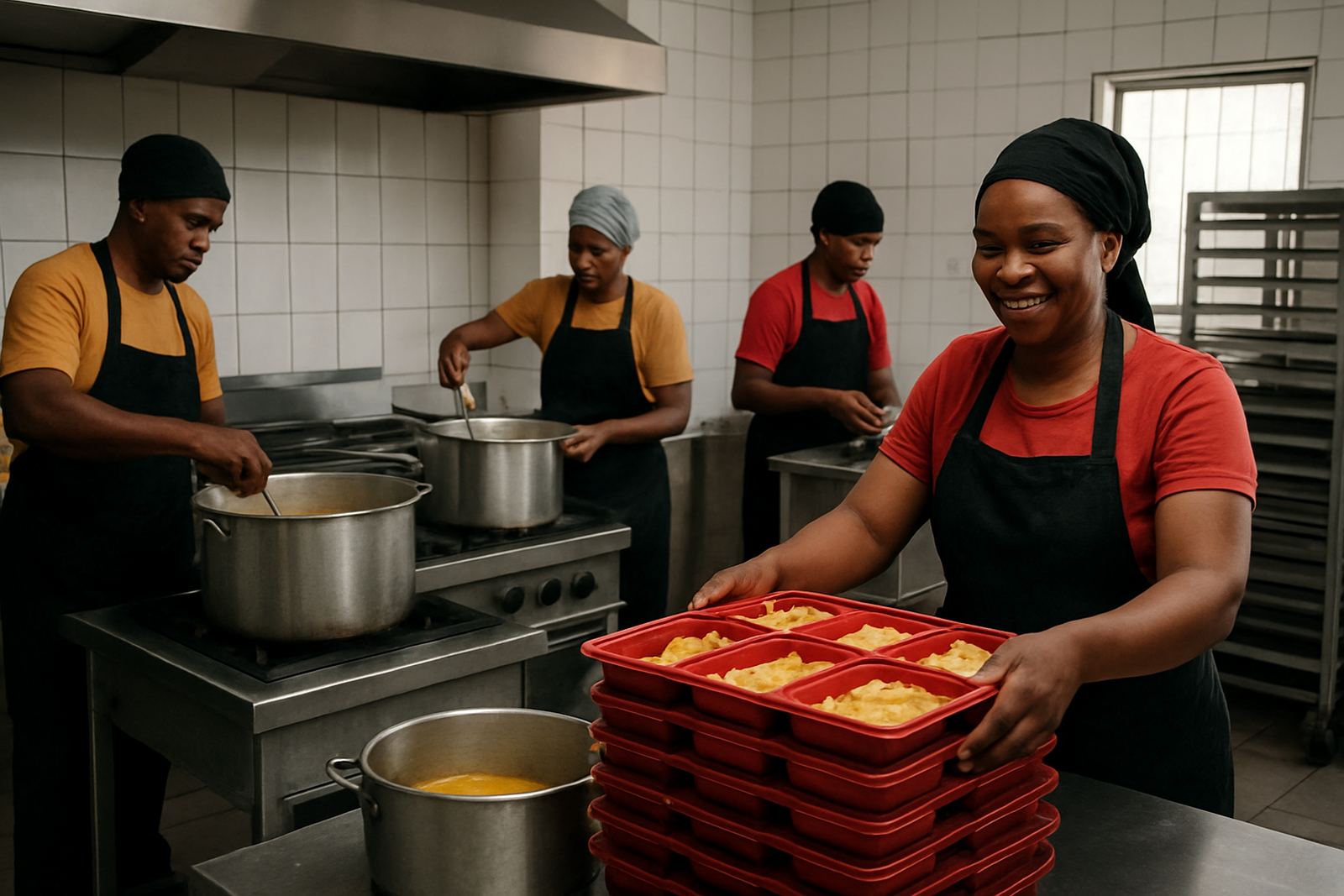
Higher-volume bakery projects for schools, hospitals, canteens or central kitchens can move beyond R1,500,000 once you include stainless fabrication, extractor work, refrigeration and site changes. That is why we prefer to price from a measured layout rather than from guesswork. It gives the owner a proper view of what is essential now and what can be added later without redoing the whole room.
We can also phase a project in stages. For example, start with mixing, baking and basic chilled storage, then add extra proofing, display or backup capacity as sales grow. That keeps cash flow manageable and avoids overbuying equipment that sits idle.
Where KZN Catering Equipment supports bakery projects
Our team in Glen Anil handles the practical side of bakery projects from first survey to handover. Mandla Sibusiso Dlamini oversees the business, Priya Naidoo leads kitchen design, Siyabonga Mkhize manages projects and Jared Pillay handles site installation. We also support procurement, service and aftersales maintenance, so the same team that plans the layout can stay involved when the equipment is being fitted and commissioned.
For bakery clients, that means one clear line of communication for layouts, equipment specification, stainless fabrication, breakdown repairs and staff training. If the bakery is in Durban North, Umhlanga, Pinetown, Ballito or Pietermaritzburg, we can assess access, power and space before equipment is ordered. That avoids delays and stops expensive changes on site.
- Site surveys and measured layouts
- Equipment specification and procurement support
- Installation, commissioning and operator training
- Preventive maintenance and breakdown repairs
If you are planning a bakery upgrade, a new bakehouse or a production kitchen with bakery output, send your drawings, product list or room measurements through our contact form. We will help you work out what the room needs and what can wait for phase two.