
Why fryer oil goes off faster than most kitchens expect
Fryer oil does not fail all at once. It slowly breaks down from heat, crumbs, moisture, salt, batter residue and long idle periods between services. Once that starts, chips come out darker, crumbed items taste heavy, and the kitchen ends up changing oil more often than it should.
In KwaZulu-Natal, heat and humidity can add to the problem, especially in open kitchens near the coast. If the fryer sits close to a prep line or gets used hard through lunch and supper, the oil can pick up off flavours even when it still looks clear enough at a glance. That is why daily handling matters more than guessing by colour alone.
- Food particles in the tank speed up burning
- Water from wet product causes splatter and breakdown
- Overheating shortens oil life quickly
- Leaving crumbs overnight makes the next day’s oil age faster
Hold the right frying temperature from the start
Most kitchens fry too hot when they are trying to keep up. That may look quicker, but it shortens oil life and gives food a hard outside before the inside is ready. For most commercial frying, a controlled range is better than pushing the thermostat to the top every time service gets busy.
Use the fryer’s thermostat properly and check it with a reliable probe if the unit starts drifting. If one basket is always cooking slower, it can be a sign of uneven heat or a tired element. In one Durban North takeaway, simply bringing the operating temperature back into range cut the weekly oil change down enough to save real money, without touching portion size or service speed.
- Do not keep topping up with oil while the fryer is running too hot
- Let oil recover between loads instead of overfilling baskets
- Never leave empty baskets in the oil during preheat
- Check for hot spots if the colour changes unevenly
Skim, strain and filter before the fryer gets dirty
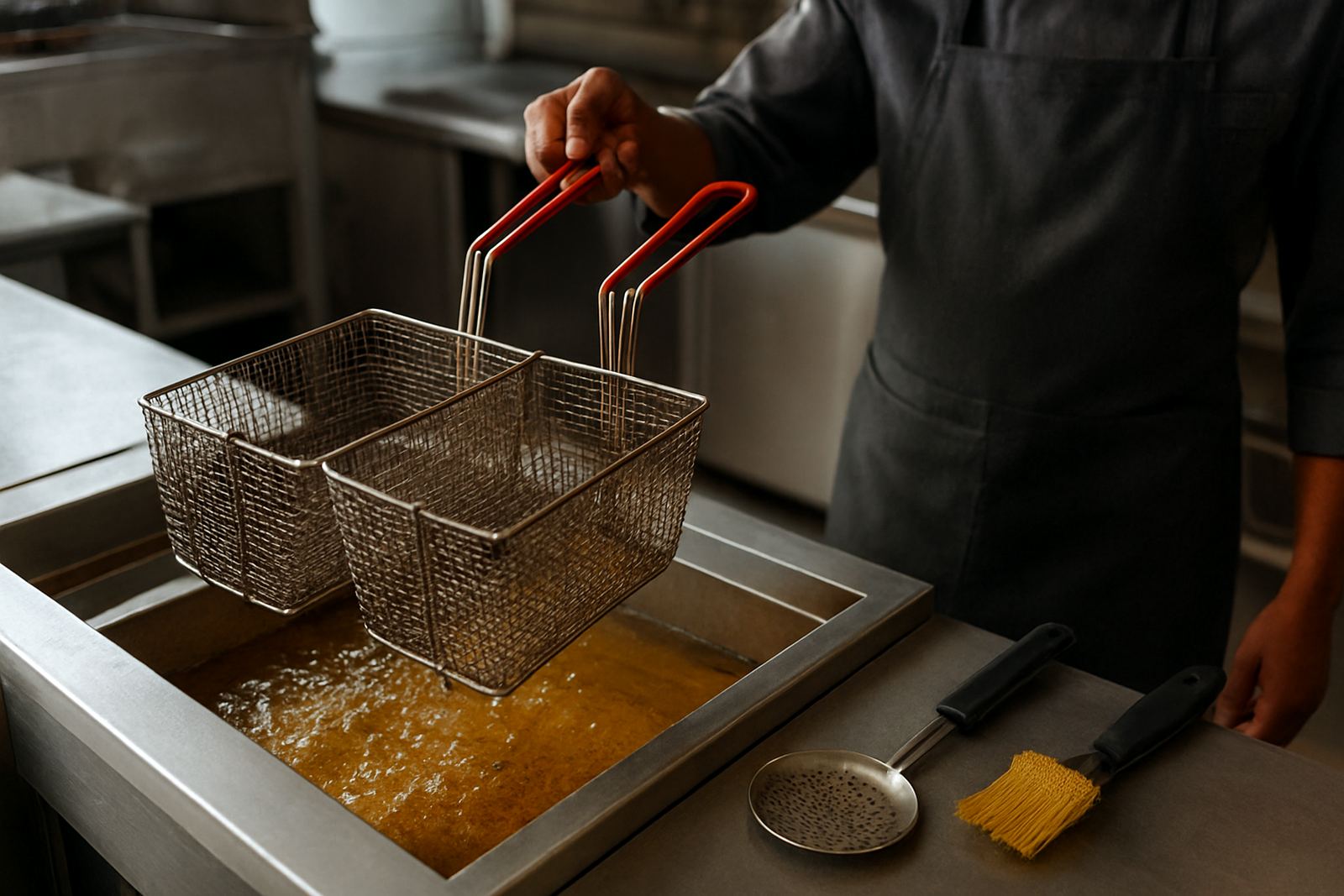
The best time to remove crumbs is before they settle and start burning. Skimming the top during service, then filtering after trade, keeps the oil cleaner and reduces the bitter taste that builds up from old bits at the bottom of the tank. This is one of the simplest habits, yet many kitchens skip it because the shift is already busy.
Filtering does not need fancy routine. A fine mesh, a proper filter machine or a safe draining setup can do the job if staff are trained to use it consistently. The point is to remove particles while the oil is still warm enough to flow, but not so hot that the process becomes unsafe. A clean fryer also cools more evenly overnight and smells better the next morning.
- Skim floating crumbs every few baskets
- Filter daily in high-volume kitchens
- Wipe the fryer rim and splash zone before closing
- Keep drain containers clean and covered
Keep wet food and frozen product under control
Water is one of the fastest ways to wreck fryer oil. Frozen chips, battered fish and par-cooked items can all carry ice or surface moisture into the vat. That moisture causes violent bubbling, more oxidation and faster oil breakdown. It also makes the kitchen messier, which leads to rushed cleaning and a shorter life for the oil again.
Make sure frozen product is stored correctly and shaken off before frying. If ingredients come straight from cold storage, let them drain properly on a tray or rack. Do not overload the basket, because the oil temperature drops and the food releases more steam than the fryer can handle. Staff training helps here, because the problem is often not the oil itself, but how the food is loaded into it.
- Drain frozen and chilled items before frying
- Do not use dripping wet marinades in the basket
- Load baskets in smaller batches during peak periods
- Keep prep and fryer areas separate where possible
Match oil care to the type of kitchen you run
A canteen in Pietermaritzburg serving lunch to 300 people has different oil demands from a small restaurant in Umhlanga or a hospital kitchen feeding shifts around the clock. The volume, product mix and staffing pattern all affect how quickly oil degrades. That is why one-size-fits-all fryer habits never work for long.
If you do a lot of crumbed chicken, samosas or battered seafood, the oil will need more frequent filtering and earlier replacement. If the fryer runs in shorter bursts, plan for preheat checks and closing cleaning so oil does not sit dirty overnight. In coastal areas like Ballito, humidity can also affect how staff store filters, cloths and drained oil, so dry storage and covered containers matter more than many people think.
- High-volume kitchens should filter more often
- Heavier crumb load means shorter oil life
- Different menus need different fryer routines
- Covered storage helps in humid coastal conditions
A simple Durban routine that keeps oil working longer
At a Glen Anil kitchen supplying fried items through the lunch rush, the most useful change was not a new fryer. It was a plain routine: skim during service, filter after close, wipe the tank edges and log the oil condition each day. That kitchen was not trying to make oil last forever, only long enough to keep flavour steady and costs under control.
A good fryer routine should be easy enough for any trained member of staff to follow on a busy shift. Keep it practical, keep it written down, and check it every week. If the fryer starts smoking early, smells harsh, or turns food too dark too quickly, it is time to review temperature, filtration and cleaning before the next service. Small habits save oil, and they also save the rest of the kitchen from avoidable churn.
- Write the fryer routine on the wall near the unit
- Log oil changes and note the reason
- Check staff follow the same method on every shift
- Review the routine after load shedding or power dips