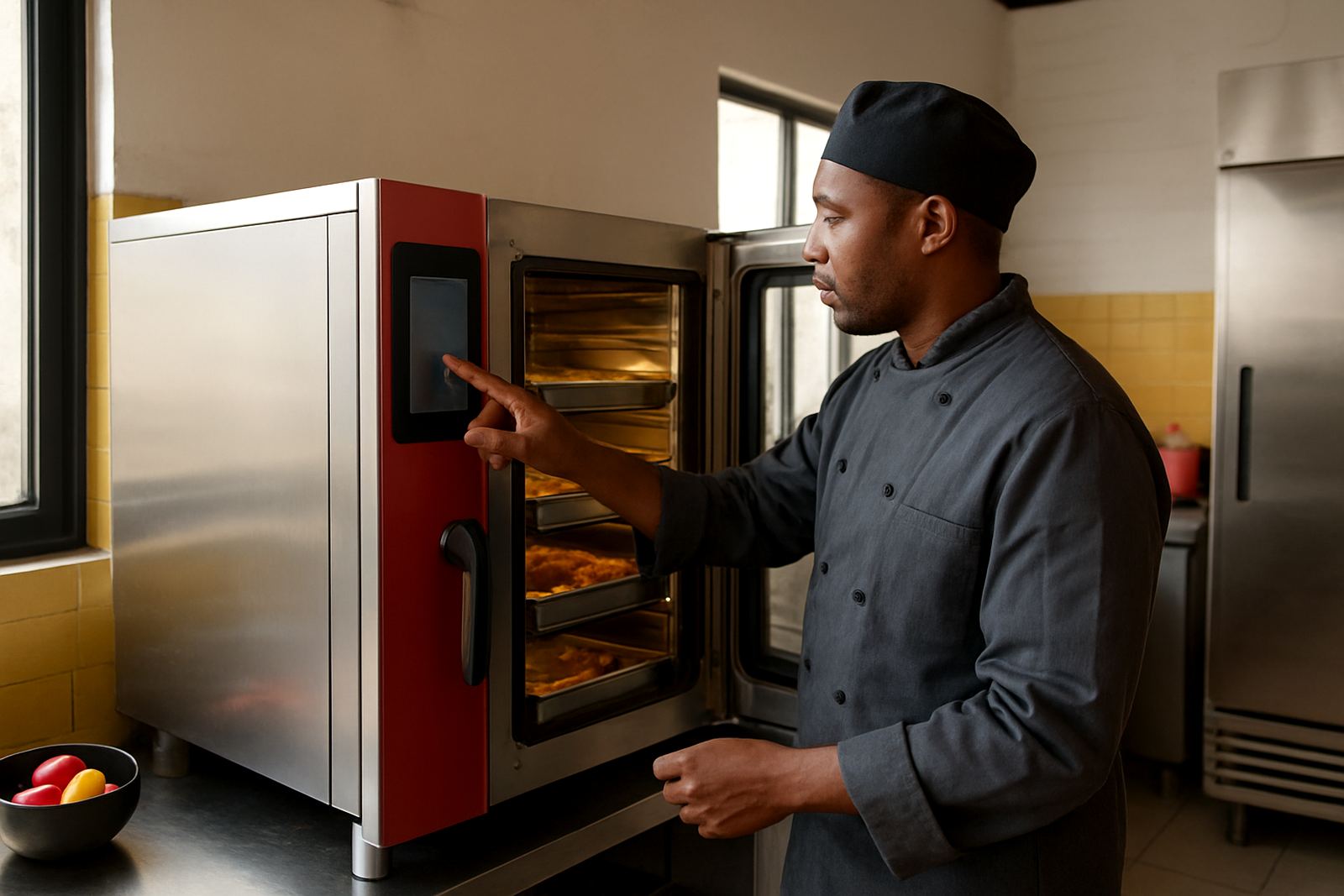
Start With the Menu, Not the Machine
The first question is not what size combi oven looks impressive on the floor, it is what you need it to do from breakfast through supper. A kitchen that turns out trays of vetkoek, grilled chicken, roast veg, baked fish and rethermed sauces has different demands to a site that only bakes and steams once or twice a day. Mixed menu production calls for a combi that can change from dry heat to steam quickly, without wasting energy or staff time.
In Durban and the North Coast, many kitchens also work around humidity, power interruptions and tight prep space. That means the oven has to handle service pressure, but also be simple enough for a short-staffed team to use after load shedding or during a rush. If the machine is too complicated, it ends up underused.
- List your top 10 menu items and the volumes per service
- Note which foods need steam, dry heat or both
- Check how often the oven will run per day
- Decide whether you need cooking, regeneration or holding
Pick the Right Capacity for Your Peak Hour
Capacity is often judged by tray count, but the real answer is throughput. A 6 tray combi might suit a café in Glen Anil that bakes, roasts and reheats in batches, while a hospital kitchen or school canteen may need a 10 tray or 20 tray unit to keep pace with meal rounds. Think about peak hour, not average day, because that is when delays show up.
Also check tray size and depth. A unit that fits GN pans neatly may still struggle if your workflow depends on deeper pans for sauces or bulk veg. Space around the oven matters too. Leave room for door swing, loading trolleys and safe cleaning access. If the unit is squeezed into a corner, staff will fight it every shift.
- Match tray count to peak production, not just floor space
- Confirm the tray format your kitchen already uses
- Allow room at the sides and rear for servicing
- Plan for trolleys if you are loading hot pans in volume
Check the Power, Water and Drainage Before You Sign
This is where many purchases go wrong. A combi oven may fit the menu but not the site infrastructure. You need to know whether the kitchen has enough electrical capacity, the correct phase supply and safe isolation. In older buildings around Pinetown or Pietermaritzburg, power upgrades are sometimes needed before installation can even start.
Water quality is just as important. Hard water can lead to scale build-up, unreliable steam generation and more call-outs over time. In coastal areas such as Durban North and Umhlanga, high humidity can also affect surrounding stainless fittings and cabling if the plant room is poorly ventilated. Drainage must be planned properly too, because a combi produces wash water and condensate that should go where it is meant to go, not onto the kitchen floor.
Before buying, ask these questions:
- Do we have enough electrical capacity for the unit and other equipment
- Is a water filter or softener needed for local water conditions
- Where will wastewater discharge, and is the floor drain close enough
- Will the unit be affected by heat, steam or poor ventilation nearby
Think About Staff Skill and Daily Cleaning
A combi oven can save labour, but only if the team is trained to use it. Some kitchens need simple presets for cooking rice, chicken portions, vegetables and baked items. Others want precise control over fan speed, humidity and core temperature. The best choice depends on who will actually run the line on a Tuesday morning when the manager is not there.
Cleaning matters just as much. If the unit is used for mixed menu production, it should be cleaned every day, not when someone finds time. Ask about automatic wash cycles, access to the cavity and whether your team can reach the parts that need wiping by hand. A machine that is hard to clean will lose performance quickly and can become a hygiene issue.
Staff training should cover more than buttons. They need to understand preheating, probe use, tray spacing and safe opening of the door when steam is released. That is especially important in busy kitchens where someone may be rushing between the combi, prep tables and cold room.
- Choose controls that your team can learn quickly
- Set a cleaning routine into the daily close-down list
- Train at least two people per shift, not one
- Make sure the kitchen has approved cleaning chemicals for food equipment
Plan the Oven Around the Rest of the Kitchen
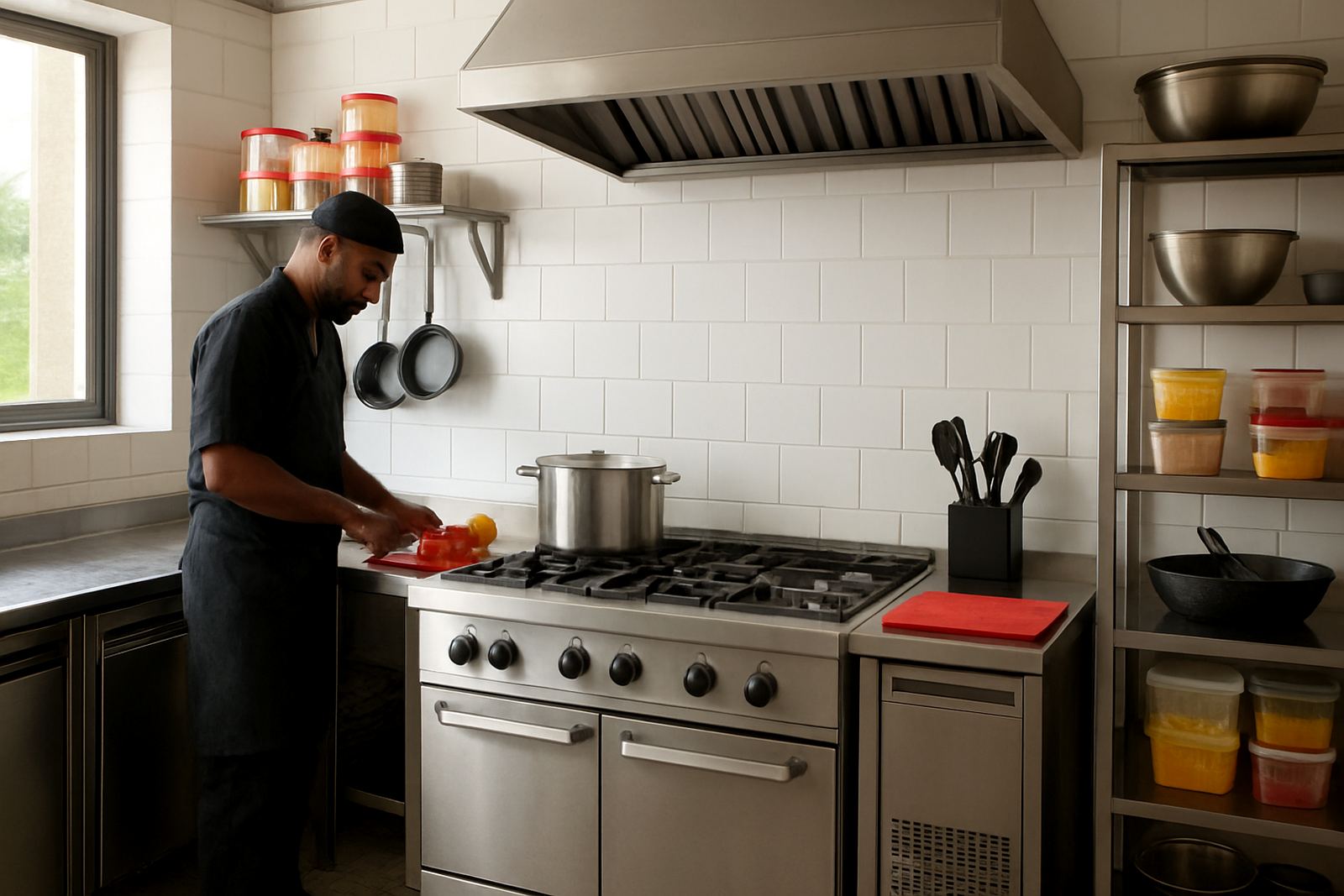
The combi should fit the full workflow, not sit as a stand-alone purchase. It needs space for prep, hot holding, plating and extraction. If the extractor is undersized, steam and heat will build up and the kitchen will become uncomfortable. If stainless benches are too far away, staff waste steps carrying hot pans across the room.
For a canteen, hospital or restaurant kitchen, we often look at the whole line before recommending the oven location. That includes food storage, refrigerated prep, wash-up, service counters and access for maintenance. If a unit is placed badly, the site ends up with bottlenecks, extra heat load and slower service.
At KZN Catering Equipment, we see the best results when the oven is part of a practical layout from day one. In Glen Anil or Ballito, for example, a mixed menu site may need the combi close to prep and plating, but still with enough clearance for cleaning and extractor planning. That small detail can save a lot of trouble later.
A Durban Example: Mixed Meals Under Pressure
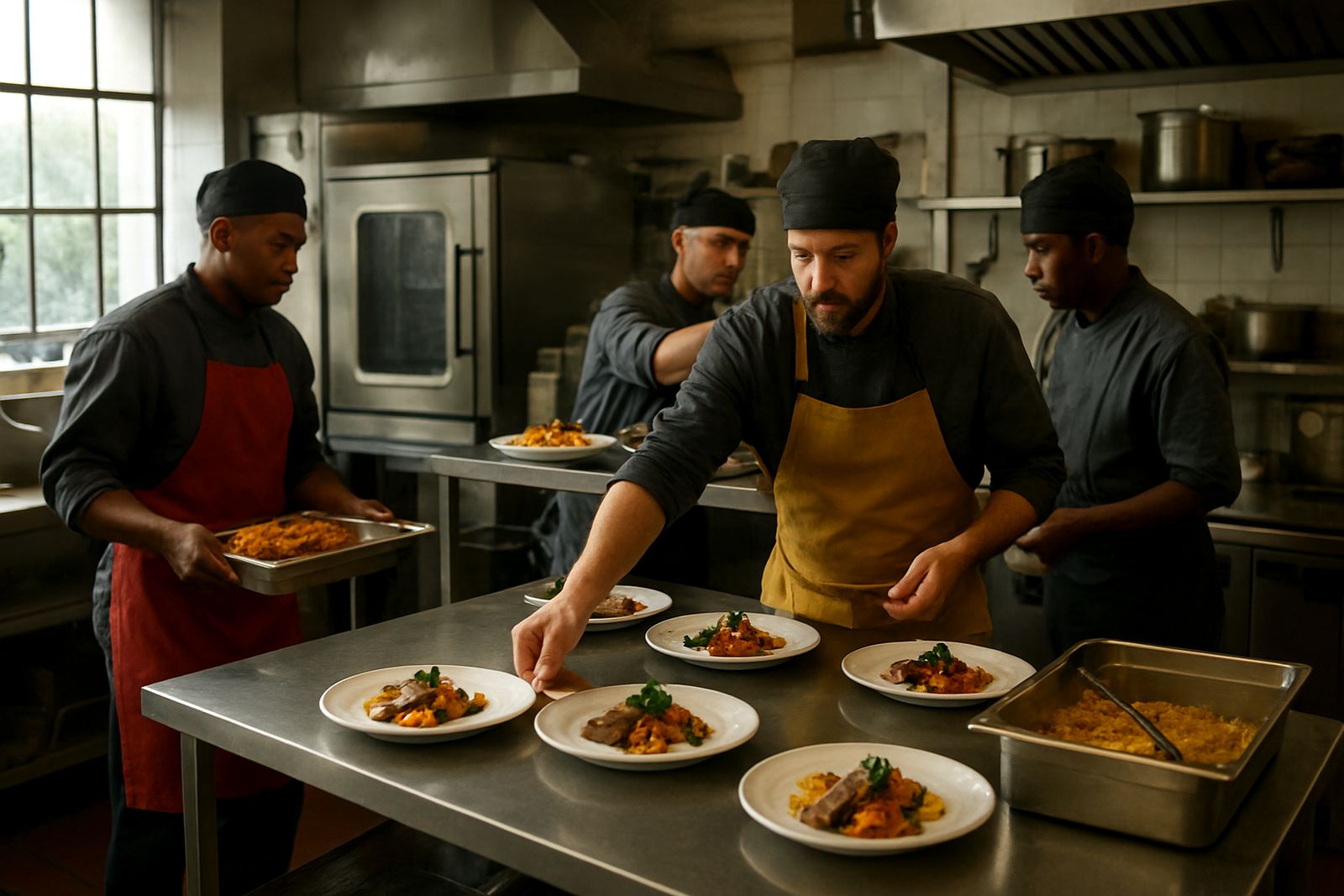
Take a Durban North site serving breakfast, lunch and early dinner to staff and visitors. The kitchen needs to roast proteins, steam vegetables, regenerate plated meals and bake items for tea time. A combi oven can do all of that, but only if it is sized correctly and supplied with the right power and water treatment. If the unit is too small, the kitchen falls behind by midday. If it is too large, it burns cash on installation and running costs.
In a case like this, we would look at the menu mix, daily volume, available floor space and whether the building can handle the load. We would also check if the site has backup planning for outages, because after load shedding the kitchen must come back into service quickly. A good combi should make that easier, not harder.
The safest buying decision is the one that starts with honest numbers. Menu type, tray count, utilities and staffing all matter. When those are clear, the right combi oven becomes a workhorse, not a guess.