What a salamander grill does on a busy pass
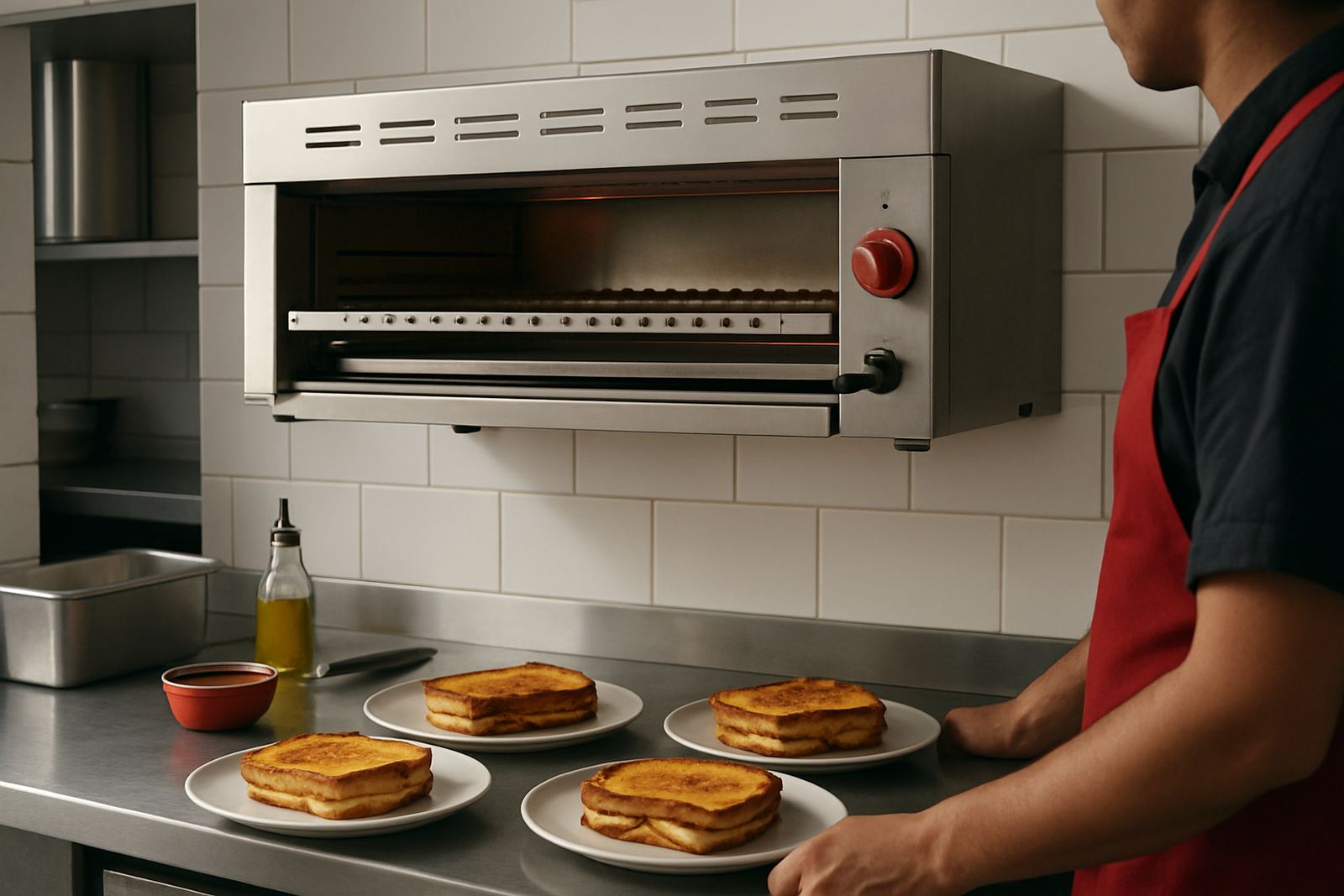
A salamander grill sits above the work line and gives direct top heat for finishing plated food. It is used for bubbling cheese, colouring gratins, glazing fish, crisping bacon and keeping portions warm for short periods before service. In a fast kitchen it saves time because the item can be finished in seconds, then sent straight to the pass.
Most units are fitted with adjustable racks so the heat sits closer or further from the product. That matters when you are working with different plates, pans and gastronorm trays. A good unit should give even heat across the width, not just in the middle, and it must be easy to wipe down after service.
This type of equipment is common in restaurant kitchens, hotel banqueting lines, school and company canteens, and hospital food service areas where consistent finishing is needed. In Durban kitchens, where humidity can sit high for much of the year, stainless steel and simple controls help keep maintenance manageable.
Typical sizes, mounting styles and heat control
Salamander grills are normally supplied in compact widths to suit wall space above a pass or landing shelf. Common widths are 600 mm, 900 mm and 1200 mm, with deeper units available for larger service areas. Some models are open-fronted for speed, while others include a lift-up or pull-out grate and a crumb tray for easier cleaning.
Heat control can be by electric elements or gas burners, depending on the kitchen setup. Electric units are often preferred where there is no gas line and where the kitchen needs precise on and off control. Gas units are useful where cooking loads are high and the kitchen already has a compliant gas installation. Choose the format that matches your service volume, because the wrong size will either hold you back or waste energy.
- 600 mm models suit smaller bistros, coffee shops and satellite kitchens
- 900 mm models work well for medium service lines and busy à la carte operations
- 1200 mm models suit hotels, canteens and production kitchens with heavier pass traffic
- Adjustable shelf heights help control browning and melting times
- Stainless steel outer panels are preferred in coastal areas like Durban, Ballito and Umhlanga
Where a salamander fits best in KwaZulu-Natal kitchens
We usually specify salamander grills for cooking lines where plated food leaves the hot section and needs one last finish before handover. That makes them useful in steak restaurants, breakfast kitchens, hotel room service stations, burger kitchens and institutional food counters. They also work well in smaller sites where there is not enough room for a separate finishing oven.
For hospitals and canteens, the unit can be positioned above a pass to improve order flow and keep serving staff from walking back and forth with hot plates. In Pinetown, Pietermaritzburg and Durban North, where kitchens often have tight service windows and limited prep space, overhead finishing equipment helps keep counters clear.
If the kitchen faces load-shedding pressure, it is worth planning how the salamander will be powered during outages. Electric models need generator or inverter support if they are to stay active, while gas models may keep service going with less interruption. We can advise on layout and utility planning before you order, so the unit does not end up in the wrong spot or without proper extraction.
- Restaurants and grill rooms
- Hotels and guest house breakfast lines
- Hospitals and nursing homes
- School, factory and mine canteens
- Contract catering kitchens and central production facilities
Installation needs, clearance and utility checks
Because a salamander grill sits above the work area, installation has to be planned with care. The mounting height must allow safe access to the controls and tray, while still keeping the heat close enough to do its job. It also needs enough clearance from combustible surfaces and enough room for staff to work below it without getting in the way of plates or hot pans.
For electric units, check the supply voltage, breaker size and cable route before ordering. Many kitchens use single phase supply for smaller units, while larger models may need three phase. For gas units, confirm bottle or mains gas supply, regulator type, isolation valve position and whether the extraction system is sized correctly for the full line.
We also look at wall strength, bracket fixing and the position of the pass shelf. In some kitchens the unit can be wall mounted, while in others it may need a frame or support off a fabricated shelf. During site surveys we check the finish on surrounding walls too, because heat and steam can damage soft surfaces over time, especially near coastal kitchens where moisture builds up quickly.
Care, cleaning and servicing for long life
Daily cleaning keeps the grill working properly and helps avoid smoke and grease build-up. Switch off, allow it to cool, then wipe the outer body and remove loose food residue from the tray, rack and catch area. Elements and burners should never be washed with excess water. Use a damp cloth and a suitable degreaser only where the maker allows it.
On electric units, check that elements heat evenly and that switches do not feel loose or sticky. On gas units, look for stable flames and make sure jets are not blocked. If the unit starts heating unevenly, browns too slowly or trips the supply, get it checked before the next service period. A small fault can turn into a bigger one very fast in a busy kitchen, especially when staff keep using the unit through service.
- Empty and clean the crumb tray daily
- Check racks and shelves for warping or loose runners
- Inspect power cords, plugs or gas hose connections
- Schedule preventive maintenance before the winter rush and holiday trade
- Keep the area below the unit free of foil, cloths and packaging
What to confirm before placing an order
Before you order a salamander grill, confirm the width you have available, the type of food you will finish and the utility connection on site. A unit that is too narrow will slow the pass, while one that is too large can crowd the line and make the heat uncomfortable for staff. It also helps to know whether you need fixed heat or variable control.
Check if the kitchen needs a single tier rack, a lift rack or a pull-out grate, and whether you want a crumb tray that slides out from the front. If the unit is going into a new build or remodel, share your kitchen plan early so the extractor, wall finish and service aisle are set out correctly. That avoids costly changes later.
- Required width in millimetres
- Electric or gas supply available on site
- Mounting method and wall material
- Need for adjustable rack positions
- Cleaning access and grease management
- Any generator or gas backup required for load-shedding periods
Our team in Glen Anil, Durban supports layout, specification, installation and commissioning for kitchens across Durban North, Umhlanga, Pinetown, Ballito and Pietermaritzburg. If you need a salamander grill matched to your pass-line layout, send through your drawings or measurements and we will spec the right unit for the job.
Key facts
| Product type | Overhead finishing grill for browning, melting and holding |
|---|---|
| Common widths | 600 mm, 900 mm, 1200 mm |
| Heat source | Electric or gas |
| Mounting | Wall mounted or supported above pass line |
| Material | Stainless steel body with removable tray and rack options |
| Use areas | Restaurants, hotels, hospitals, canteens and contract catering kitchens |