How a convection oven works in a busy kitchen
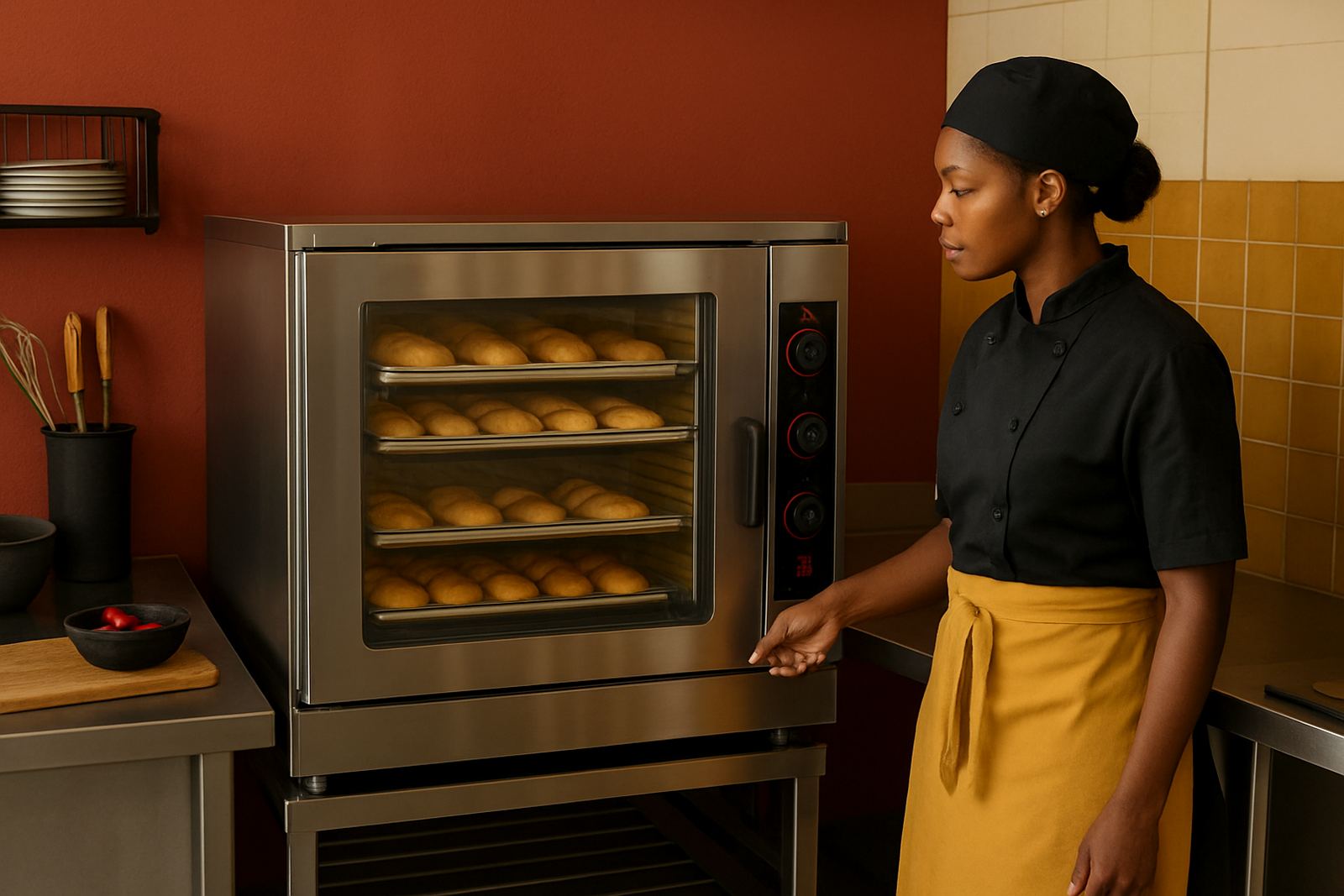
A convection oven is built for steady heat distribution. Instead of relying only on radiant heat, internal fans circulate hot air across the trays so one shelf does not bake faster than another. That matters when you are turning out chickens, pies, roast vegetables, pastries or prepped meals in volume. The result is better consistency, less tray rotation, and fewer burnt corners on the top rack.
For restaurants, hospitals, school kitchens and canteens, this makes planning easier. Your team can load several trays at once and get a more predictable finish, even when the kitchen is under pressure and the lunch rush starts early. It also helps where load-shedding planning is part of daily operations, because a well specified oven can be matched to your electrical or gas setup from the start.
We supply and install convection ovens for commercial kitchens in Glen Anil, Durban North, Umhlanga, Pinetown, Ballito and Pietermaritzburg, with layout advice where the oven needs to sit near prep, holding or extraction points.
Sizes, tray counts and options to suit your output
Convection ovens are available in compact single-cavity units through to larger multi-tray models. The right size depends on your menu, peak covers and bench space. A smaller oven may suit a café or nursing home kitchen with steady but moderate output. A larger unit is better for banqueting, contract catering, school meals or production kitchens where several trays need to be baked at once.
Common options include manual controls, timer functions, internal lighting, double-glazed viewing doors and humidity support on selected models. Some kitchens prefer gas heating for running costs and backup planning, while others choose electric for tighter temperature control and simpler connection requirements. In coastal areas like Durban and Umhlanga, stainless construction and good door seals help reduce the effect of humidity on hinges, trays and controls.
- Single-cavity and double-cavity models
- Tray capacities from 4 up to 10 GN-style trays, depending on size
- Electric or gas heating options
- Manual or digital temperature control
- Optional humidity support for selected baking tasks
- Stainless steel exterior and food-safe cavity finishes
When we spec a unit, we look at tray size, door swing, service clearances and how close the oven sits to a prep line or extractor. That avoids the common problem of buying a unit that fits the floor plan, but not the production flow.
Best uses in restaurants, hospitals and canteens
This oven suits kitchens that need repeatable cooking across several trays. In a restaurant, it is useful for roast meats, vegetables, baked sides and par-baked items. In a hospital or care kitchen, it helps with batch preparation where meal timing and portion consistency matter. In canteens and school kitchens, it gives good throughput for pies, muffins, breads, baked proteins and reheat programmes.
It is also a practical choice where menus change through the day. A convection oven can handle breakfast items, lunch production and prep for the next service without long recovery times between loads. That makes it valuable where staff numbers are tight or kitchen shifts change through the day.
- Restaurants and bistros
- Hospitals, clinics and care facilities
- Schools, colleges and boarding kitchens
- Contract catering and staff canteens
- Butcheries and food prep operations
- Hotels, guest houses and event venues
If your kitchen serves from a hot line or plated counter, the oven should be planned with nearby holding and transport equipment in mind so trays move cleanly and the team is not walking back and forth across the kitchen.
Installation, power supply and gas planning
Before installation, check the available power supply, breaker size and ventilation. Electric convection ovens need the correct cable sizing and isolator position, while gas models need safe gas routing, shut-off access and compliance with site rules. In Durban, that often means coordinating with the landlord, electrician or gas installer before delivery day so the unit can be commissioned without delay.
We also look at extractor planning where the oven sits under a canopy or close to other heat-producing equipment. Even when the oven itself does not need a full extraction canopy, heat build-up in a small room can affect staff comfort and equipment life. A proper site survey helps avoid poor clearances, awkward door openings and service panels blocked by walls or counters.
For sites affected by load-shedding, it is worth checking whether the oven must be backed by a generator, inverter or gas supply. Not every oven can be moved onto backup power, so we look at the total connected load and advise on the safest option for your operation.
Care, cleaning and servicing that keep output steady
Daily care is simple but it matters. Wipe down the cavity once the unit cools, clean spills before they bake on, and check fan covers, racks and door seals for grease build-up. In coastal kitchens the salty air can be hard on metal fittings, so regular cleaning helps keep hinges moving properly and reduces premature wear. A quick end-of-shift check saves a lot of trouble later, even if the kitchen has had a long day.
Preventive maintenance should include thermostat checks, fan inspection, door alignment, seal condition and electrical or gas safety checks. If the oven starts taking longer to heat, cooking unevenly or tripping under load, it is better to inspect it early rather than wait for a breakdown during service. Our service team handles routine maintenance and repairs for kitchens across Glen Anil, Durban North, Umhlanga, Pinetown, Ballito and Pietermaritzburg.
- Clean trays and cavity surfaces daily
- Check fan operation and unusual noise
- Inspect seals, hinges and door latches
- Book preventive servicing before peak season
- Keep the area around the oven clear for airflow and access
Where ovens are used for long baking runs, operators should also keep an eye on tray spacing and loading patterns. Overloading the cavity can block airflow and reduce the very evenness the oven is there to provide.
What to confirm before you order
Before placing an order, confirm the tray size, total tray count, door direction, power type and available floor space. If the oven will sit in a fitted line, check adjacent equipment heights and the working clearance at the front and sides. A unit that is 50 mm too wide can create a daily nuisance, and that is a problem nobody wants once the kitchen is in service.
It also helps to know your peak production volume, what you bake most often and whether the oven will be used for roasting, pastry or reheating. Tell us if you need stainless fabrication around the unit, a stand, a tray trolley, or installation near an extractor. If you have an older site with older wiring, or a small prep room, we can advise on the right spec before equipment is bought.
For a quote or layout discussion, contact KZN Catering Equipment at our contact form. We have been supporting commercial kitchens from our Glen Anil base since 2007, with design, supply, installation and servicing handled by a local team that knows Durban sites and the pressures they work under.
Key facts
| Product type | Commercial fan-assisted convection oven |
|---|---|
| Heating options | Electric or gas, subject to site requirements |
| Capacity | Single or double cavity, from 4 to 10 trays depending on model |
| Construction | Stainless steel exterior with food-safe internal cavity |
| Controls | Manual or digital temperature and timer options |
| Typical use | Baking, roasting, batch cooking and reheat service |