
What a saladette fridge does on the prep line
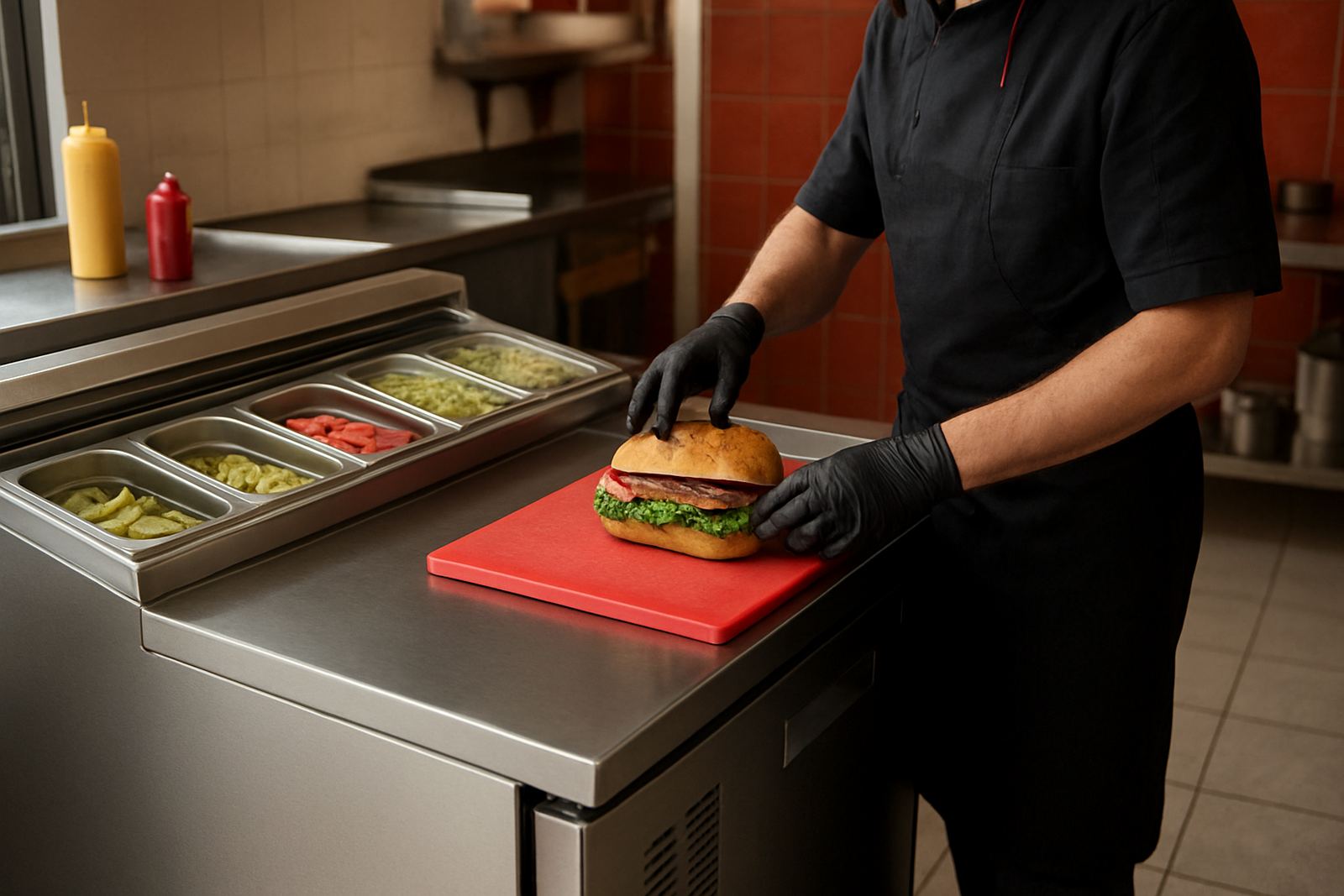
A saladette fridge is a refrigerated prep counter with a food-safe top section for pans, bottles or inserts, and a chilled cabinet below for backup stock. It is made for fast assembly work where the team needs lettuce, tomatoes, cheese, sauces and sliced fillings close at hand without opening a separate cold room every few minutes.
In a busy kitchen, that matters. Less door opening means better temperature control and fewer cold chain breaks, especially in Durban humidity where prep areas can get warm quickly. A good saladette also keeps the work surface at a sensible height for plating and sandwich building, which helps speed and staff comfort through lunch rush and school catering peaks.
These units are used for more than salads alone. They suit wrap bars, burger lines, deli counters, hotel breakfast stations and institutional kitchens where food must be portioned in order, and kept tidy. If you need a unit that does not waste space, a saladette fridge is often the right middle ground between a plain worktable and a full multi-door refrigerator.
Common sizes, pan layouts and cabinet options
Saladette fridges are usually specified by length, pan capacity and base storage. Common widths are 900 mm, 1200 mm, 1500 mm and 1800 mm, with some larger custom units for high-volume service. Depth is often around 700 mm to 800 mm, and the working height normally falls in the 850 mm to 900 mm range depending on castors or feet.
The top can be arranged for GN 1/3 pans, GN 1/6 pans or a mix of sizes, depending on the menu. Some units have a glass sneeze screen for front-of-house service, while others use a flat lift-up lid for back-of-house prep. Below, you may choose one, two or three doors, or a drawer section for better organisation of backup product.
- 900 mm to 1200 mm units suit smaller cafés, tuck shops and compact prep rooms.
- 1500 mm units are a common choice for sandwich bars and takeaway kitchens.
- 1800 mm units work well where several staff use the line at once.
- Static or forced-air cooling can be specified depending on product mix and loading habits.
- Stainless steel tops and bodies are preferred for daily wash-down and long service life.
For coastal sites such as Umhlanga, Durban North and Ballito, we usually look closely at stainless finish, corrosion risk and the air flow around the condenser. In hot kitchens, the right size is only part of the job, because a unit that is too small will struggle once the pans are full and the room gets busy.
Where a saladette fridge works best
These counters suit sites where chilled ingredients must be reached repeatedly throughout the day. That includes quick-service restaurants, hospital tray lines, canteens, sandwich bars, delis, hotel kitchens and school or university food stations. They are also useful in smaller businesses where a full cold room is not practical for daily prep.
For hospitals and care facilities, saladettes help with portion control and cleaner line organisation. For restaurants, they keep mise en place neat during service and reduce wasted steps. In canteens, where the team may be working under time pressure and load shedding backup plans, a dependable refrigerated prep unit helps maintain production when every minute counts.
If the unit will sit near fryers, grills or ovens, it must be positioned carefully. Heat from adjacent equipment can shorten compressor life and cause higher power use. We normally plan the kitchen layout so there is enough space for service access, cleaning and airflow at the back and sides. That makes a real difference in day-to-day use, not just on paper.
Installation, power supply and site conditions
Most saladette fridges run on standard electrical supply, usually 220V to 240V single phase, but the exact amperage depends on the compressor size and cabinet length. A dedicated plug point is preferred, with proper earthing and enough room to avoid overloading extension leads. In new kitchens, we also check the route for cables so they are not exposed to mop water, foot traffic or hot equipment.
Good installation is more than plugging in the machine. The unit must be level so doors seal properly and condensate drains where required. It should stand clear of the wall enough for ventilation, and the condenser area must be accessible for cleaning. In Durban and coastal towns, salty air and grease build-up can affect performance if the coil is not kept clear.
- Allow for service access behind or below the unit.
- Keep it away from direct sun, ovens and deep-fat fryers.
- Check whether castors are needed for cleaning and repositioning.
- Plan for load shedding if your prep line depends on chilled stock all day.
- Where a site has strict municipal or health requirements, we align the layout to wash-down and hygiene needs.
We install across Glen Anil, Pinetown, Pietermaritzburg and the greater Durban area, and can advise on extractor planning, counters and stainless surrounds where the saladette forms part of a larger food line.
Care, cleaning and breakdown servicing
A saladette fridge will last longer if staff clean it properly every day. Wipe spills as they happen, keep pans covered where practical, and do not leave warm product sitting in the top section. Once a week, remove food residue from the pan area, gaskets and lower shelves, then check that air paths are not blocked by packaging or overfilled stock.
Condenser coils should be cleaned on a routine basis, especially in kitchens with flour, grease or coastal dust. If the coil clogs, the fridge works harder and temperatures become less stable. Door seals must be checked for gaps or tears, because a leaking seal costs money and makes the cabinet cycle too often. It sounds simple, but many service calls start with a dirty coil or a damaged gasket.
Our service team handles preventive maintenance, breakdown repairs and staff training. If a unit starts running hot, icing up or cycling too often, it is better to call early rather than wait for spoilage. For sites that cannot afford downtime, we recommend scheduled checks so the prep line is not caught out during a lunch rush or weekend trade.
What to confirm before you place an order
Before you order a saladette fridge, it helps to confirm the real working needs of the kitchen, not just the space available. The wrong pan layout or cabinet size can slow the line and create unnecessary topping-up during service. We usually check these details before specifying a unit or drawing the final kitchen plan.
- Overall length and depth available, including doors opening space.
- Number of staff working on the line at one time.
- Whether you need GN pans, bottle wells or a flat prep surface.
- Temperature range required for your menu and holding routine.
- Voltage supply and whether a dedicated socket is already in place.
- Distance to heat sources, drainage points and cleaning access.
- Whether castors, doors or drawers make more sense for the site.
If you are fitting out a new kitchen or replacing tired equipment, we can help with equipment specification, stainless fabrication, installation and commissioning. That means the saladette arrives as part of a working line, not just a standalone item that still needs planning.
Key facts
| Product type | Prep-top refrigerated counter for chilled ingredient assembly |
|---|---|
| Typical sizes | 900 mm, 1200 mm, 1500 mm and 1800 mm widths |
| Top layout | GN pan wells for 1/3, 1/6 or mixed pans |
| Temperature range | Commonly 2 °C to 8 °C depending on loading and site conditions |
| Power | 220V to 240V single phase, exact load depends on model size |
| Construction | Stainless steel body and worktop, with doors or drawers below |