
Chip Fryers Built for Busy Service
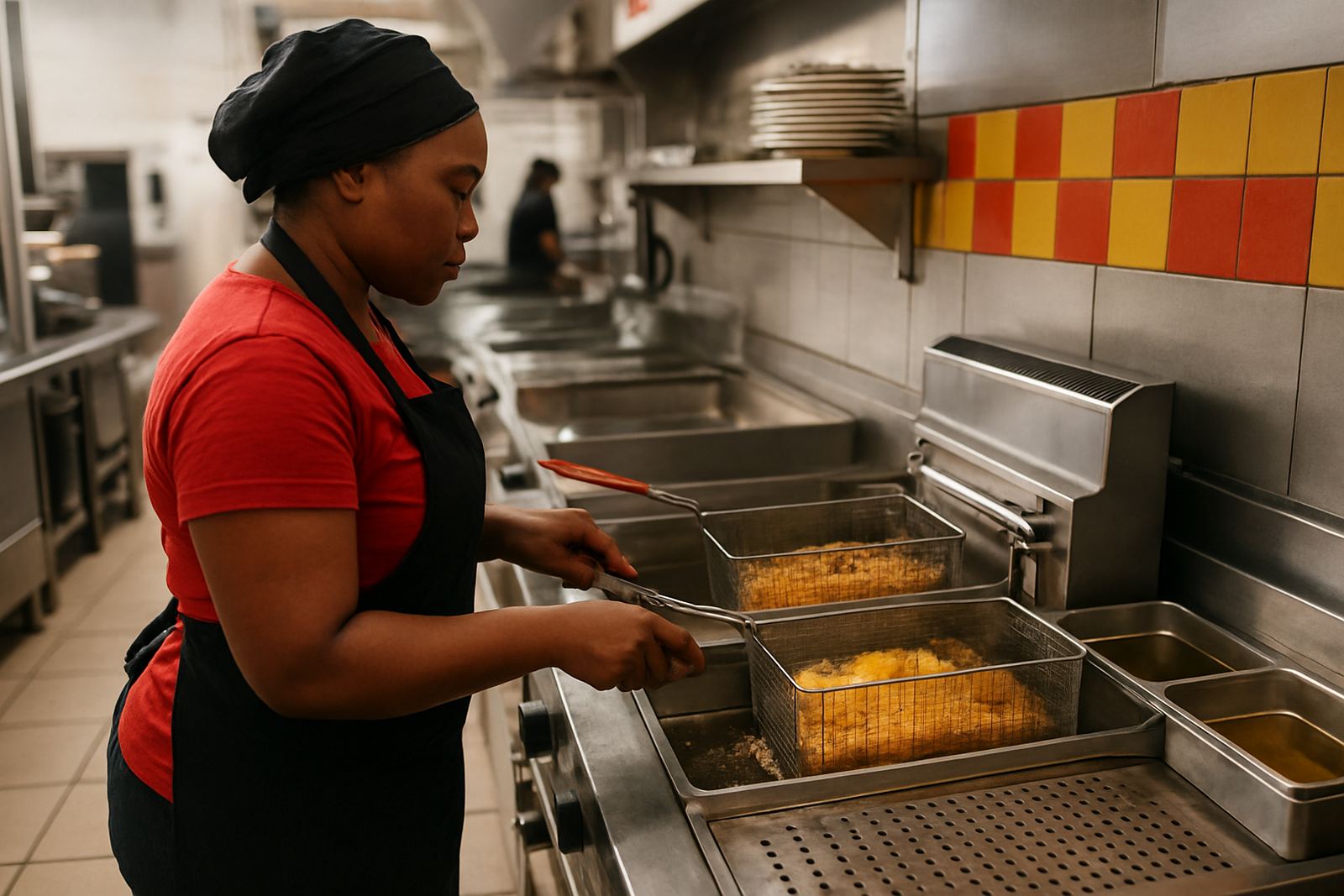
A chip fryer is made for one job, frying high volumes of potatoes and other snack items at a steady temperature through the rush. In a commercial kitchen that means quicker turnaround, less waiting at the pass and more consistent colour on every batch. For Durban sites, that also means equipment that can cope with warm weather, coastal humidity and long service hours without constant fuss.
We supply floor standing and counter top chip fryers for restaurants, cafeterias, school kitchens, hospitals and takeaway shops. Some sites only need a compact unit for lunch service, while others need twin pan units that can keep up with supper trade, weekend peaks and load-shedding planning with backup cooking on other lines.
Sizes, Burner Counts and Basket Options
Choosing the right fryer comes down to litres, basket size and how many portions you need out in an hour. A small counter fryer can suit a café or snack bar, while a larger floor model is better for busy takeaways and canteens where chips move fast all day.
- Counter fryers: usually 8 L to 20 L oil capacity per vat, suitable for lighter daily volumes.
- Floor fryers: commonly 20 L to 40 L per vat, with stronger recovery for peak periods.
- Single vat or twin vat units: choose twin vats if you fry chips and crumbed items at the same time.
- Electric or gas heating: selected to suit your site supply, running cost and extraction setup.
- One, two or three baskets: allows you to portion separate orders or rotate product cleanly.
As a rule, a fryer that is too small gets tired quickly and gives uneven results. One that is too large for your trade wastes oil and space. We size the unit to your actual covers or meal count, not just the floor area available.
Where a Chip Fryer Works Best
Chip fryers are used anywhere fried food forms part of the core menu. In Durban and surrounds that includes takeaways in Durban North and Umhlanga, canteens in Pinetown, small restaurants in Ballito and larger food production kitchens in Pietermaritzburg. Hospitals and institutional kitchens often need a fryer that is simple to clean and easy for staff to operate during shift changes.
They also suit bakeries, pubs, cafeterias and contract caterers where portion control matters. If your menu is based around fries, battered items, samoosas, chicken portions or onion rings, the fryer must hold temperature after each load and not slow down the line. That is where fryer recovery and basket handling make a real difference.
- Takeaway counters with repeat chip sales
- Restaurants and pubs with hot snack menus
- Schools, hospitals and staff canteens
- Event kitchens and prep areas with batch frying
Power, Gas and Installation Checks
Before ordering, check what supply is already on site. Electric chip fryers may run on 230 V single phase for smaller models or 400 V three phase for larger floor units. Gas fryers need the correct gas type, regulator, isolation valve and compliant installation. If your premises are in a mall, estate or municipal building, there may be extra sign-off around extractor placement, fire safety and gas routing.
We also look at the surrounding work space. A fryer needs enough clearance for safe basket movement, draining, cleaning and service access. The floor should be level, the extractor hood sized for the heat load, and nearby surfaces able to handle oil splashes. On coastal sites, we advise on corrosion resistance and proper ventilation, because salt air and grease can shorten equipment life if the kitchen is not planned properly.
- Confirm electrical phase and breaker size before purchase
- Check gas line capacity, cylinder position or reticulation point
- Allow for extractor capture over the fryer line
- Plan safe oil draining and disposal access
- Leave service space at the rear and sides of the unit
Care, Cleaning and Servicing
A fryer that is cleaned daily will heat better, use oil more evenly and give better chips. Staff should skim crumbs through the shift, filter oil if the model allows it, and wipe the exterior while the unit cools. Once the fryer is off, the vat, baskets and splash areas need proper wash down so carbon does not build up and taint the next batch.
Preventive maintenance matters as much as cleaning. Elements, thermostats, gas burners, pilot systems, valves and basket hooks should be checked before a failure stops service. We support installations with breakdown repairs, commissioning and staff training so the team knows how to heat, drain and clean the fryer safely. That small bit of training saves a lot of oil and avoids burnt product, which is often where the hidden cost sits.
- Daily crumb removal and oil checks
- Weekly deep clean of vats and baskets
- Regular thermostat and temperature verification
- Inspection of seals, controls and burner condition
- Oil change schedule based on your trade volume
What to Check Before You Place an Order
Ordering the right fryer is easier when the details are clear up front. Tell us what food you fry, how many portions go out in a rush, and whether the fryer is for full day trade or only lunchtime. If your kitchen is already tight on space, we can suggest a counter model or a narrower floor unit. If the fryer must sit beside a griller or bain marie, we will check heat spacing and workflow so the staff are not moving across each other.
Also confirm whether you need a drain tap, matching stand, chip scuttle, basket divider or a fryer with a lid. In some kitchens, a twin vat is better for separating fish and chips or for keeping vegetarian items apart. In others, a single large vat gives simpler control and less maintenance. The best choice is the one that fits your menu and your labour pattern, not just the cheapest quote. If the spec is wrong, the kitchen ends up paying for it every shift.
- Daily chip volume and peak hour output
- Electric or gas supply available on site
- Floor space, hood size and counter height
- Oil capacity and recovery speed needed
- Cleaning method and drainage arrangement
- Any municipal, mall or fire compliance requirements
Key facts
| Model types | Counter top and floor standing chip fryers |
|---|---|
| Heat source | Electric or gas |
| Typical oil capacity | 8 L to 40 L per vat |
| Power supply | 230 V single phase or 400 V three phase, model dependent |
| Common features | Thermostat control, basket hooks, drain valve, splash guard |
| Best for | Takeaways, restaurants, hospitals, canteens and snack kitchens |