
Built for daily dough production
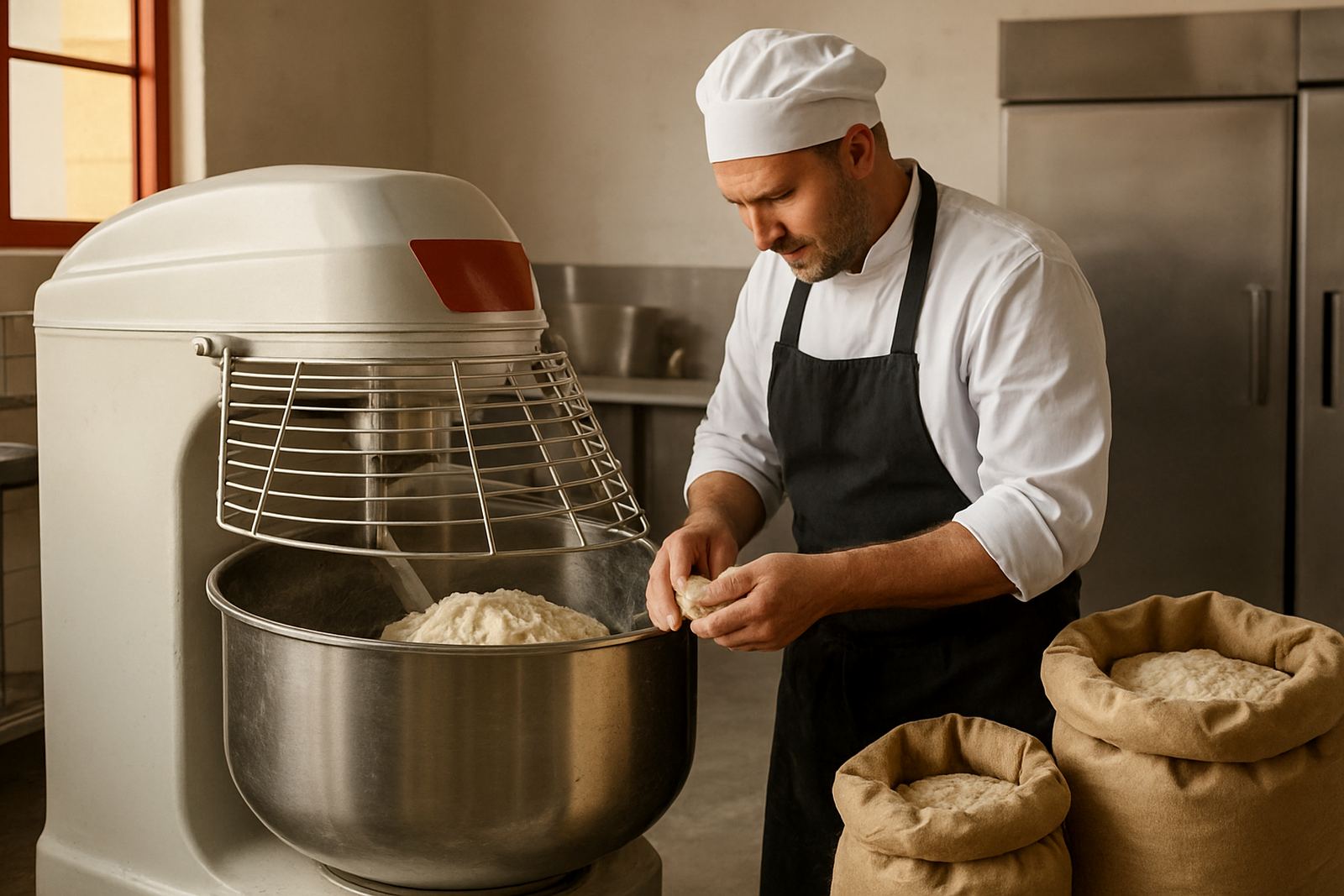
A dough mixer is made to combine flour, water, yeast, salt and other ingredients evenly, with less effort than hand mixing and far better consistency from batch to batch. In commercial kitchens that turn out bread rolls, pizza bases, vetkoek, pastry and catering dough, the right mixer helps keep texture right and production moving, even when the load-shedding schedule is not kind.
We supply two main mixer types. Planetary mixers are good for general prep and lighter dough work, with a rotating agitator that can also handle batters, fillings and whipped products. Spiral mixers are better for heavier dough loads because the bowl and spiral hook are set up to develop gluten properly with less heat build-up. If you are running a bakery in Durban North or a canteen in Pietermaritzburg, the choice usually comes down to batch size, dough type and how often the machine will run through the day.
- Planetary mixers suit mixed-use kitchens and smaller dough batches.
- Spiral mixers suit bread, pizza and higher volume dough production.
- Floor standing units work well where there is steady daily output.
- Countertop units suit smaller prep areas and tighter spaces.
Sizes and options that suit your kitchen
We help you choose a mixer that matches your output, available floor space and staff routine. A machine that is too small slows service. One that is too large can be awkward to load, hard to clean and more expensive to run. For Durban kitchens, we also look at ventilation, nearby sockets, delivery access and whether the floor can carry the weight without issue.
Common commercial options include 10 litre, 20 litre, 30 litre, 40 litre and 60 litre mixers, with larger capacities available for higher output sites. Bowl sizes are often matched to flour weight as well as total dough weight, so it is worth checking both figures. Some models come with fixed speeds, while others offer multiple speeds for better control over dough development and mixing of different product types.
- Single phase power suits many smaller kitchens and bakeries.
- Three phase power is often better for larger units and regular production.
- Timer controls help keep batches consistent across different staff.
- Interlocked guards and emergency stop buttons improve operator safety.
If you are in Ballito or Umhlanga where production may be tied to peak trading periods, a mixer with a decent bowl capacity and reliable gearbox can help you prep ahead without overworking the motor.
Where a dough mixer fits best
Dough mixers are used in bakeries, pizzerias, takeaways, hotels, hospitals, school kitchens and contract catering sites. In a hospital kitchen, they are useful for rolls, pastry and bulk dough prep. In a pizza operation, they help keep base quality steady through busy service. In a canteen, they reduce manual labour and make it easier to produce the same result every day.
They also suit production kitchens that need to separate wet and dry prep areas. If you are working under municipal food hygiene requirements, the mixer should be sited so it is easy to clean around, with enough space for ingredient bins, trolleys and safe loading. In coastal areas like Durban and Umhlanga, we also consider humidity and salt air, so stainless contact parts and good finish quality matter for long life.
- Bakeries needing repeatable dough batches.
- Pizza kitchens with constant evening service.
- Canteens and institutions making bulk dough items.
- Hotels and hospitality kitchens with varied prep tasks.
Installation, power and site needs
Before installation, we check the access route, final position, nearby services and the power supply. Smaller mixers may run on standard single phase power, while larger spiral units often need three phase power. If the site has frequent load-shedding or unstable supply, it is worth discussing start-up behaviour, motor protection and how the machine will be used with existing backup systems. A mixer that trips often becomes a bottleneck fast.
The floor should be level and strong enough for the machine weight and the vibration from kneading. For floor standing models, allow room to lift bowls, load ingredients and carry out cleaning without staff working too close together. If the machine sits near sinks or wash-up areas, keep splash exposure in mind and make sure cabling and plugs are properly protected. Our installation team can set out the right position during a site survey, which saves moving equipment later.
We also look at extractor routes, adjacent prep tables and how the mixer links with your storage and refrigeration flow. That helps keep flour, dough tubs and trays moving in a sensible order through the kitchen, not across each others way.
Care, cleaning and servicing that keep production moving
Regular cleaning and planned servicing make a big difference to mixer life. Dough residue left on hooks, bowls and guards hardens quickly and can affect hygiene as well as moving parts. After each shift, remove loose flour and dough, wipe food contact areas, and check that guards, switches and fastenings are sound. Staff should never run the mixer with unsafe guards removed or override safety devices.
For ongoing care, we recommend preventative maintenance that checks belts, bearings, chains, gearbox condition and electrical controls before they fail. In busy kitchens around Glen Anil, Pinetown and Durban North, that can mean fewer breakdowns during peak trading. If the mixer starts making unusual noise, struggling under normal load or leaving dough uneven, it should be inspected promptly rather than pushed on until a full failure occurs.
- Clean after every shift, especially around the bowl and hook.
- Check guards, locks and emergency stop functions weekly.
- Service moving parts at planned intervals, not only after a fault.
- Keep spare mixing attachments where possible to avoid downtime.
What to check before you order
When you request a dough mixer, it helps to have a few practical details ready. That makes it easier to match the machine to your kitchen and avoid overspending on capacity you do not need. Tell us what products you make, how many batches you run each day, and whether the mixer will be used for dough only or for a wider range of prep tasks.
It is also worth checking access dimensions, ceiling height, power supply, and whether you need a fitted bowl trolly or mobile use. If the machine is going upstairs, through a tight passage or into an older building, those details matter. We can also advise on stainless fabrication around the machine, such as landing tables or ingredient stations, so the whole prep area works together rather than as separate pieces.
- Batch size and product type: bread, pizza, pastry or mixed prep.
- Available power: single phase or three phase.
- Space and access: door width, turning space and final position.
- Cleaning needs: bowl access, guard design and drainage nearby.
If you are unsure, send your kitchen details through our contact form and we can help work through the options before supply and installation.
Key facts
| Mixer type | Planetary or spiral |
|---|---|
| Capacity range | 10 litre to 60 litre standard, larger on request |
| Power supply | Single phase or three phase, model dependent |
| Speed options | Single speed or multi speed versions |
| Materials | Food contact stainless steel and coated steel frame |
| Typical use | Bakery dough, pizza dough, canteen production, general prep |