What an open chargrill does in a working kitchen
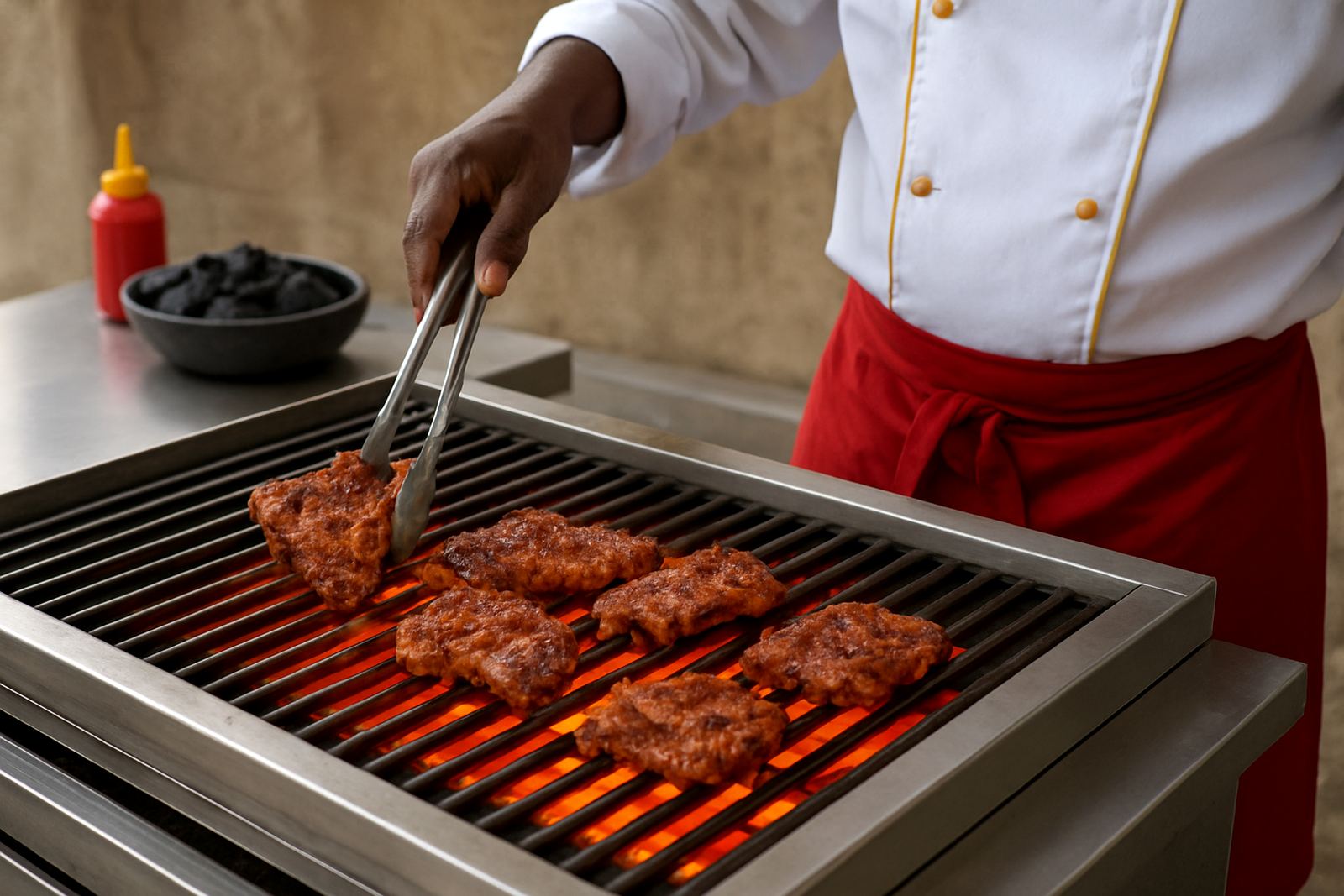
A chargrill is built for direct heat cooking over burners or radiant bars, with a cooking surface that leaves the familiar grill line on steaks, chicken, boerewors, burgers and fish. In a busy pass it helps the kitchen keep pace because the recovery time is short and the heat is concentrated where you need it.
For Durban kitchens, especially on the coast where humidity is high, the right unit needs solid stainless steel construction and good grease control. Heat, smoke and splatter all matter in a confined prep area, so the grill should sit under proper extraction and be easy to wipe down at the end of service.
Open chargrills suit menus that need visible flame character and a little extra flavour from dripping fat hitting a hot surface. They are not the same as a flat top or griddle. A chargrill gives texture and colour, while a griddle gives an even sear across the full plate.
Typical sizes, burner layouts and build options
Chargrills are usually specified by width, cooking area and fuel type. Common sizes include 600 mm, 900 mm and 1200 mm units, with larger custom builds for hotels, hospitals and production kitchens. The right size depends on whether you are cooking for a lunch rush in Glen Anil or turning out steady volume for a canteen in Pietermaritzburg.
Most commercial units are made in stainless steel with cast iron or heavy steel grates. Some have radiant bars under the grate for even heat spread, while others use direct flame burners. The grate pattern, heat zones and drip management should be matched to the menu. If you cook fatty cuts all day, you want a unit that can deal with grease build-up without flare-ups taking over.
- 600 mm chargrill for smaller service counters or limited menu use
- 900 mm chargrill for mid-volume restaurants and hotel kitchens
- 1200 mm and custom widths for high-output kitchens and institutional feeding
- Optional splash guards, removable grates and front drip trays
- Available as countertop or on cabinet stand, depending on your line-up
Where a chargrill makes sense
We usually recommend a chargrill where the menu depends on grilled protein, toasted sandwiches, flame-finished vegetables or quick order turnaround. It works well in restaurants, pubs, hotels, hospitals, staff canteens and private school kitchens. In Ballito and Umhlanga, where front-of-house presentation matters, the grill mark alone can help the plate sell better. In a larger kitchen, it becomes part of the hot line and must be positioned for clear workflow.
It also suits kitchens that want one piece of equipment to handle different items across the day. Breakfast service may need bacon, sausages and eggs on a separate griddle, while lunch and supper move to steaks, chicken breasts and wors on the chargrill. If the same line is used all day, the unit must recover quickly and hold steady temperature under load.
- Restaurants and grill rooms
- Hotel kitchens and banqueting prep areas
- Hospital and clinic feeding kitchens
- Canteens and school kitchens
- Fast service kitchens with short ticket times
Installation, ventilation and utility requirements
A chargrill must be installed with proper clearance, extraction and gas supply. It should sit under an extractor canopy sized for the heat and smoke load, with enough make-up air so the kitchen does not pull fumes back into the room. In KwaZulu-Natal, where summer heat can be heavy, poor ventilation makes the whole line uncomfortable and can affect staff output very quickly.
If the unit runs on gas, the regulator, hoses, shut-off valve and cylinder or reticulation point need to be set up to the correct spec and checked for leaks. Gas installations must follow local safety requirements and municipal rules, and the same goes for fire suppression where it is required. For countertop units, the bench or stand has to carry the weight of the grill and the food load without movement.
Depending on the model, you may need a 15 amp or 220 V supply for ignition, lights or control systems. The main heat source is usually gas, which is useful during load-shedding because cooking can continue if the rest of the kitchen is planned properly. We also check access for cleaning and service so the unit can be moved or lifted without damage when maintenance is due.
How to keep it clean and working properly
Daily cleaning is not optional on a chargrill. Grease on the grate or in the drip tray will smoke, smell and create flare-ups. At the end of service, the grates should be brushed while warm, then wiped once cooled. Drip trays must be emptied before the next shift, and the underside of the unit should be checked for carbon build-up.
With Durban humidity and salty air near the coast, stainless surfaces need proper wiping and drying or you will see tea-staining and dull patches. Where water quality is hard, mineral marks can also show up on splash guards and pans. If the grill is in constant use, schedule a service check for burners, flame pattern and gas pressure so you catch weak heat before it affects service.
- Brush grates after each service while they are still warm
- Empty drip trays and clean splash guards daily
- Check burner ports for blockage and uneven flames
- Inspect gas hoses and fittings for wear
- Book preventive maintenance before peak trading periods
What to check before you place an order
Before ordering a chargrill, work through the menu, daily volume and available space. The right choice depends on the number of portions you need per hour, whether you are cooking with gas cylinders or a fixed gas line, and what extraction is already in place. A busy site in Pinetown will often need a different layout from a smaller kitchen in Durban North.
Check the following before you commit:
- Cooking width needed for peak service
- Gas type, pressure and connection point
- Available bench space, stand height and clearance above the unit
- Extractor canopy size and air movement in the kitchen
- Grate type, drip tray access and ease of cleaning
- Whether the unit will be used for full menu service or only selected items
If you are fitting a full hot line, we can help with kitchen layouts, equipment specification, extractor planning, stainless fabrication, installation and commissioning. We also support staff training so the team knows how to light, run and clean the grill properly from day one.
Key facts
| Product type | Open commercial chargrill for flame cooking |
|---|---|
| Common widths | 600 mm, 900 mm, 1200 mm and custom |
| Construction | Stainless steel body with heavy-duty grill surface |
| Fuel | Gas, with connection matched to site supply |
| Typical use | Restaurants, hotels, hospitals, canteens and grill kitchens |
| Service needs | Extraction, gas safety check, cleaning and periodic maintenance |