What a combi oven does in a busy kitchen
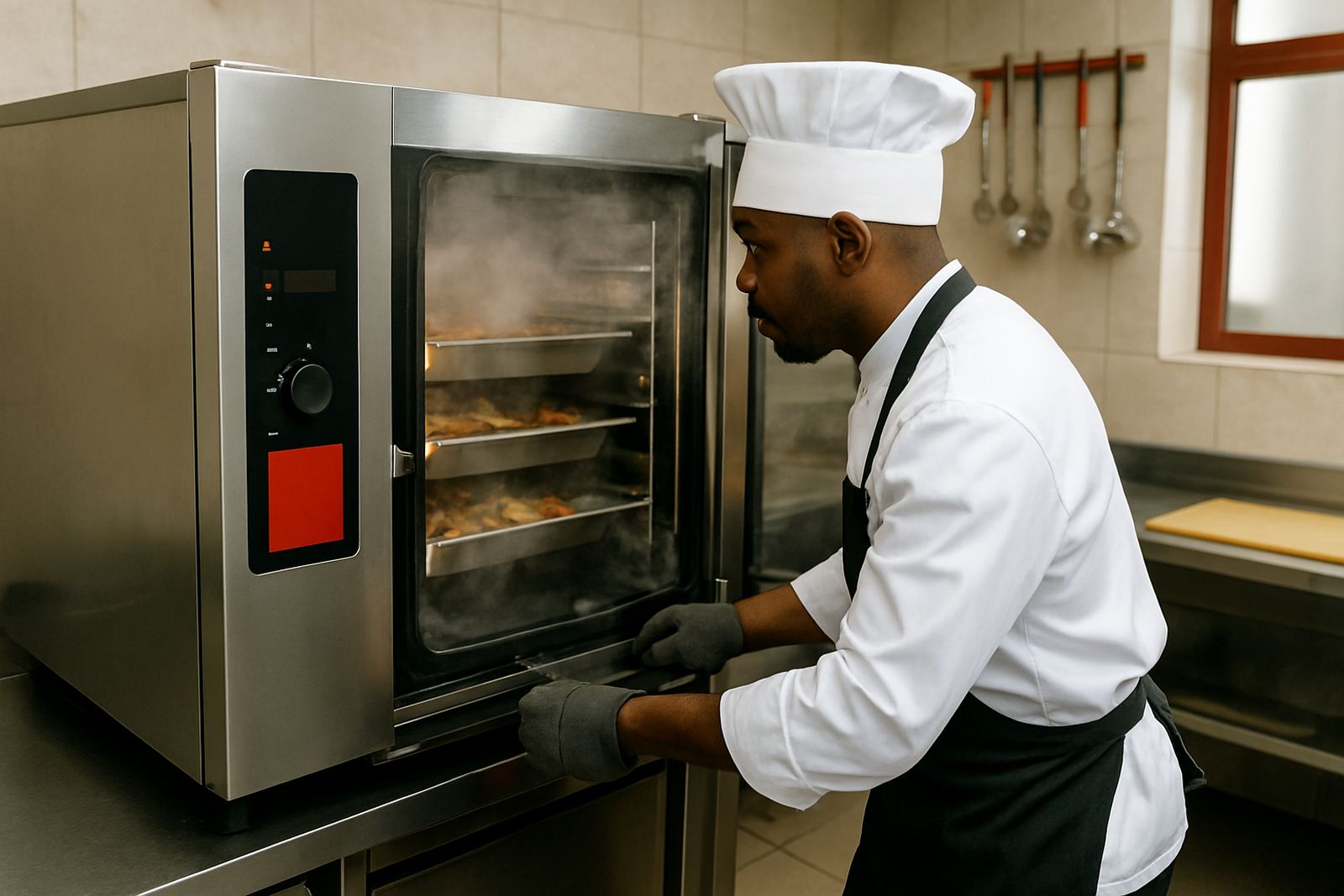
A combi oven combines hot air, steam, or a mix of both in one unit. That means you can roast chickens, steam vegetables, bake trays of savoury items, reheat plated meals, and hold food at serving temperature without moving between separate appliances. For kitchens working under pressure, one machine can replace several pieces of equipment and free up floor space.
In practical terms, this is useful where the menu changes through the day. A hospital may need breakfast service, batch lunch production and late snack cooking. A restaurant may need vegetables steamed to order, joints roasted for the pass, and tray baking during prep. A canteen or contract kitchen may need repeatable results with less operator variation. Programmes help staff set temperatures, humidity and timing, so the food comes out more consistently than manual cooking alone.
Combi ovens are available in several capacities, from compact 6 tray units for tighter prep rooms to larger 10, 20 or even 40 tray cabinets for higher output. The right choice depends on your service volume, tray size, staff workflow and available services. If the kitchen is in Durban, Umhlanga, Ballito or Pinetown, we also look at heat, ventilation and the way coastal humidity affects nearby storage and pass areas.
Sizes, tray options and useful control features
When we specify a combi oven, we start with tray capacity and the type of production. Smaller units suit cafes, boutique restaurants and satellite prep rooms. Medium units are common in school kitchens, retirement facilities and hotel back-of-house areas. Larger units are better for hospitals, contract catering and central kitchens where meals are cooked in batches across the day.
Useful features usually include programmable recipes, core temperature probes, multi-stage cooking, timed humidity control and automatic cleaning cycles. Some kitchens prefer a simple control panel with a handful of stored programmes, while others need more recipe memory and repeated production settings. Touch controls are common, but physical knobs and buttons still make sense in high-use sites where staff wear gloves or the kitchen has heavy service turnover.
- Tray sizes commonly supplied: GN 1/1, GN 2/3 and site-specific pan formats
- Typical capacities: 6, 10, 20 and 40 trays depending on footprint
- Cooking modes: hot air, steam, combi and regeneration
- Options: core probe, retractable spray gun, delta T cooking and recipe storage
- Door and rack layout can be selected to suit left to right workflow
The best unit is not always the biggest one. A properly sized combi oven that fits the room, the staff and the service pattern will usually perform better than an oversized cabinet that is hard to load, hard to clean and wastes energy.
Where a combi oven suits best in KwaZulu-Natal
Combi ovens suit sites where output must stay consistent and labour time is tight. They are used in restaurants, hotels, private hospitals, frail care facilities, school kitchens, staff canteens and catering departments that cook ahead for later service. They also make sense where menus need variety, because one cabinet can handle protein, vegetables, bakery items and regeneration in a controlled way.
In coastal areas like Durban North and Umhlanga, stainless steel quality and good ventilation matter because salt air and moisture can shorten equipment life if the kitchen is poorly planned. In inland areas such as Pietermaritzburg, the focus may be more on stable power, site access and managing heat build up in smaller kitchen rooms. For Ballito and Pinetown sites, delivery access, gas positioning and drainage for cleaning can affect the final specification as much as the oven itself.
We also look at how the oven fits with prep tables, chillers, extractor lines and service trolleys. If the oven door opens into a narrow passage or blocks the pass, the staff will struggle during peak trade. A good layout saves steps, cuts bottlenecks and makes cleaning easier at the end of the shift.
Power, gas and installation requirements
Before ordering, confirm what services are available on site. Many combi ovens are supplied as electric units, while some can be specified for gas depending on the kitchen and the local setup. Electric models need the right supply voltage, dedicated circuit protection and cable sizing. Larger cabinets may require three phase power, so it is important to check the incoming supply before the unit is selected.
Ventilation is just as important as power. Most installations need proper extractor planning to remove heat, steam and cooking vapour. A combi oven placed under the wrong canopy or too close to sensitive equipment can create condensation and discomfort in the room. We plan for clearances, access for service and a practical position for daily loading. If gas is used, the line size, isolation valve position and compliance with local safety requirements must be checked before commissioning.
- Confirm the available electrical supply and breaker capacity
- Check whether the site has single phase or three phase power
- Allow for drainage where a cleaning cycle or plumbed steam system is used
- Provide suitable extraction and fresh air make-up where needed
- Leave space for door swing, trolley access and routine servicing
We handle kitchen layouts, extractor planning and equipment installation from our Glen Anil base, and can coordinate with builders, electricians and plumbers where the project needs it.
Care, cleaning and preventive servicing
A combi oven gives the best life when it is cleaned regularly and serviced before small faults become downtime. Daily wipe-downs, prompt removal of grease and food residue, and use of the cleaning programme all help protect the fan system, door seals and cooking chamber. In a humid coastal kitchen, leaving residue inside the cabinet will show up faster, especially if the oven is used through breakfast, lunch and dinner in the same day.
Staff should be shown how to remove trays safely, check the door seal, monitor probe use and start the correct cleaning cycle. If the oven is overworked or the chamber is not rinsed properly after chemical cleaning, the unit will suffer uneven performance. Preventive maintenance is recommended for kitchens that depend on the oven every day, because a blocked drain, worn seal or scale build up can affect results before a breakdown appears.
Our service team supports planned maintenance and breakdown repairs for kitchens across Durban, Glen Anil, Umhlanga, Pinetown, Ballito and Pietermaritzburg. We also provide staff training so operators know the basics of safe use, simple care and when to call for support.
What to check before you place an order
Before you order a combi oven, it helps to compare the practical details rather than just the front panel. Start with the menu, then work back to the cabinet size and services. A hospital kitchen producing bulk meals needs a different specification from a restaurant that uses the oven for finishing and prep. Ask what tray sizes are accepted, how quickly the oven recovers between loads and whether the unit can store enough programmes for your common dishes.
Check the access route into the kitchen, the available floor area, and whether the oven will sit on a stand, a proofer, or a matching base. If the cabinet needs to be fitted through a narrow doorway or up stairs, that should be known before delivery day. Also confirm water quality, because hard water can affect steam systems and shorten cleaning intervals. In some sites a water treatment point is worth including at the start.
We can assist with equipment specification, site surveys and commissioning, so the final order suits the kitchen rather than forcing the kitchen to suit the machine. That is often the difference between a unit that works well for years and one that causes friction from the first week.
Key facts
| Cooking modes | Hot air, steam and mixed combi cooking |
|---|---|
| Tray capacity | 6, 10, 20 or 40 trays depending on model |
| Tray format | GN 1/1, GN 2/3 or site-specific pan sizing |
| Utilities | Electric or gas depending on specification |
| Control options | Programmable recipes, probe, humidity control, cleaning cycle |
| Typical use | Restaurants, hospitals, canteens, hotels and contract kitchens |