When to log a repair callout
Call us as soon as you notice heat loss, strange noises, breaker trips, water leaks, door seals that will not close, or cabinets that are not holding temperature. Waiting usually turns a small fault into a longer stoppage, especially in busy sites like restaurants, hospitals and canteens where equipment runs hard from breakfast through supper.
If you are in Glen Anil, Durban North, Umhlanga, Pinetown, Ballito or Pietermaritzburg, we will ask for the equipment type, the fault symptoms and whether the unit is still safe to use. For refrigeration, tell us the temperature reading if you have one. For cooking equipment, note whether the burner, element, thermostat, fan or ignition is affected. That first bit of information helps us arrive with the right parts and tools.
What to do before the technician arrives
There are a few practical steps that help protect staff and equipment while you wait for service. Keep them simple and do not attempt repairs if you are not trained to do so.
- Switch the unit off if you smell burning, see smoke or hear a loud electrical hum.
- Move food to a working fridge or freezer if a cold room, undercounter unit or upright cabinet is rising above safe holding temperatures.
- Keep doors closed on refrigeration equipment as much as possible to hold the cold in.
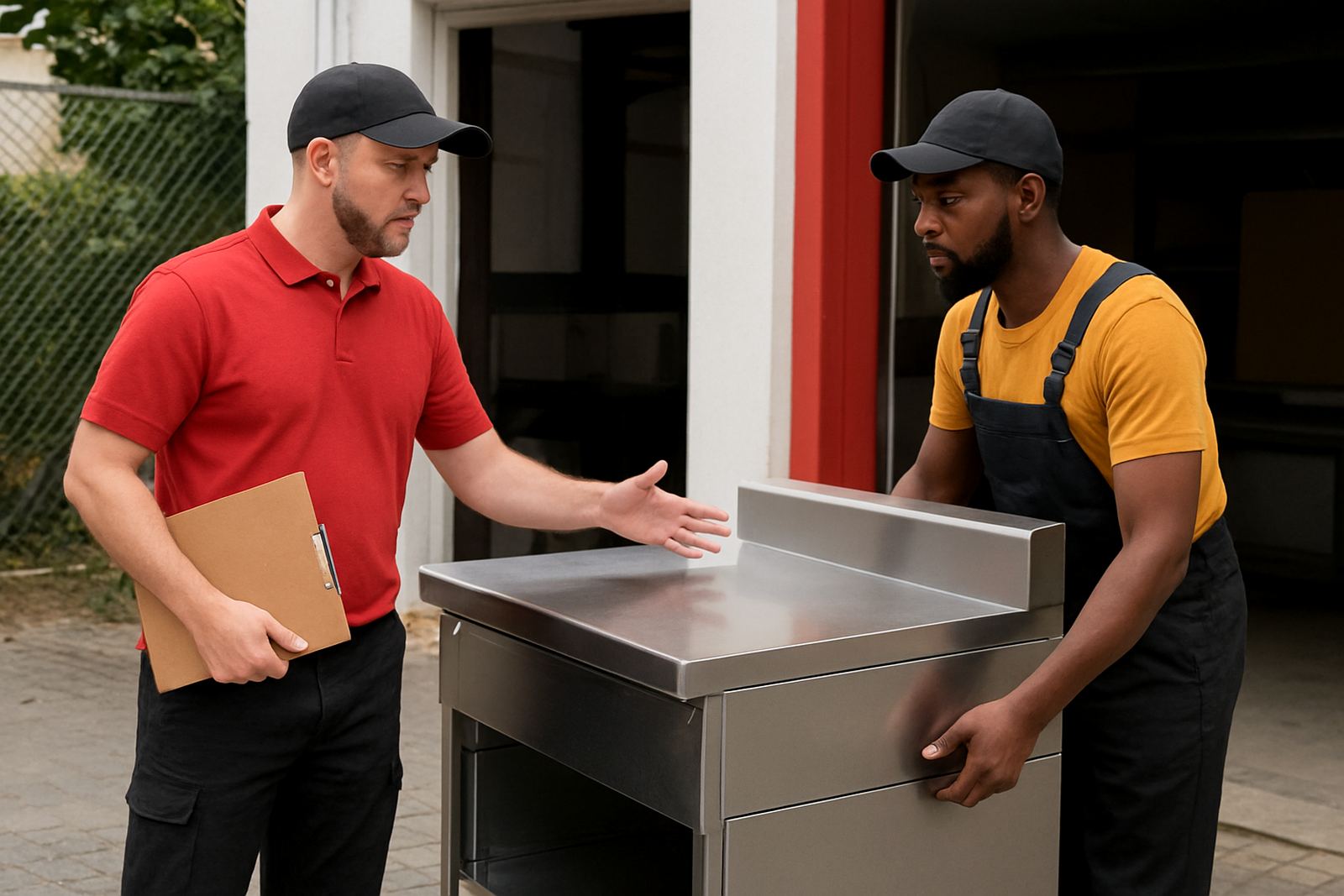
- Clear access around the machine so the technician can work safely.
- Have your power status ready, especially if the site has been affected by load-shedding or a recent surge.
On coastal sites like Umhlanga and Ballito, humidity and salt air can speed up corrosion and cause more frequent seal and fan issues. Inland sites can see dust build-up and blocked filters instead. Both can affect cooling and airflow.
Our fault finding process on site
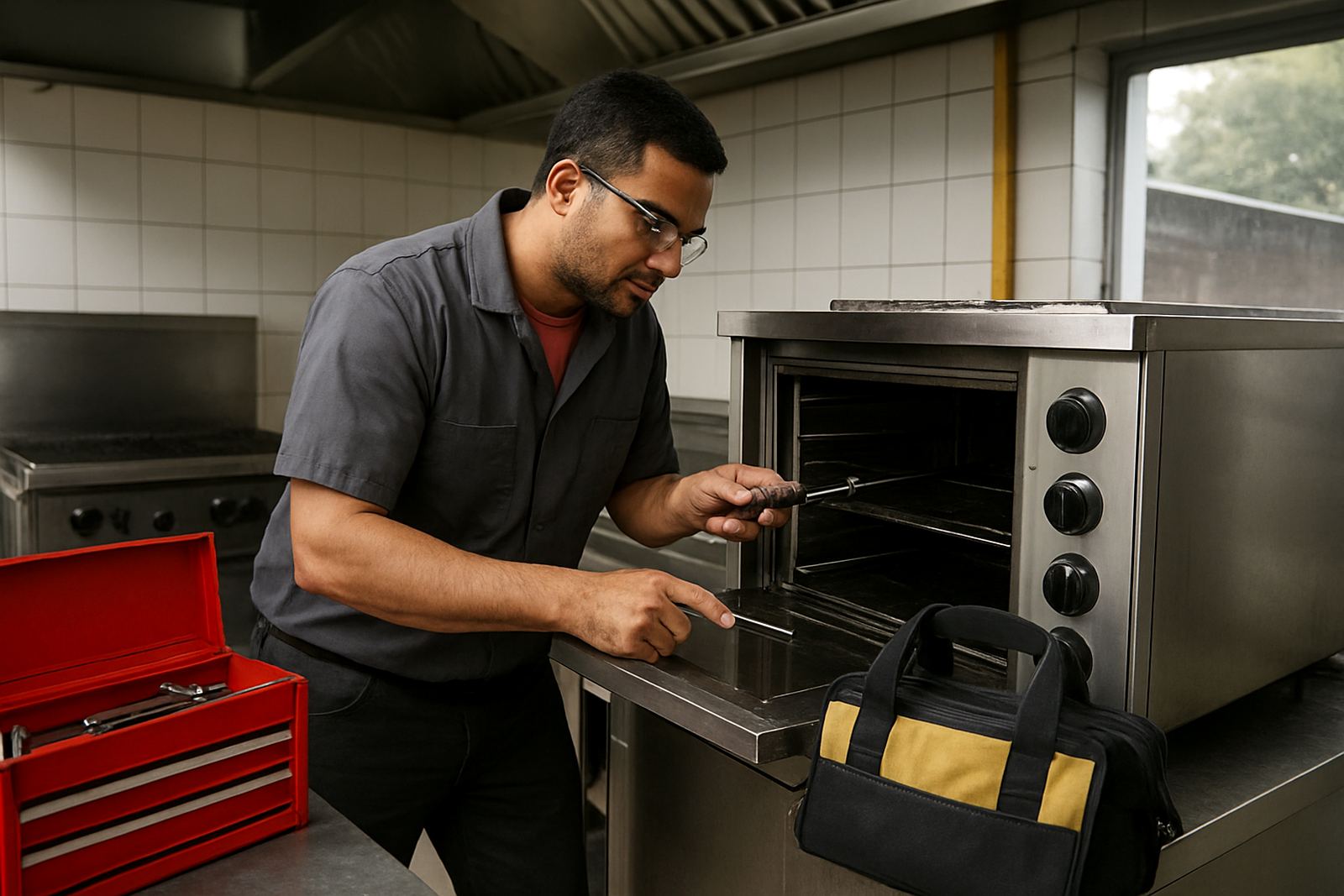
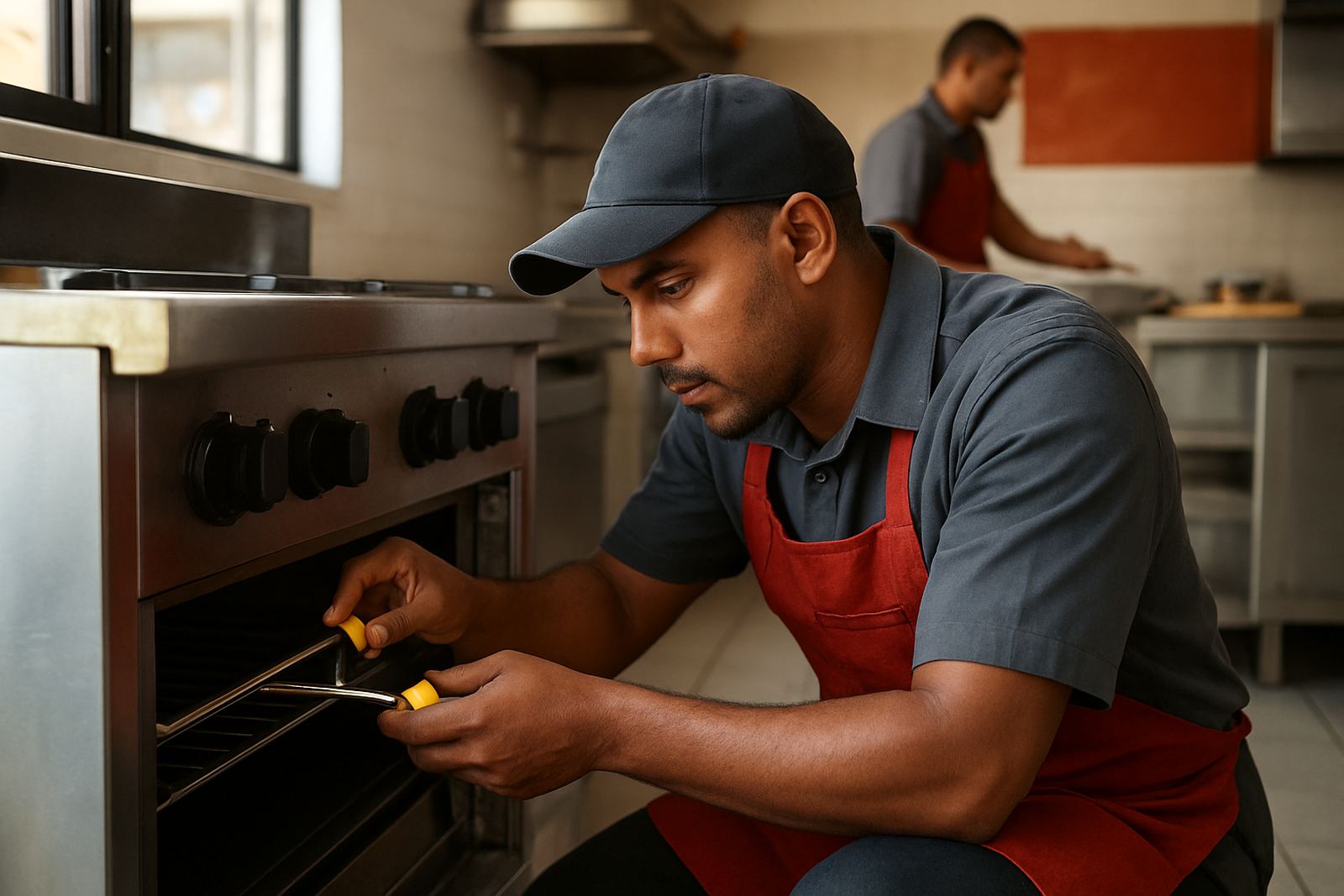
Every callout starts with a proper check, not guesswork. We inspect the unit, test the controls and look at the power supply, mechanical wear points and any signs of poor installation or overloading. Where needed, we compare the actual performance against what the equipment should be doing under normal kitchen use.
For refrigeration, we check airflow, compressors, condensers, door gaskets, defrost cycles and temperature recovery. For cooking and preparation equipment, we look at elements, gas lines where applicable, thermostats, switches, bearings, motors, and any worn wiring or failed safety parts. If the fault is linked to a larger issue such as poor ventilation or unstable power, we will explain that clearly before going further.
This matters in commercial kitchens because the same fault can have more than one cause. A fridge may look like a gas issue but actually be suffering from a dirty condenser and bad door seals. An oven may be blamed for slow heat-up when the real issue is supply voltage or a damaged control component.
Repair or replace, we will tell you straight
Some equipment is worth repairing. Some is getting near the end of its practical life. We give you an honest view so you can plan properly and not spend money twice.
- If the repair is small and the unit is otherwise sound, we recommend fixing it.
- If the breakdown is recurring, we will explain the likely cause and the cost impact.
- If the unit is older, inefficient or no longer suited to the kitchen load, we may suggest replacement planning.
- If a temporary fix is possible, we will say so and explain the limits clearly.
That approach helps managers, chefs and procurement teams make a sensible decision for the site. In hospitals and canteens, where uptime and food safety matter, clear advice is often more useful than a rushed patch-up.
Parts, procurement and turnaround
We keep the process practical. If the fault needs a part, our procurement team sources what is required and we keep you updated on timing. Some items are common and can be turned around quickly. Others may need a short lead time, especially on older equipment or special sizes.
Because we work across cooking, prep and refrigeration equipment, we understand which faults can wait a few hours and which ones need immediate attention. We also know that power cuts and generator changes can expose weak points, so we check the conditions around the fault not only the fault itself. That saves repeat callouts and helps avoid a second breakdown after the first repair.
Preventive maintenance after the callout
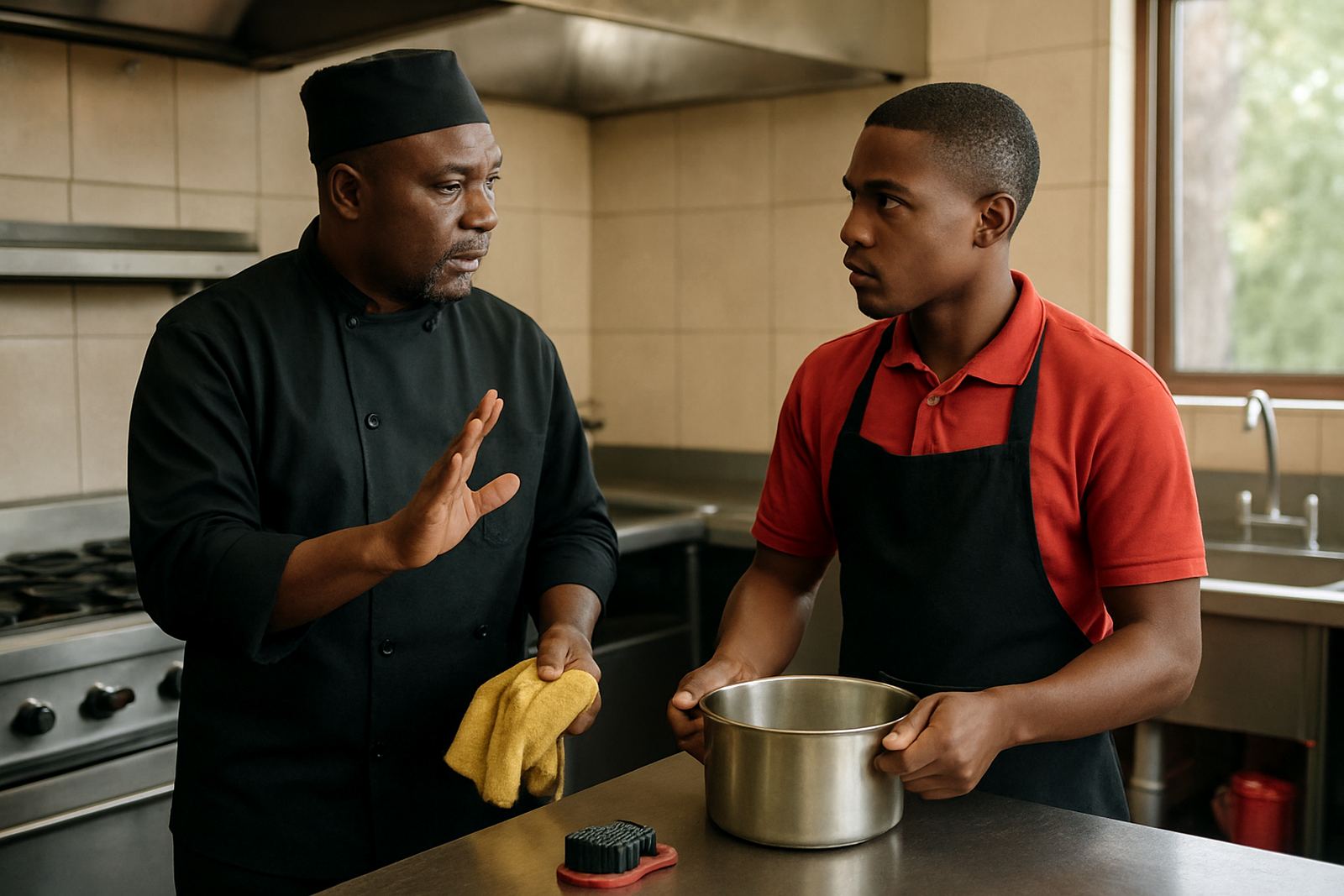
Once a unit is back in service, we can set up preventive maintenance to reduce repeat failures. This is useful for kitchens that run long hours or serve high volumes. A planned service schedule is easier and cheaper than reacting to a breakdown every few weeks.
Typical maintenance includes cleaning, checking seals, inspecting wiring, testing thermostats and safeties, and making sure moving parts are not wearing out faster than they should. In Durban and the coastal belt, regular attention to corrosion and moisture build-up is especially important. In busy sites, even a minor wobble in a fan motor or hinge can grow into a bigger fault if left alone.
- Reduces emergency downtime during service periods
- Helps protect stock in fridges, freezers and cold rooms
- Extends the life of cooking and prep equipment
- Supports safer operation for kitchen staff