Train the team before the first busy service
Every kitchen works better when the people using it know the order of operation, the limits of the equipment and the cleaning steps that protect it. In restaurants, hospitals and canteens across Durban and KwaZulu-Natal, we normally start with the machines that cause the most trouble when used incorrectly, such as cooking lines, refrigeration, prep equipment and extractor systems. A short training session before opening, or before a new shift team starts, can prevent burnt elements, blocked drains, damaged seals and unnecessary callouts.
We keep the guidance practical. Staff should know which switches to use first, how long to allow for warm-up or cool-down, and what must never be forced, overfilled or sprayed directly. If the kitchen is running during load-shedding, training should also cover restart steps, safe switch-over and what items must be checked before food production starts again.
Safe daily use of cooking, prep and cold equipment
Most equipment failures begin with poor daily handling. Training focuses on simple habits that protect the kitchen and reduce downtime. A fryer that is overfilled, a fridge door left open during a rush, or a slicer cleaned while still plugged in can all lead to avoidable risk. Staff need to understand not just what to do, but why it matters.
- Check power, gas and water connections before use.
- Do not overload shelves, trays or prep bowls beyond the rated capacity.
- Allow hot equipment to cool before washing or moving parts.
- Keep cold room doors closed as much as possible, especially in humid coastal weather.
- Use dry hands near switches and never hose down motors, control panels or sockets.
- Report odd noises, smell, vibration or poor cooling straight away.
For kitchens in Umhlanga, Ballito and Durban North, salt air can be hard on fittings and seals, so daily checks are not optional. A quick look each morning saves a lot more than a missed service later on.
Cleaning routines that protect food safety
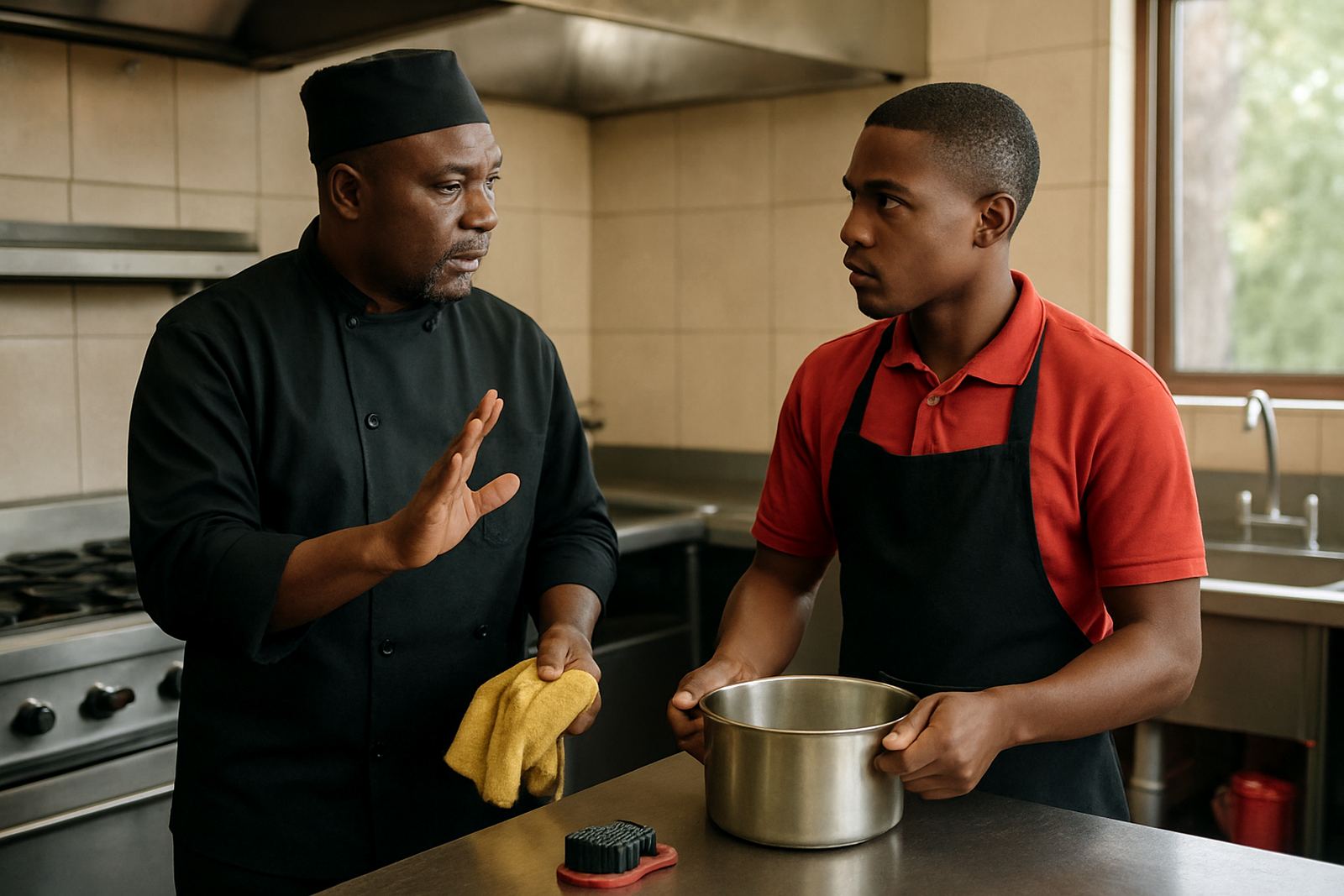
Cleaning is part of operation, not something left until the end of the week. Training should show staff which parts can be wiped, which parts must be removed for washing, and which areas should stay dry. Stainless surfaces, shelving, handles, knobs, trays and drip areas all need regular attention. Floors under cooking lines and behind fridges also need a set routine because grease and dust build up fast in a busy kitchen.
We recommend a clear cleaning schedule that matches the shift pattern. Morning staff, day staff and closing staff should each know their part. That way no one assumes the last person already did it. For hospitals and canteens, where hygiene records matter, a signed cleaning sheet helps management track what was done and when.
- Use food-safe cleaning chemicals in the correct dilution.
- Do not use scourers that scratch polished stainless steel.
- Remove crumbs and food scraps before wiping wet surfaces.
- Dry cold room seals and door frames to stop mould.
- Clean extractor filters regularly so grease does not build up.
How to spot wear before it becomes a breakdown
Good operators notice small changes early. That could be a fridge taking longer to cool, a burner flame looking uneven, a door not closing squarely, or a machine that starts making a new rattle. These signs often appear days or weeks before a full failure. If the team is trained to report them quickly, maintenance can be planned with less disruption.
Our site teams often find that simple observations from front-line staff point to the real issue sooner than a full inspection would. For example, a weak gasket or blocked air flow can look like a compressor problem, while a loose hinge can cause repeated door slam and damage to the frame. Small details matter. Please dont ignore them because the unit is still running.
Load-shedding, generator use and restart checks
KZN kitchens often have to work through outages, planned switch-overs and generator use. Training should cover what to switch off first, what to leave until power is stable, and how to bring equipment back online in the right order. Restarting everything at once can trip circuits, overload a changeover system or put unnecessary strain on refrigeration units.
Operators should also know which food items need temperature checks after an outage and when product must be discarded under municipal or food safety rules. If a fridge has been off long enough for temperatures to rise, it is not safe to guess. Record the outage time, note the cabinet temperature where possible, and tell a supervisor before service continues.
- Switch off sensitive equipment before power returns.
- Let compressors and motors rest before restarting.
- Check alarm indicators, lights and display panels after reset.
- Verify ice machines, fridges and freezers have returned to safe temperature.
- Keep torch lights and printed restart steps near the main prep area.
Who should be trained and what the session should cover
Training works best when it includes the people who actually touch the equipment each day. That usually means chefs, kitchen assistants, cleaners, supervisors and maintenance contacts. For larger sites in Pinetown or Pietermaritzburg, we often train one group on daily use and another on cleaning and fault reporting, so the message stays clear.
A proper session should cover start-up, shutdown, cleaning, safe loading, temperature checks, basic fault signs and who to call when something goes wrong. It should also cover what not to do. Staff remember practical examples better than a long manual, so we keep the instruction direct and site-specific. The aim is simple: safer use, less waste and fewer breakdowns.
If your kitchen has just been fitted out, has changed menu, or has had staff turnover, it is worth refreshing the training rather than waiting for a fault. A short recap often prevents the kind of mistake that costs a full day of trading.