
Campus kitchens that cope with lecture breaks and meal rushes
University food service is different from a single restaurant line. You may have one kitchen feeding a dining hall, a student canteen, a coffee point and a late meal counter all from the same back-of-house space. That means equipment has to suit batch cooking, fast hot holding, quick turnarounds and safe cleaning between service periods.
At KZN Catering Equipment in Glen Anil, Durban, we work with campus teams that need practical layouts, not just a list of machines. We look at how students move through the space, where queues build up, where deliveries land and how the kitchen will cope during registration weeks, exam periods and weekends when staffing is thinner. In Durban humidity, stainless finishes and correct ventilation matter, especially near open food lines and dishwash areas.
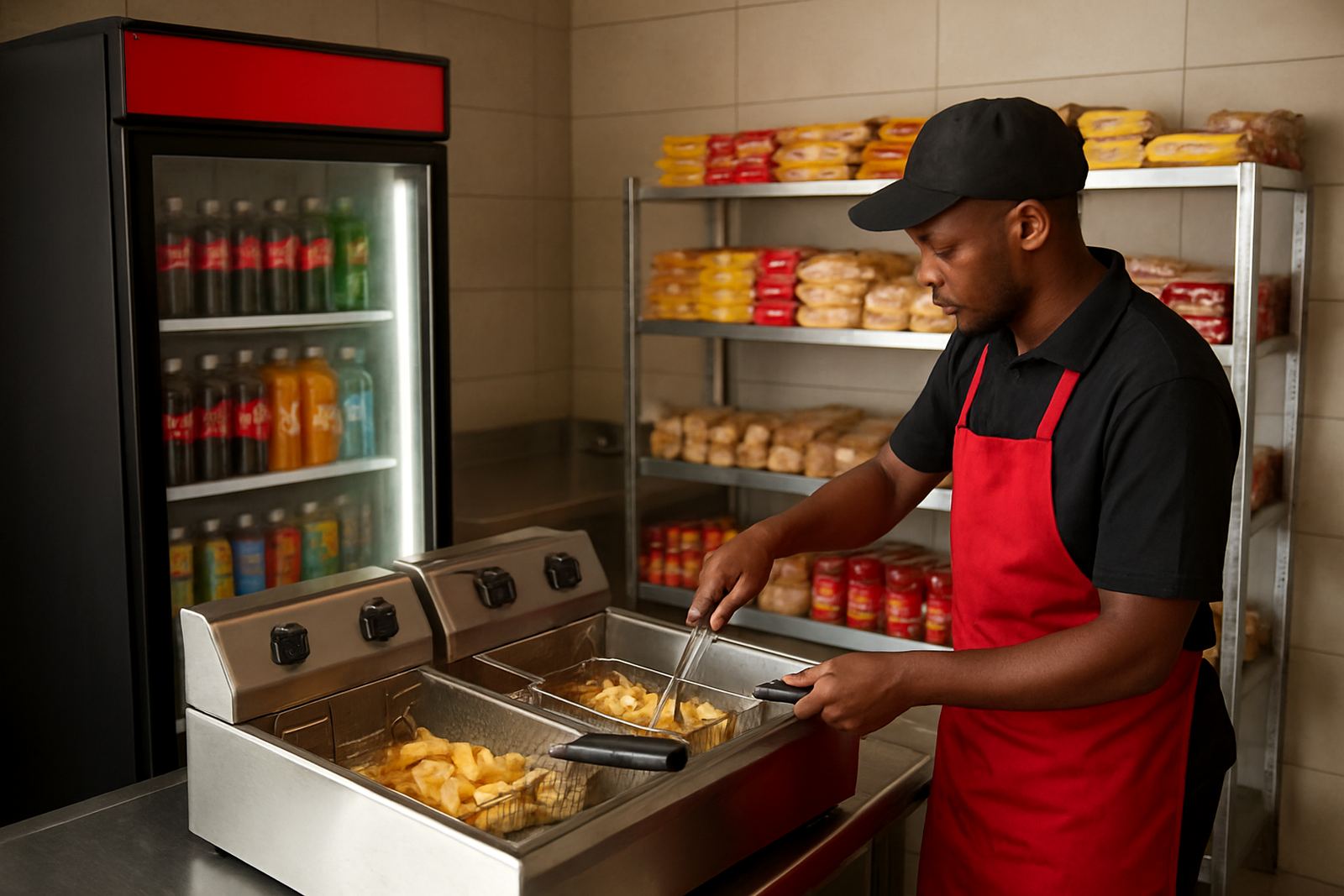
Typical equipment for university food courts and canteens
The right setup depends on the menu mix, but most campus projects need a balance of cooking, prep, storage and holding equipment. A university kitchen often runs different meal periods in the same day, so we usually plan for equipment that can be used hard from breakfast to supper without strain.
- Combi or convection ovens for batch baking, roasting and reheating
- Gas or electric ranges, griddles and chargrills for cooked-to-order items
- Boiling tops and stock pots for soups, sauces and starches
- Reach-in fridges, freezers and undercounter cold storage
- Stainless prep tables, wall shelves and ingredient bins
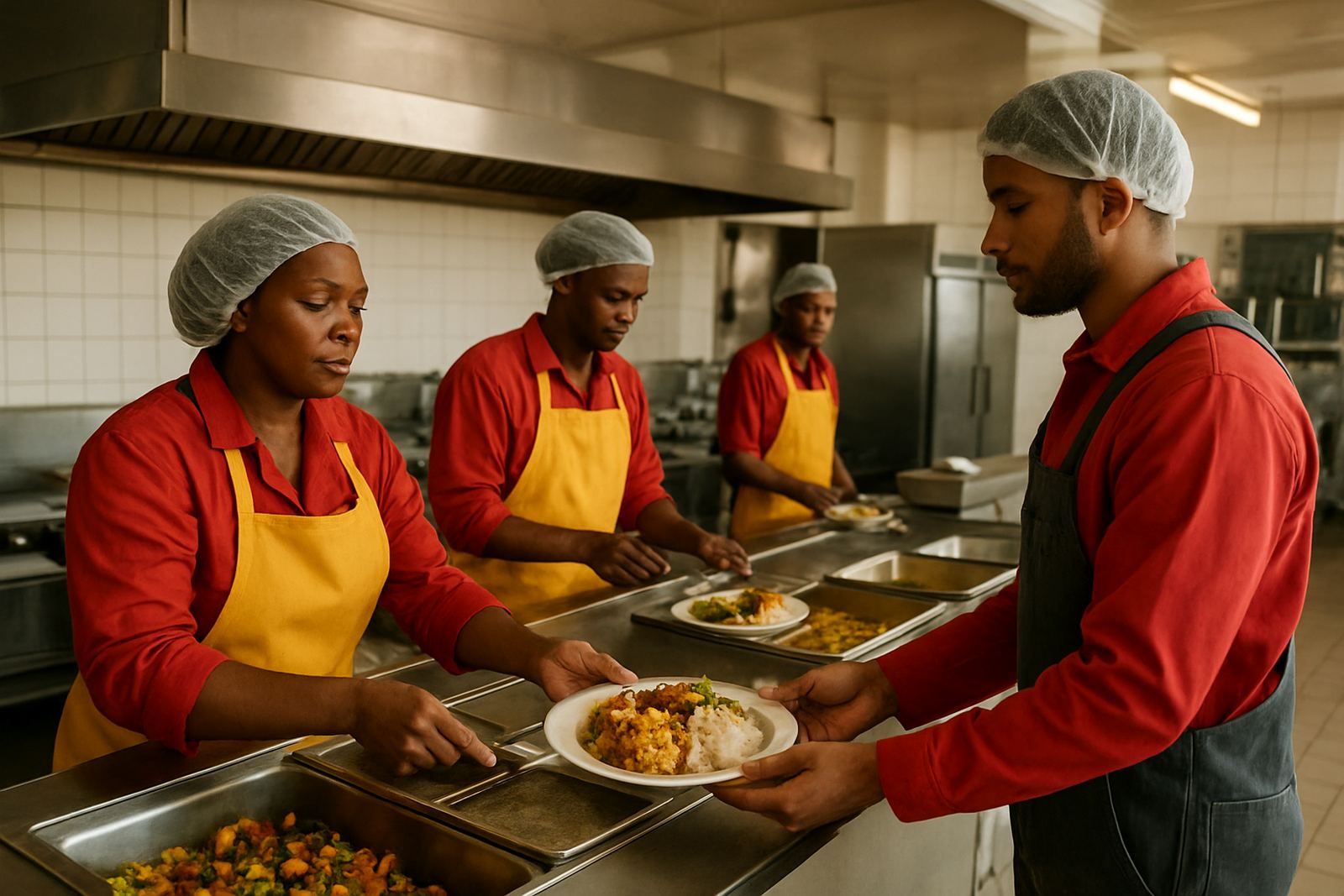
- Hot holding cabinets and service counters for queue control
- Dishwashing machines, sinks and pot wash stations
- Extractor canopies and make-up air planning for cooking heat and odour
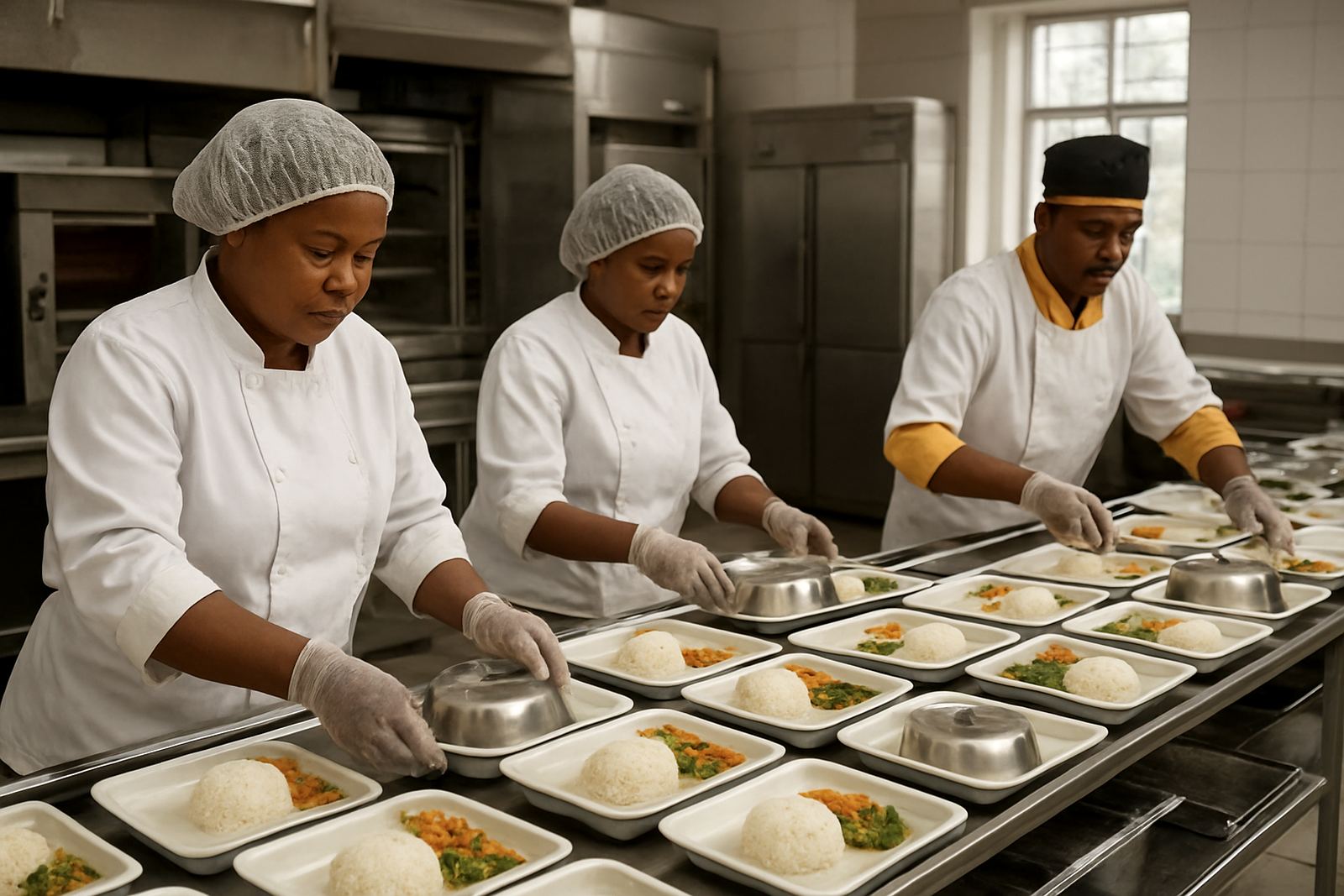
For larger campuses, we often split equipment into zones. One area handles prep, one handles production, one handles plating and one handles wash-up. That reduces cross-traffic and helps staff keep up when 200 students arrive at once. If the dining hall is near a residence block, we also allow for quieter equipment placement so the space does not become too noisy after load-shedding changeovers or early-morning service.
Layout planning that saves time during peak serving
Good kitchen planning starts with the flow of food, not the shape of the room. On a campus, the best layouts are the ones that keep raw ingredients, hot food, plate return and refuse moving in separate paths. If those paths cross, service slows down and the hygiene risk goes up. A tight room can still work well if the sequence is right.
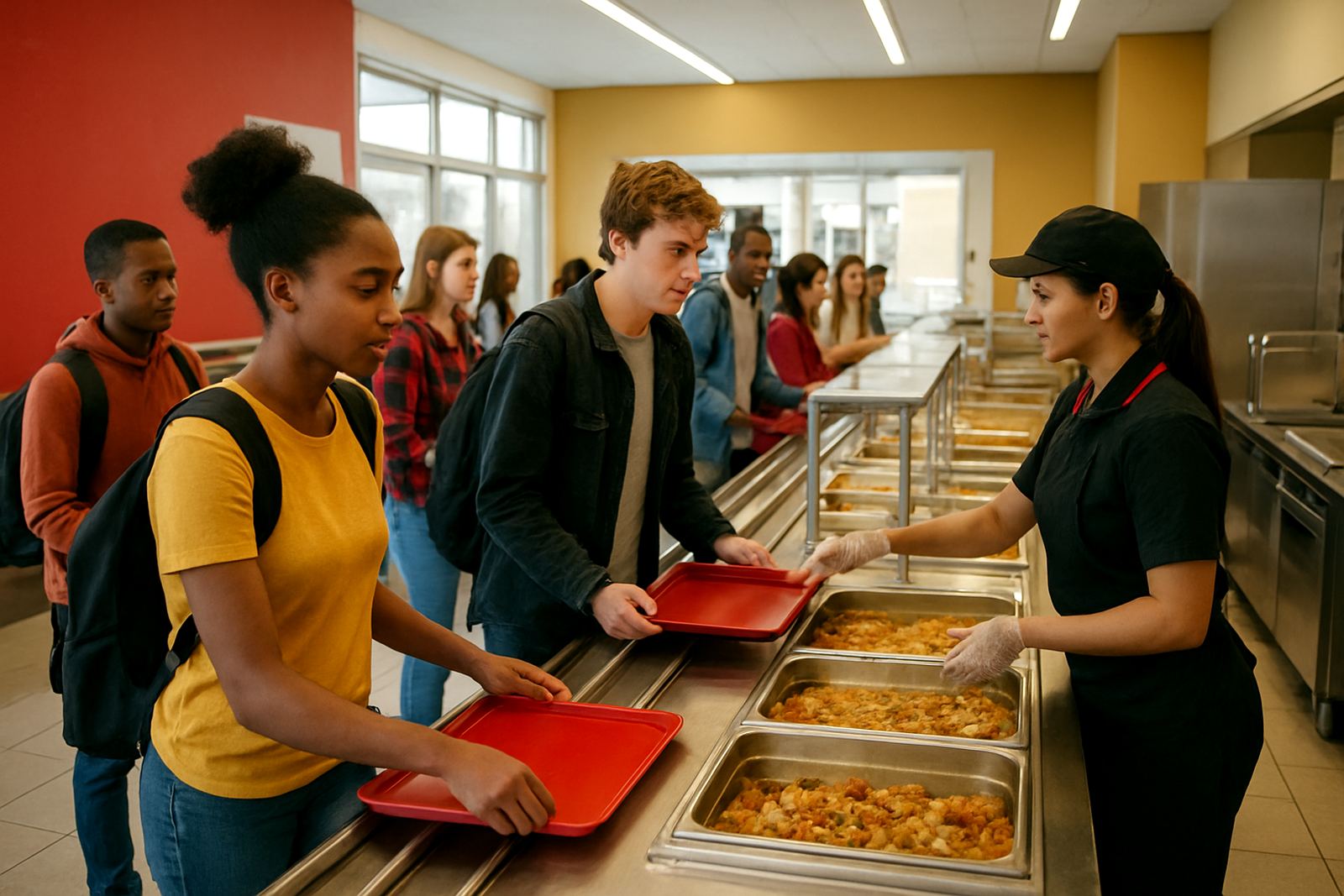
We usually advise universities to think in four parts: receiving, storage, production and service. The receiving point should be close to access for deliveries, with enough space for crates, dry stock and chilled goods to be checked quickly. Storage needs to be sized for meal plan volumes, not just daily sales. Production must have enough bench length for multiple staff members to work at the same time, and service counters should be arranged so the queue moves in one direction with no bottlenecks.
- Keep fridges close to prep benches to cut walking time
- Allow one-way movement from raw prep to cookline to service
- Place dish return away from clean plate issue points
- Leave enough space for trolley movement and stock restocking
- Plan extra sockets and isolators for future menu changes
We also advise checking water pressure, drainage falls and extractor routes early. Some campus buildings were never designed for commercial kitchens, so small things like drain positions, grease trap access and duct runs can become the main delay if they are left too late.
Common mistakes we see on campuses
One common mistake is buying equipment before the menu and volume are fixed. A university may start with a sandwich bar and then add hot meals, snacks and takeaway after a term or two. If the kitchen was planned only for light use, the team ends up with tight corners, weak power allocation and not enough cold storage. Another problem is undersizing the serving line, which creates long queues just when students are between lectures and only have 20 minutes to eat.
We also see kitchens that ignore maintenance access. If a fryer, fridge or extractor filter cannot be reached quickly, cleaning gets skipped and breakdowns happen sooner. In Pietermaritzburg and Ballito, where some campuses have mixed utility supply or coastal air, regular maintenance matters more than people expect. Small corrosion points can become expensive repairs if they are not addressed early, especially on exposed steel and hinges.
A final issue is forgetting future growth. Universities change menus, enrolment numbers and operating hours. It is better to leave space for one extra fridge bay or a future hot counter now than to tear out part of the kitchen later. That kind of planning saves money, and stress too.
Budget ranges for campus food-service projects
Budget depends on size, menu complexity and whether you are fitting out a new build, a renovation or a phased upgrade. For a small university canteen or satellite serving point, equipment and basic installation can start from about R250 000 to R600 000. A mid-sized dining hall with hot production, cold storage and extractor work often sits between R700 000 and R1,8 million. Larger multi-outlet campus projects can run from R2 million upwards, especially where fabrication, ducting, civil alterations and commissioning are included.
We usually help clients break the spend into stages. First comes the core production line, then storage and service counters, then any extras such as pass-through fridges, stainless fabrication or backup units for load-shedding. This staged approach helps universities keep procurement controlled while still getting the kitchen functional from day one.
If the site is in Durban North, Umhlanga or along the coast, it is worth budgeting for better ventilation, corrosion-resistant finishes and stronger service access because the environment works harder on equipment. A slightly higher spend upfront can reduce repair calls later.
From Glen Anil to campus handover
Our team handles university kitchen projects from first survey to final commissioning. That includes kitchen layouts, equipment specification, extractor planning, stainless fabrication, installation, preventive maintenance and staff training. Mandla Sibusiso Dlamini leads the business, with Priya Naidoo on kitchen design, Siyabonga Mkhize on projects, Annelise van Wyk on procurement, Luyanda Zungu on service and Jared Pillay on site installation.
We work across Durban, Pinetown, Ballito and Pietermaritzburg, and we are used to campus timelines that have to fit around term dates and holiday shutdowns. If your university needs a new canteen, a food court upgrade or a phased refresh of its existing kitchen, we can help map out the equipment and the build sequence so the space is ready for real service, not just for a handover photo.