Project brief for a busy La Lucia staff canteen
The client was a workplace canteen serving staff meals in La Lucia, Durban North. The space was being used hard through breakfast, lunch and afternoon break service, so the old flow was slowing people down and the serving counter was not matching the way staff actually moved through the room.
The brief was simple on paper but specific in practice: improve self-service speed, keep chilled items safely cold, hold hot meals at serving temperature and make the line easier to keep clean during a rush. The client also wanted a neater front-of-house look without turning the canteen into a showpiece. It still had to be practical, quick to wipe down and comfortable for daily use.
Because this was a working site, we had to plan around meal breaks, delivery access and limited downtime. The canteen could not be shut for long, so the whole job needed clear sequencing and a straight handover, not a drawn-out build that kept staff waiting.
Site limits, load-shedding and day-to-day constraints
The room had a fairly tight footprint and the old serving line left bottlenecks near the point where chilled salads, hot mains and tray return all met. There was also the usual coastal issue of humidity, which matters more than people think when you are dealing with refrigeration doors, seals and stainless finishes near an open service area.
We also planned for local power interruptions and voltage dips, because a canteen with chilled display and meal holding cant run on hope. The specification had to be practical for load-shedding support and reliable restart after power return. The client needed equipment that would recover quickly, hold temperature properly and not create extra admin for the catering team.
- Space had to suit one-way self-service flow with clear entry and exit points
- Equipment footprint needed to fit the existing room width and service counter line
- Hot and cold items had to be separated to reduce cross traffic
- Cleaning access had to be easy for daily wipe-downs and weekly deep cleaning
What we supplied and installed
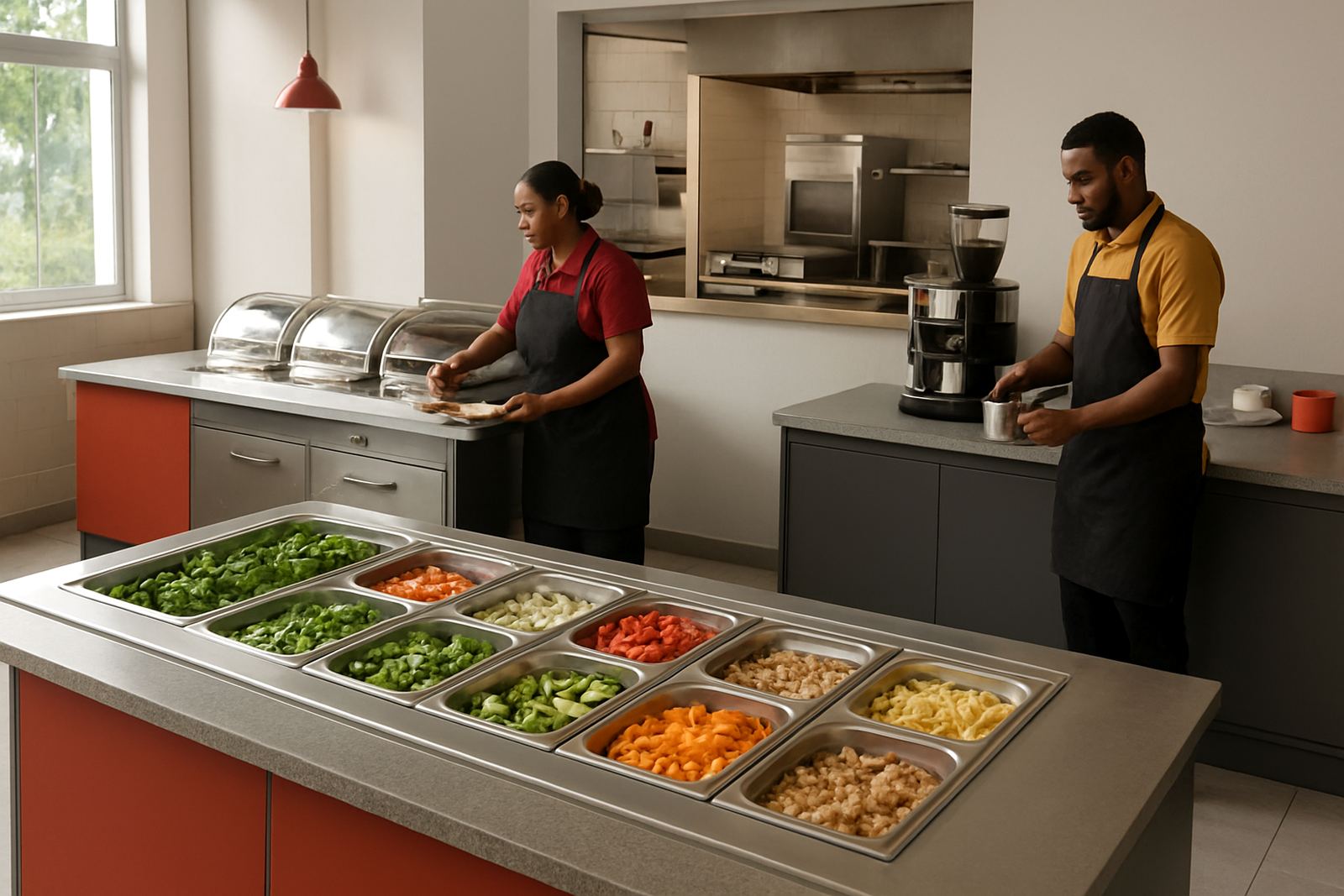
We supplied and installed a compact canteen line built around chilled display, meal holding and prep support. The final setup included a chilled multi-deck display section for salads, drinks and dessert items, a heated holding section for plated meals and trays, stainless prep surfaces and undercounter refrigeration where stock access was needed during service.
We also fabricated stainless work surfaces and splash backs to suit the room layout. The stainless was specified for regular wash-downs and the kind of daily use you get in a staff canteen, where the team is moving quickly and you need corners, joints and edges that are easy to maintain. No fancy bits that slow service down, just the right kit in the right place.
- Chilled display cabinet for ready-to-serve cold items
- Hot holding section for cooked meals and plated portions
- Undercounter refrigeration for service stock and backup items
- Stainless prep tables and wall finishes for hygiene control
- Service-friendly counter spacing to guide traffic at peak times
Layout changes that fixed the flow
Kitchen Design Lead Priya Naidoo adjusted the line so that staff could move from trays to cold items, then hot meals, then payment without doubling back. That change made a bigger difference than people expect. Once the sequence is right, the service feels quicker even before the equipment is switched on.
We also reduced the points where queues could merge. The old arrangement allowed people to cross paths near the serving counter, which made lunch feel slower than it should have been. By separating the chilled section from the hot holding zone, and setting the handover points out more clearly, the canteen became easier to run during a rush.
The room now supports a clean visual line from entry to exit. It helps the catering team keep control of portions and topping up, and it cuts down on the stop-start movement that usually happens when a counter is too cramped. A small change, but it saves time every day.
Timeline from survey to handover
The full project ran over four weeks from site survey to commissioning. Week one covered the survey, measurements and final equipment specification. Week two was procurement and fabrication. Week three allowed for delivery coordination, positioning and installation. Week four covered commissioning, temperature checks and staff training on daily use and cleaning.
Our projects manager Siyabonga Mkhize kept the programme moving and coordinated with the client around meal times and access windows. Installation was handled by Jared Pillay and the site team, with checks on levelling, service clearances and drainage where needed. The service supervisor Luyanda Zungu then ran the handover checks with the catering team so they could see the start-up steps, cleaning sequence and what to watch during busy service.
- Week 1: survey, measurements and equipment schedule
- Week 2: procurement and stainless fabrication
- Week 3: delivery, setting out and installation
- Week 4: commissioning, training and handover
Results after the canteen refresh
Once the line was in service, the biggest change was speed. Staff moved through more evenly and the canteen team spent less time managing queues at the counter. Cold items stayed at the right temperature and hot food was held properly through the lunch window, which reduced the amount of food that had to be refreshed early.
The client also gained a cleaner-looking serving area that is easier to wipe down at the end of a shift. That matters in a workplace canteen because the room needs to reset quickly for the next service, not sit half-clean while people are still working around it. The new setup gave the team better control of stock rotation too, especially for items that move quickly on busy days.
From a maintenance point of view, the arrangement is also easier to keep in order. Doors, seals and counter surfaces are more accessible, and the team can check temperatures and cleaning points without pulling the whole line apart. It was a practical improvement, not a cosmetic one, which is what the client needed.
What we would repeat on the next canteen job
If we were doing the same type of project again, we would use the same approach: start with the traffic flow, not the equipment list. Too many canteen upgrades begin with a shopping list and only then try to fit it into the room. That usually leads to awkward corners and wasted steps. Here, the flow came first and the equipment followed.
We would also keep the same mix of chilled display, hot holding and stainless fabrication, because that combination suits a workplace canteen in Durban North very well. It handles humidity, daily cleaning and high turnover without becoming difficult to run. The other thing we would repeat is the short, controlled timeline. In a live canteen, longer is not better. Clear milestones are.
For a site like this, a simple rule works best: measure carefully, specify for the actual service pattern, then install with enough room for staff to work properly. That is what delivered the result here.
Key facts
| Project type | Workplace canteen refresh |
|---|---|
| Location | La Lucia, Durban North |
| Timeline | 4 weeks from survey to handover |
| Main equipment | Chilled display, hot holding, undercounter refrigeration |
| Fabrication | Custom stainless prep and splash-back work |
| Services used | Kitchen layouts, equipment specification, installation, commissioning and staff training |