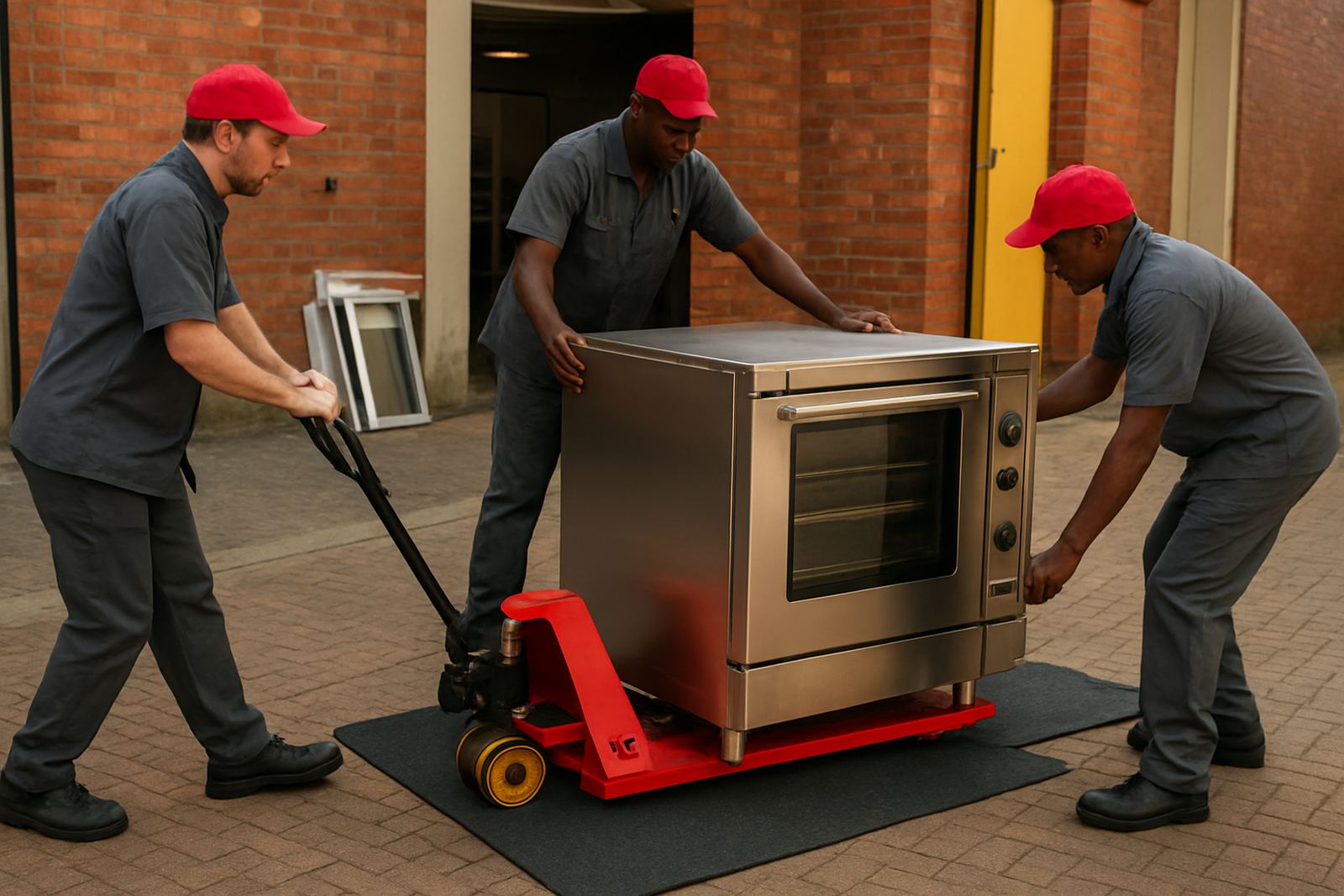
What our equipment installation covers
We handle the physical installation of cooking, refrigeration, prep and storage equipment in new kitchens and refits. That includes moving units into position, checking floor levels, setting feet and castors, anchoring where needed, and making sure there is enough access for doors, trays and cleaning. We also confirm service gaps, ventilation routes and power points before final fixing, because a well placed fryer or upright chiller is easier to live with for years.
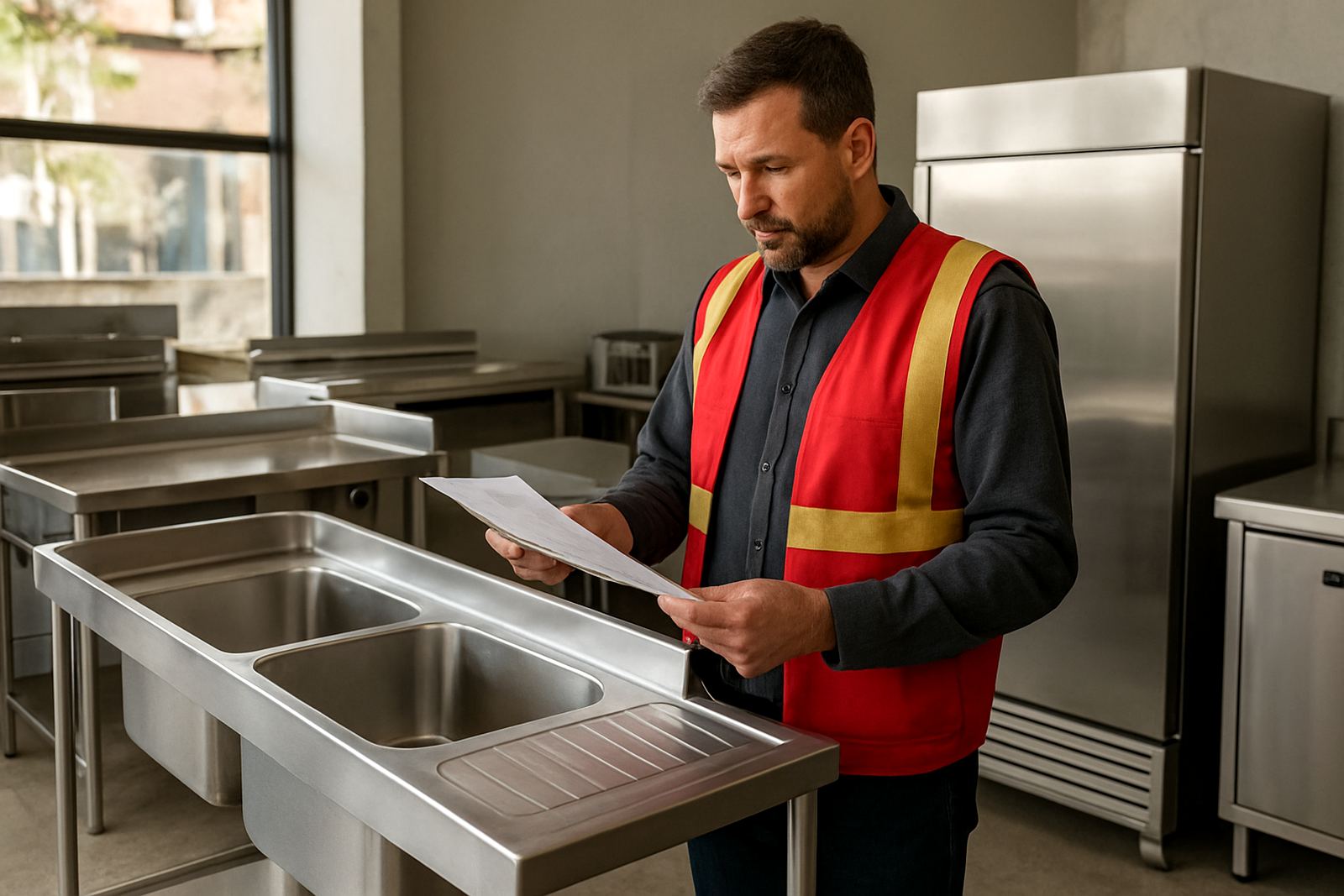
On Durban sites we often work around tight delivery bays, lift access and after-hours rules, so the install plan needs to match the building. For hospitals, canteens and school kitchens we also allow for hygiene zones, drip control and easy wipe-down surfaces. If stainless items or custom counters are part of the scope, those are fitted in the same sequence so the equipment line stays square.
- Positioning and levelling of heavy equipment
- Connection of supplied power, water and drain points where approved
- Anchor fixing and anti-tip setting for tall units
- Clearance checks for heat, door swing and cleaning access
- Co-ordination with extraction, refrigeration and prep flow
From site survey to final handover
Every install starts with a site survey or a review of the approved kitchen layout. Priya Naidoo and Siyabonga Mkhize check access routes, services, floor falls, wall finishes and the position of extract hoods, cold rooms and wash-up points. If the space is in Glen Anil, Durban North, Umhlanga, Pinetown, Ballito or Pietermaritzburg, we factor in local delivery timing and any building manager rules before the team arrives.
The installation process is kept practical and clear. First, the site is marked out. Then the equipment is unloaded, checked against the packing list and placed in sequence so one trade does not block another. After positioning, we align the units, verify service connections and run a basic operational check. Commissioning support can follow immediately if the kitchen is ready to start up.
- Pre-install check against drawings and equipment schedule
- Delivery planning for access, parking and off-loading
- Positioning in build sequence so trades do not clash
- Final fit check before handover and sign-off
Technical details we confirm on each install
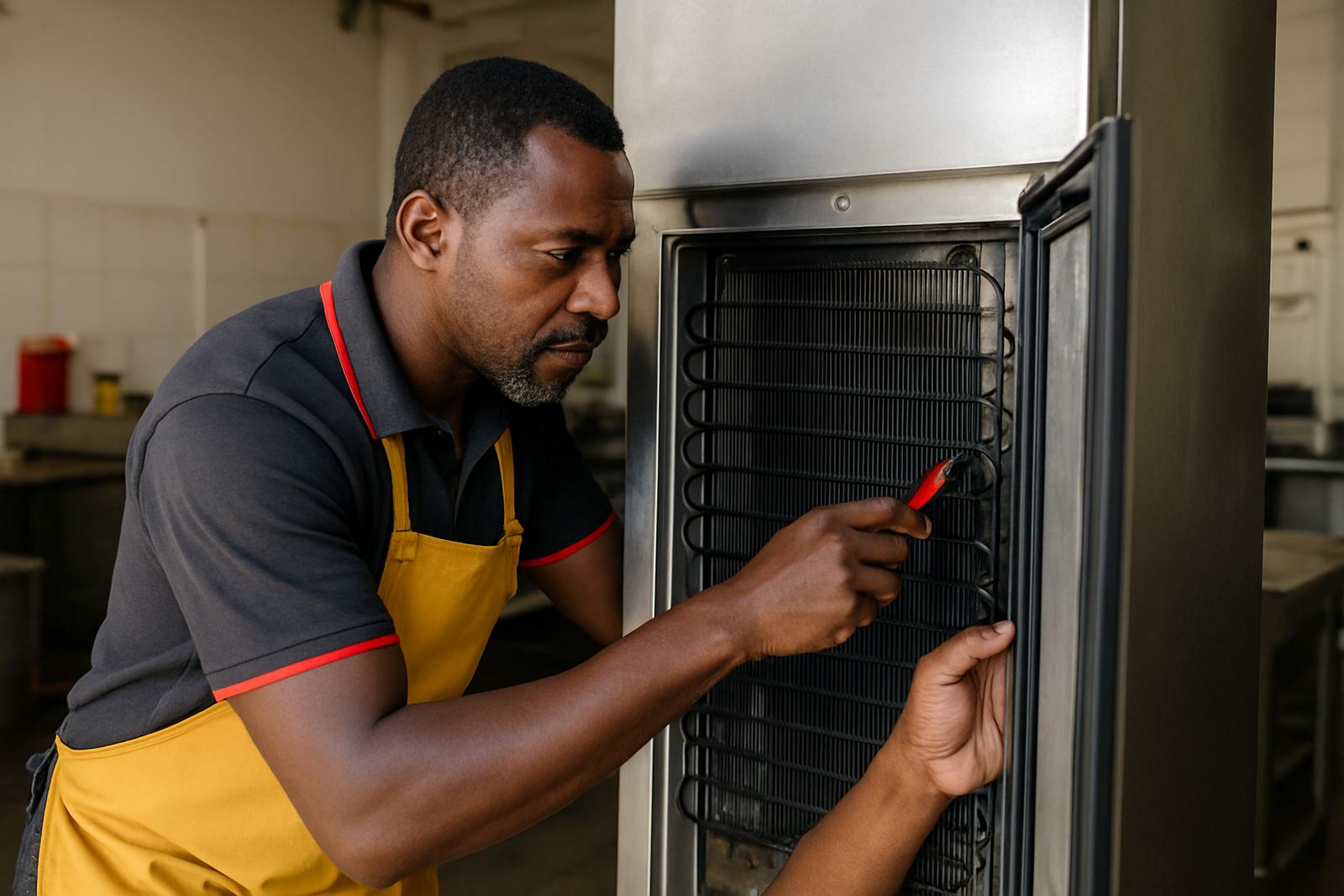
Correct installation is not only about placing a unit on the floor. We check voltage and phase requirements, water inlet sizes, drain falls, extraction clearances and safe working gaps around heat-producing equipment. For refrigerated equipment we allow for air flow at the condenser side, and for hot equipment we check heat shielding, gas approval requirements where relevant, and safe access for cleaning. In humid coastal areas like Durban and Ballito, we also look at condensation control and corrosion risk around exposed fittings.
Typical commercial kitchen equipment may need 220V or 380V supply, depending on size and function, with dedicated circuits for ovens, dishwashers and refrigeration. Stainless items are levelled to prevent pooling, and caster-mounted units are secured where site conditions demand it. If the building has load-shedding backup, we can co-ordinate with the electrical contractor so the equipment start-up sequence is not affected. A quick mistake here can shorten service life, so we rather take the time and get it right the first time.
- Power checks: single phase or three phase as specified
- Water and drainage checks for sinks, dishwashers and ice machines
- Extraction and make-up air allowance for cooking lines
- Clearance from walls, finishes and combustible materials
- Load-shedding readiness for critical refrigeration and prep areas
Turnaround times for Durban and KZN sites
Turnaround depends on the size of the kitchen, the number of trades on site and whether civil work, electrical work or extraction changes are already complete. A small refit with a few units can often be installed in a day, while a full kitchen fitout may take several days in stages. We keep the schedule realistic rather than promise an impossible overnight finish, because commissioning still needs space for testing and fine tuning.
For urgent replacements, Luyanda Zungu can co-ordinate breakdown swaps where the old unit is removed and the new one is positioned with minimum downtime. That is useful for hospitals, canteens and busy restaurant kitchens that cannot stop service for long. If equipment arrives early and the site is not ready, we can hold the sequence so the team does not pay for wasted labour. This saves time and usually a fair bit of Rand too.
- Small replacement installs: often same day or next day
- Medium refits: usually 2 to 4 working days
- Large commercial kitchens: phased scheduling by area
- Urgent breakdown swaps: subject to stock and access
Pricing that suits new builds, refits and replacements
Installation pricing is based on the scope of work, site access, equipment weight, the number of units and whether rigging, anchoring or after-hours work is required. We quote from the layout and equipment list first, then confirm once the site survey is done. If a project needs stainless fabrication, extractor planning or extra site works, those items are separated so you can see exactly what is included and what is not.
That approach works well for procurement teams and owner-managed kitchens alike. There are no vague bundle figures hiding extra labour, and no guesswork on call-out charges. For projects in Durban North, Glen Anil, Umhlanga, Pinetown, Ballito and Pietermaritzburg, travel and access are noted up front. Where the site is tricky, we may recommend staged delivery so the install cost stays under control.
- Quoted from approved equipment schedule and site conditions
- Labour charged by scope, not by guesswork
- After-hours and weekend work quoted separately
- Extra items like lifting gear or anchors listed clearly
Keeping installed equipment in service longer
Once the kitchen is live, maintenance matters. We can advise on service intervals for each item, from quarterly checks on high-use cooking equipment to six-monthly inspections for refrigeration seals, fans and drainage. Heavy-use sites in restaurants, hospitals and canteens often need more frequent cleaning and inspection than a smaller prep kitchen, especially where grease, steam and constant door opening are part of daily operation.
Mandla Sibusiso Dlamini and the service team can set a basic maintenance plan during handover, so the staff know what to clean daily, what to record weekly and what to call in for. That might include checking hinges, seals, burner performance, thermostat accuracy and drain blockages. Preventive work costs less than emergency repairs, and it keeps the kitchen moving when power interruptions and busy meal times already put pressure on the plant. If something changes later, we can return for re-leveling, reconnection or a full resite.
- Daily cleaning of exposed food and splash areas
- Weekly checks on seals, doors and controls
- Three-monthly to six-monthly service intervals for busy sites
- Re-leveling and adjustment after flooring changes or moves
Key facts
| Service area | Glen Anil, Durban North, Umhlanga, Pinetown, Ballito and Pietermaritzburg |
|---|---|
| Equipment types | Cooking, refrigeration, food prep, storage and wash-up equipment |
| Site support | Positioning, levelling, connection, testing and handover |
| Typical supply | Single phase 220V and three phase 380V equipment, depending on unit |
| Turnaround | Same day to phased multi-day installs, depending on site readiness |
| Maintenance intervals | Daily, weekly, quarterly and six-monthly, based on use and duty cycle |