What commissioning covers in a new kitchen
Commissioning is the final step between installation and first service. It is where we check that the cooking line, refrigeration, wash-up area, prep counters and extraction all work together as they should. For restaurants, hospitals and canteens, that means more than simply switching units on. We verify power supply, water connections, drainage, gas where applicable, airflow and control settings so the kitchen can run under real service pressure.
Our commissioning work suits new builds, fit outs, refurbishments and equipment replacements in Durban North, Umhlanga, Pinetown, Ballito and Pietermaritzburg. It is especially useful in KwaZulu-Natal where coastal humidity can affect seals, condensers and stainless fixings, and where load-shedding can expose weak points in electrical planning. We look for those issues before opening day, not after the first rush.
- Cooking equipment start-up and functional checks
- Refrigeration temperature verification and door seal inspection
- Extraction fan and make-up air checks
- Drainage, water pressure and leak testing
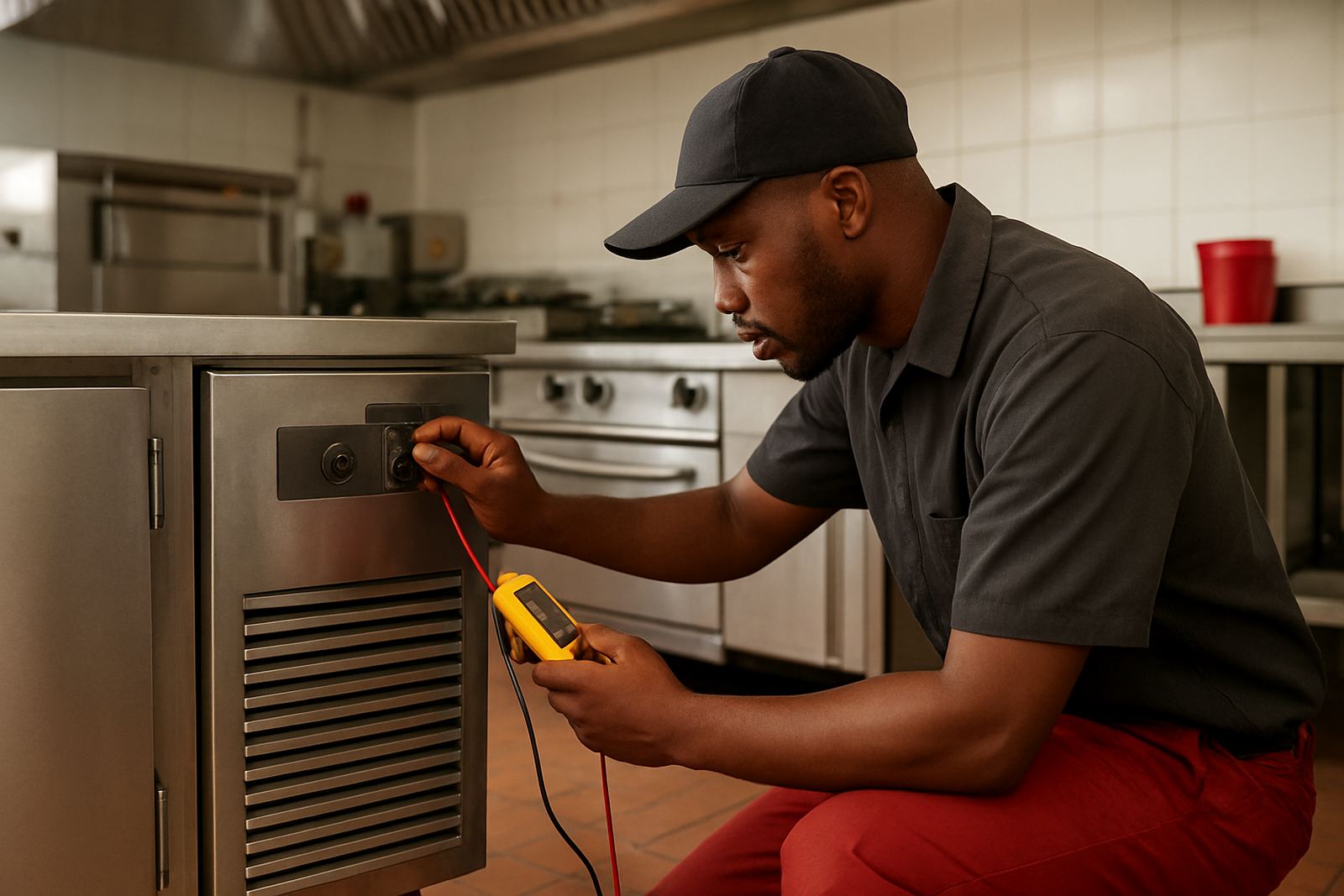
- Safety switch, isolator and circuit confirmation
Step-by-step handover from test run to sign-off
We follow a clear process so the client, contractor and kitchen team know what has been checked and what still needs attention. Priya Naidoo and Siyabonga Mkhize coordinate the start-up sequence, while Jared Pillay oversees the on-site checks with the installation team. If a supplier has delivered multiple items, we test them in the order they will be used in service, which keeps commissioning practical and avoids missed faults.
Typical commissioning starts with a site inspection, then isolation checks, then power-up and function tests. After that we confirm temperature pull-down, burner ignition, thermostat response, extractor draw and equipment fitment. Any snag items are recorded and discussed on site. We do not leave a kitchen with loose fittings, tripping hazards or equipment that has not been properly set. That is not good enough for a busy commercial operation.
- Pre-commission walk-through and utility confirmation
- Equipment energising and initial calibration
- Performance test under normal working settings
- Fault list and corrections where needed
- Final handover and user sign-off
Equipment we test and the specs we confirm
Commissioning covers the full kitchen package, not only the main line. We check cooking, prep, storage and wash-up equipment against the operating conditions on site. For example, refrigeration units are tested for pull-down time and temperature stability. Cooking appliances are checked for flame quality, heat response and even cooking. Stainless counters and shelving are checked for level, clearance and safe access. In a hospital kitchen or school canteen, even small faults can slow service, so the handover must be precise.
For most projects, we confirm practical specs such as voltage, phase, gas pressure, airflow rate, thermostat range and safe operating clearances. Where extraction is installed, we check canopy alignment, duct connections and fan direction. If equipment is linked to water, we test inlet pressure and drainage fall. These are simple checks, but they save a lot of call-backs later.
- Electrical supply: 220V single phase or 380V three phase, as specified on site
- Temperature checks: chillers typically 1 to 5 degrees C, freezers around minus 18 degrees C
- Gas checks: ignition, burner stability and shut-off control
- Extraction: canopy capture, fan rotation and duct continuity
- Clearances: service access, heat spacing and cleaning access
How long commissioning takes and what affects turnaround
Turnaround depends on kitchen size, utility readiness and the number of items to be tested. A small café kitchen may be completed in half a day once power, gas and water are live. A larger restaurant, hotel, hospital or production kitchen can take one to three days, especially if several refrigeration units, hot cupboards, dishwashing areas and extract systems must be checked together. If the site is not ready, we will say so upfront, because commissioning only works properly when the basics are in place.
Weather, municipal interruptions and access can also affect timing. In Durban, heavy rain can delay external duct work or final roof sealing, while in inland areas water pressure or power stability may need more attention. We schedule carefully around contractor handover, cleaning and staff training so the kitchen does not sit idle longer than necessary. That said, a rushed sign-off usually costs more in the end.
- Small kitchen: same day if services are ready
- Medium kitchen: 1 to 2 working days
- Large kitchen or institutional site: 2 to 3 working days
- Extra time may be needed for corrections, missing parts or utility faults
Pricing approach and what is included
Our pricing is based on the scope of the kitchen, the number of equipment items, site complexity and whether remedial work is needed during handover. A straightforward commissioning on a prepared site costs less than a project with missing plumbing points, electrical issues or extraction adjustments. We quote clearly, so you know whether the fee covers testing only, or testing plus minor adjustments and staff orientation.
Where possible, we bundle commissioning with installation and preventive maintenance planning so the client gets better long-term value. If a unit is found to be out of tolerance because of the supply, we report it and advise on the fix rather than pushing unnecessary repairs. That keeps the process fair and practical. You get a kitchen that works, not a list of surprises.
- Fixed pricing for smaller kitchens with confirmed utilities
- Project pricing for multi-zone kitchens and institutional sites
- Call-out pricing for re-commissioning after repairs or changes
- Clear separation between labour, parts and any remedial work
Maintenance intervals after handover
Commissioning is the start of the maintenance cycle, not the end of it. We recommend a first review after the kitchen has been in use for 2 to 4 weeks, because that is when filters clog, seals settle and staff routines start to show where adjustments are needed. After that, most busy kitchens benefit from quarterly checks on refrigeration, extraction and cooking equipment, with more frequent attention for high-volume sites such as hospitals and canteens.
In coastal areas like Durban North, Umhlanga and Ballito, stainless surfaces and electrical contacts should be inspected more often because humidity can shorten service life if cleaning and airflow are not kept up. In kitchens that rely on backup generators or load-shedding routines, we also check changeover behaviour and temperature recovery after power dips. A little maintenance now prevents costly downtime later, and it keeps the kitchen ready for service every day.
- First review: 2 to 4 weeks after opening
- Standard service interval: every 3 months
- High-use sites: monthly checks for refrigeration and extraction
- After power events: temperature and control reset check
Key facts
| Service area | Durban, Glen Anil, Durban North, Umhlanga, Pinetown, Ballito and Pietermaritzburg |
|---|---|
| Typical utilities checked | Electricity, gas, water, drainage and extraction airflow |
| Temperature verification | Chillers 1 to 5 degrees C, freezers around minus 18 degrees C |
| Turnaround | Half day to 3 working days, depending on kitchen size and site readiness |
| Handover output | Function test records, snag list, operating notes and user sign-off |
| Best timing | After installation and before first service, once all services are live |