Why canopy size starts with the cookline
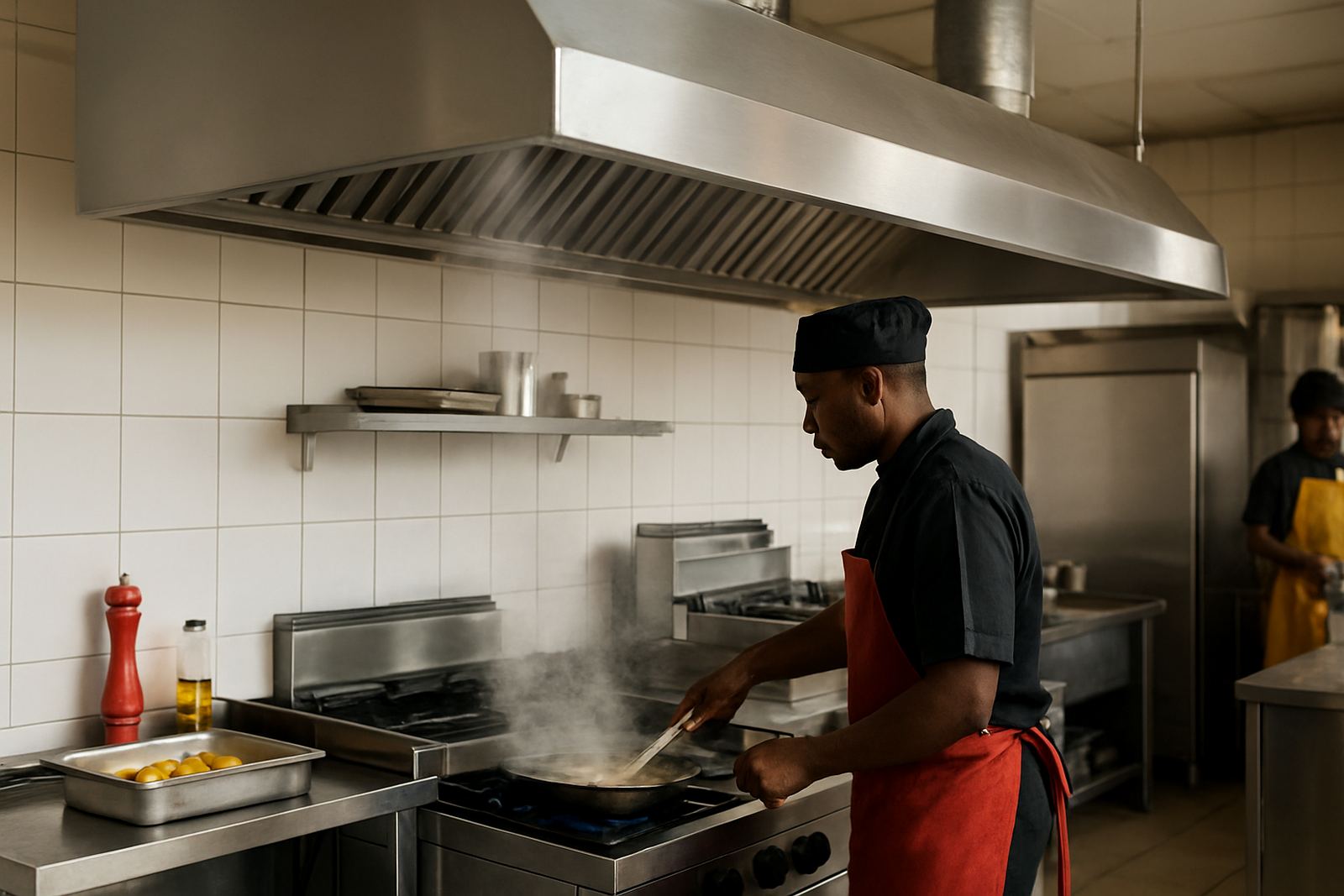
An extractor canopy should suit the actual cooking line, not just the room size. In a hard-working kitchen, the canopy has to catch steam, grease vapour and heat before they spread across the prep area or settle on walls and ceilings.
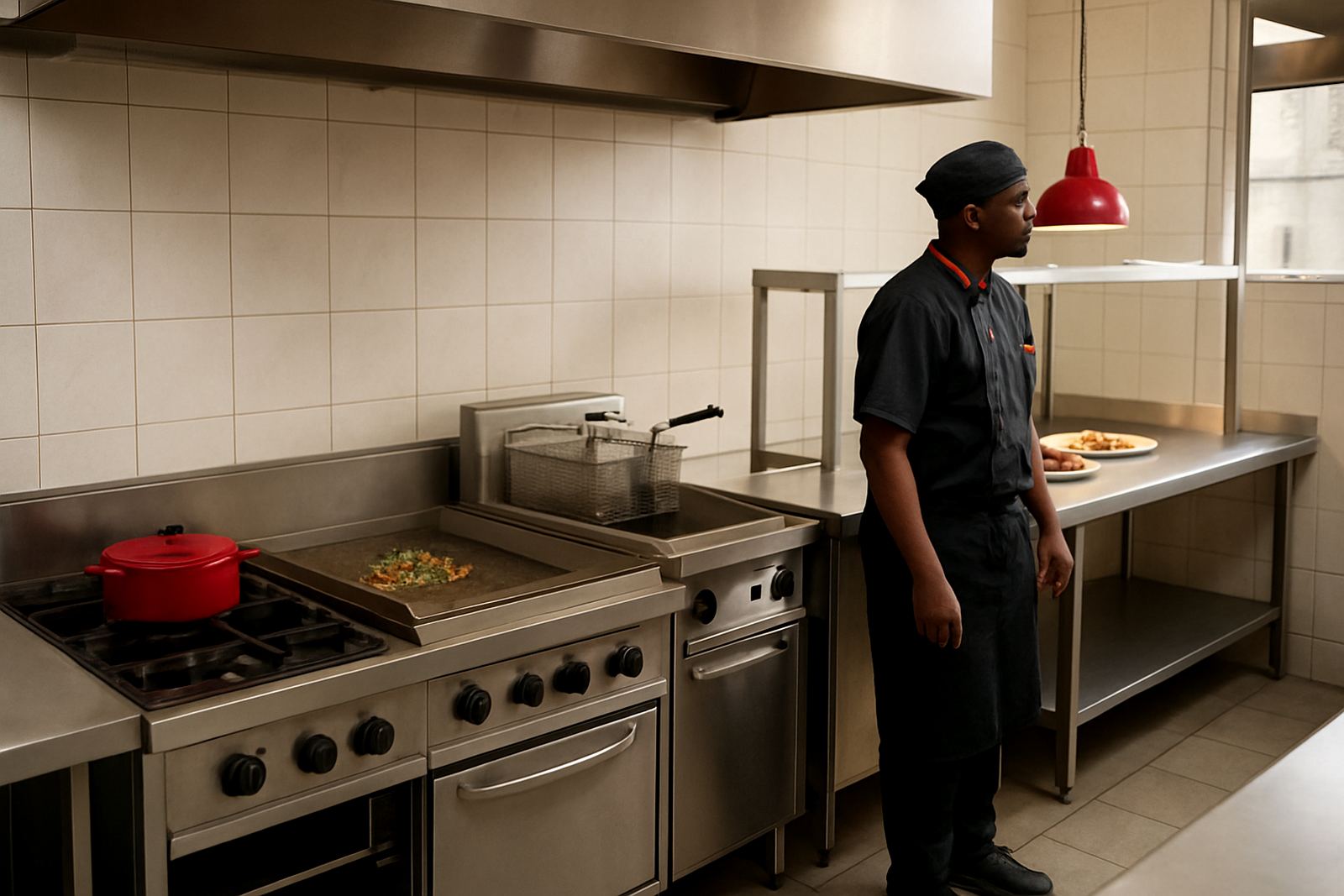
As a rule, the canopy should extend beyond the front and side edges of the equipment underneath it. If the canopy is too small, smoke escapes around the edges. If it hangs too low, staff bang into it and access becomes awkward. For most restaurant and canteen lines, the right starting point is to map the cookline first, then set the canopy length and depth to match the duty on each station.
In Durban, we also look at the conditions around the site. Coastal humidity, frequent door opening, and kitchens that sit close to loading bays all affect how air moves. A canopy that looks fine on paper can still struggle if the kitchen has no clear airflow path.
Airflow needs a balance, not just more suction
Many owners think stronger fans solve everything. In practice, too much extraction without enough incoming air can make a kitchen noisy, draughty, and hard to control. Doors start slamming, gas flames can flicker, and staff complain that the room feels like it is fighting itself.
The aim is balance. Extract air should remove heat and fumes, while make-up air replaces what leaves the building. That replacement air must enter in a controlled way, otherwise the canopy will pull from the nearest opening and leave the rest of the room stagnant.
- Check that make-up air enters away from the canopy opening where possible.
- Keep supply air filtered, especially near busy roads or industrial areas.
- Avoid dumping cold air straight onto cooks, pass areas or plated food.
- Allow for door openings, dish return points, and extract from adjacent prep spaces.
In a small Pinetown takeaway, for example, a canopy can work well over the fryer and chargrill, but the room still needs a planned air path from the front entrance or a side louvre. Without that balance, grease builds up fast and the kitchen feels hotter than it should.
What the canopy must remove in a busy service
Ventilation is not only for smoke. In kitchens doing breakfast, lunch and supper service, the system must also deal with steam from boiling pots, odours from grills, and fine grease mist from fryers and pans. These particles travel further than most people expect.
The canopy filters and ducting should be set up for the type of cooking below it. Heavy frying needs stronger grease capture and easier cleaning access. A pot wash area may need a different approach from a grill line. One size rarely suits every station.
- Use grease filters that can be removed and cleaned without tools where possible.
- Keep duct runs as straight as the building allows to reduce pressure loss.
- Plan access panels for inspection and maintenance.
- Make sure the discharge point does not blow odours back into neighbours windows or courtyards.
For hospitals and canteens, the standard is even higher. Large meal counts, long operating hours and strict hygiene rules mean the extraction system must stay clean and predictable, not just powerful on day one.
Local example: a Glen Anil kitchen that needed airflow fixed properly
We recently looked at a commercial kitchen near Glen Anil that had a common problem. The owners had a canopy over the cookline, but the room was still hot, and condensation was forming near the cold storage door. Staff had begun leaving the prep door propped open, which only made the airflow worse.
The issue was not just the canopy. The kitchen had extraction, but not enough planned replacement air. Once we mapped the layout, the cookline, pass, wash area and storage route, it became clear that the system was pulling air from the wrong places. We adjusted the extractor layout, added properly positioned make-up air, and improved the path between hot and cool zones.
The result was a more stable room temperature, less grease on nearby surfaces, and better working conditions during the lunch rush. That kind of fix matters in Durban, where humidity and heat can make a poorly balanced kitchen feel almost unworkable by mid afternoon.
Maintenance is part of ventilation, not an extra
A canopy that is not cleaned becomes a fire risk and a performance problem. Grease builds up on filters, inside ducting and around fans, which reduces airflow and puts strain on the motor. In many kitchens the issue creeps in slowly, so people only notice once smoke starts lingering or the room becomes stuffy again.
Preventive maintenance should be scheduled by usage, not just by date. A busy restaurant on the Durban North coast may need more frequent filter cleaning than a smaller staff canteen. If the kitchen runs through power cuts, the system also needs checking after load-shedding events because power surges and repeated restarts can affect controls and fans.
- Clean filters regularly and replace damaged ones.
- Inspect fans, belts, motors and fixings.
- Check for grease in ducting before it becomes heavy build-up.
- Test make-up air and extraction together, not in isolation.
Waiting until there is a breakdown costs more and interrupts service. A kitchen that is already under pressure can not afford another few hours without proper airflow.
Planning ventilation from the start saves money later
Good ventilation is best planned with the rest of the kitchen layout. If the cooker line, prep bench, cold room, dish area and waste route are all considered together, the extractor system can be sized and placed properly the first time. That avoids later patch jobs and keeps the installation neat.
Our team works across Glen Anil, Durban North, Umhlanga, Pinetown, Ballito and Pietermaritzburg, so we see how different sites affect the design. A beachfront kitchen in Umhlanga has different corrosion risks from an inland canteen in Pietermaritzburg. Stainless finish, duct routing and maintenance access all matter.
If the aim is a kitchen that stays cooler, cleaner and easier to run, the extractor canopy should be treated as part of the working layout, not an afterthought. Done properly, airflow supports the whole operation, from the first prep pan to the last clean-down.