Why the order of equipment changes service speed
Hot line sequencing is the order in which cooking equipment, pass areas, holding points and plating space sit along the production line. In a busy restaurant, hotel, hospital or canteen, the sequence matters as much as the equipment itself. If a fryer sits behind a griddle, or the pass is too far from the finishing station, staff end up turning, stepping back and crossing paths. That is where delays start.
A well-planned line supports a simple flow: prep comes in, cooking happens in a straight run, hot food is held briefly, then plated and sent out. The aim is not to cram everything into one wall. The aim is to place the right item in the right spot so the team can work fast without bumping shoulders. In Durban kitchens, especially where space is tight and humidity is high, that bit of planning makes a noticeable difference.
Start with the menu, not the machine list
The best sequencing starts with what the kitchen actually produces. A breakfast cafe in Umhlanga will need a different line from a school canteen in Pinetown or a hospital kitchen in Pietermaritzburg. If the menu is built around grills, eggs and toasted items, the line should favour quick access to dry heat and a short pass. If the operation leans on sauces, stews and bulk holding, then boiling, simmering and hot holding need better positioning.
Before equipment is selected, it helps to answer a few practical questions:
- Which dishes are made every hour and which are peak-time only?
- What items must be plated together, and what can sit briefly in holding?
- How many staff work the line at one time?
- Where does the clean-up route start, so dirty returns do not cross the hot food path?
- Will the line need to cope with load-shedding backup equipment or gas-first operation?
Those answers shape the order. If the menu is heavy on fried foods, the fryer should sit near the service end with a clear landing space. If the team does lots of final garnish work, the pass and plating area need to be protected from heat and steam so staff can work without hurrying or reaching across burners.
A practical cookline sequence that usually works
There is no single layout that suits every kitchen, but a reliable sequence often runs from heat generation to finishing in a clean line. Prep and cold storage feed the line from the back of house, then the cookline begins with primary cooking equipment, followed by secondary finishing equipment, then holding and pass. That keeps the movement one way and reduces backtracking.
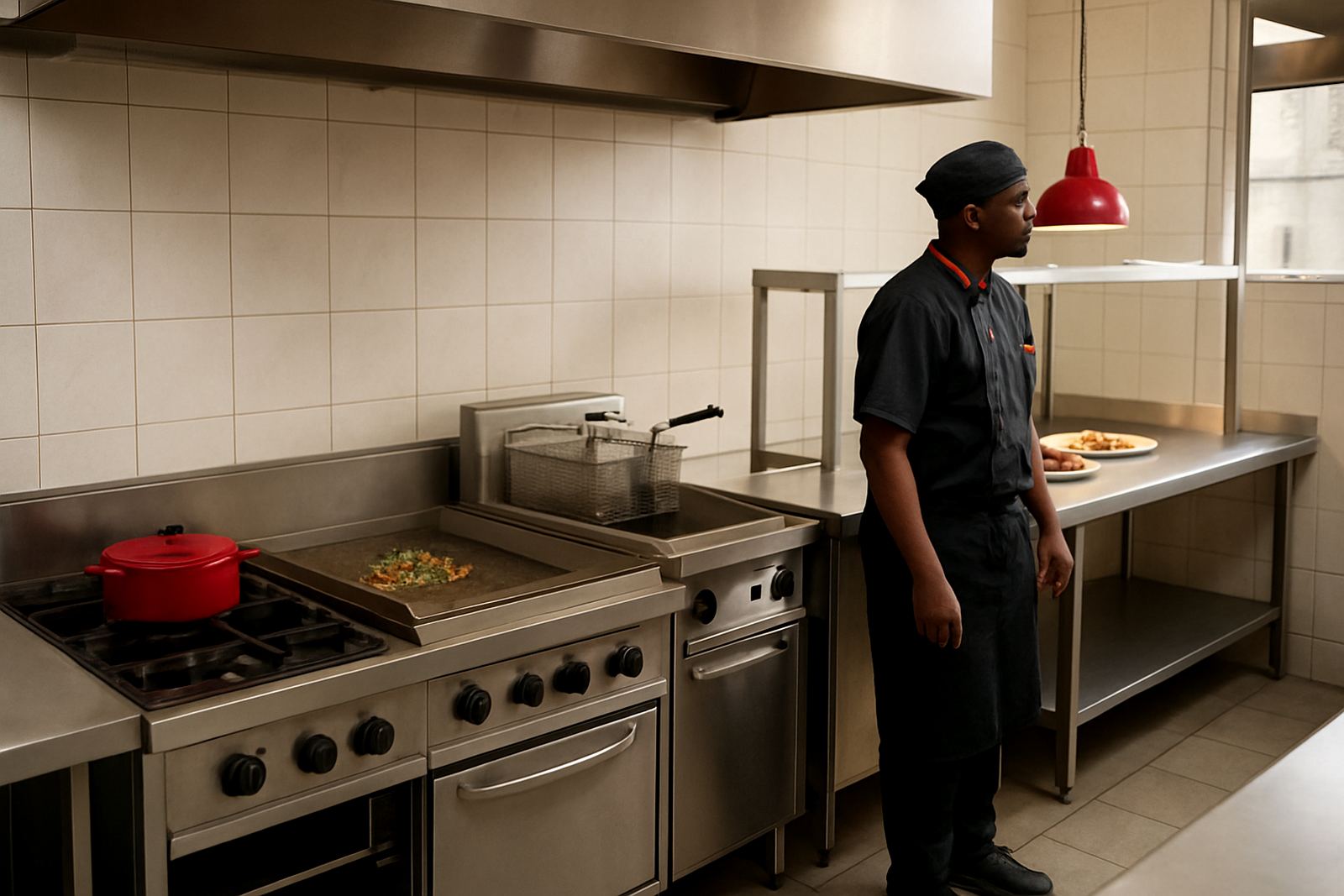
A simple sequence often looks like this: preparation table, primary cooker or fryer, grill or oven, finishing station, hot holding, then service pass. In some kitchens the fryer sits before the grill, in others the order changes based on menu pressure. The key is that each station should support the next one without forcing staff to cross over. If a cook has to leave the hot line just to reach a garnish shelf, the line is already losing pace.
- Place heavy-use equipment where the main operator stands most of the time.
- Keep the service pass close enough for quick transfer, but not so close that heat loads build up.
- Leave enough counter for pans, trays and plating, not just for the machines.
- Allow a clear route for service trolleys or tray movement where needed.
In coastal kitchens, stainless surfaces and correct extractor planning matter too. Steam, salt air and grease build-up can make a cramped line harder to manage, so spacing and ventilation should be considered together.
Avoid the common crossing-path mistakes
Most problems come from treating the kitchen as a row of machines rather than a working system. A line can look neat on paper and still fail during service because the operator must twist round every few seconds. One of the biggest errors is placing prep and finishing in the wrong order, which forces raw items and cooked items to share the same movement path. Another mistake is putting storage so far away that staff spend half the shift walking.
Watch for these warning signs:
- Cooks are turning their backs to the line to fetch tools.
- Plated food passes behind raw prep areas.
- Two staff members need the same narrow gap at the same time.
- Hot trays are being parked on random surfaces because the holding point is too small.
- Steam, heat or smoke is drifting into the pass and slowing the team down.
When these issues show up, the answer is usually not more equipment. It is a better order, a clearer landing space, or a small shift in the position of the extractor canopy or pass. That kind of fix often improves service more than adding another appliance.
How hot line sequencing supports safety and maintenance
A good sequence does more than speed up service. It also lowers the chance of slips, burns and unnecessary strain. If staff do not need to cross behind one another with hot pans, there is less chance of collision. If the sequence is logical, new workers learn faster and make fewer errors on a busy shift. In canteens and hospital kitchens where different team members rotate, that is especially important.
Maintenance is easier too. When equipment is laid out with service access in mind, filters can be reached, drip trays can be cleared and breakdown repairs are less disruptive. If the hot line is jammed tight against a wall, even a small fault can shut down half the row. We often plan for enough front access and side clearance so the line can be cleaned and checked without pulling everything apart. In KwaZulu-Natal, where power interruptions and humid conditions can put pressure on equipment, that practical access saves time later.
A Durban example: keeping breakfast service moving
At a Durban North restaurant serving hotel breakfasts and all-day meals, the original cookline had the grill, fryer and pass arranged in a way that forced staff to move in a loop. During the morning rush, eggs were crossing behind fried items, toast was landing too far from the plating point and one operator had to keep stepping out of the line to reach sauces. The kitchen was busy, but not in a controlled way.
After a site survey, the sequence was adjusted so the grill and fryer fed into a short finishing zone, with the pass placed where the plating team could work directly from the hot side. Small changes were made to counter depth and landing space, and extractor planning was tightened to deal with the steam and heat load. The team did not get more equipment, just a better order. Service became steadier, the staff stopped crossing paths as often and the morning shift felt less rushed.
That is usually the point of hot line sequencing. It does not try to make the kitchen bigger. It makes the kitchen work in the right order, which is often the difference between coping and falling behind.