Why holding matters once the pans leave the stove
In a restaurant, hospital kitchen or canteen, the hardest part is not always cooking the meal. It is keeping it safe and presentable until the last plate goes out. If food sits too long, steam softens crisp items, sauces split and staff start reworking trays just when the rush is at its worst.
Good holding methods help a kitchen bridge the gap between production and service. That matters in Durban where lunch peaks can be sharp, power interruptions are common in some areas and humidity works against food quality. The aim is simple: hold food at the right condition for the right time, with as little waste as possible.
A proper plan also helps staff move with less pressure. Instead of crowding the pass and guessing whether an item is still good, the team knows where each dish should sit, how long it can stay there and who is checking it. That kind of control saves money, and it keeps standards steady from Glen Anil to Pietermaritzburg.
Hot holding for meals that must stay ready to serve
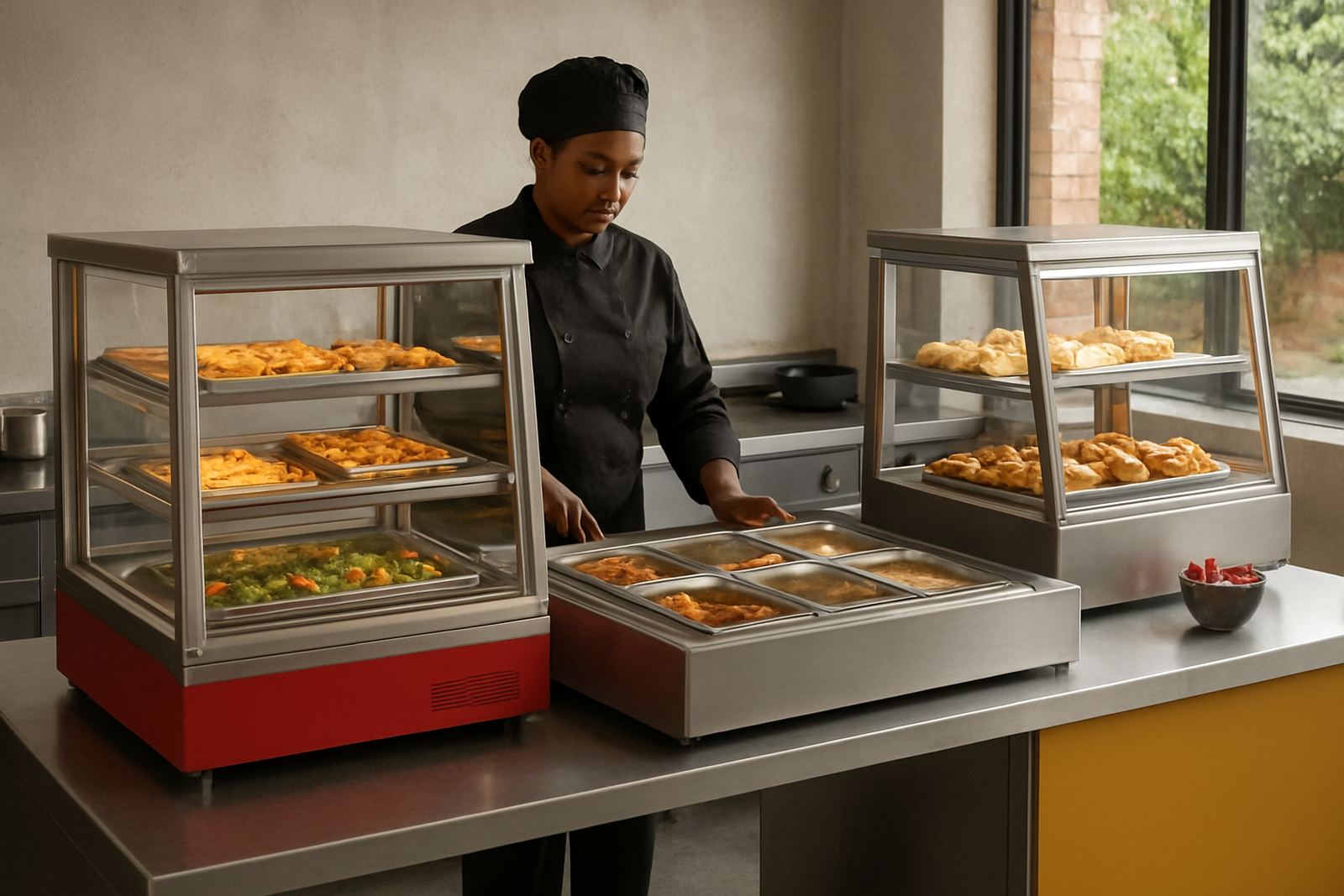
Hot holding is used for cooked food that will be served shortly after preparation. It suits soups, stews, sauces, rice, vegetables and plated meals that need to stay hot without overcooking. The key is to hold food at a safe temperature while keeping moisture and texture under control.
Common hot holding equipment includes bain-marie units, heated pass stations, hot cupboards, heat lamps and insulated transport containers. The right choice depends on the menu and the service style. A canteen doing large volumes needs different holding than a small restaurant with made-to-order plates.
- Use shallow pans where possible so heat moves through evenly.
- Stir wet dishes regularly to stop hot spots and skin forming on top.
- Do not top up old food with new batches unless your procedure allows it.
- Cover items where practical, but leave enough access for staff to serve quickly.
- Check temperatures at set intervals, not only when something looks cold.
In coastal kitchens, stainless equipment and covered holding points also help reduce corrosion and spoilage from the damp air. If a kitchen is close to the harbour or on the North Coast, that extra attention can make a noticeable difference over time.
Chilled holding for salads, dairy and prepped ingredients
Chilled holding is the other side of the same coin. It keeps ingredients and finished cold dishes within a safe temperature range until they are needed. This is important for dairy, cut fruit, mayonnaise-based items, desserts and prepped ingredients waiting for assembly.
Under-counter fridges, upright fridges, prep counters with refrigerated wells and display chillers all play a part. The main rule is that the equipment must recover quickly after frequent door openings. In a busy line, a fridge that looks cold on the outside can still struggle once staff keep reaching in every few minutes.
For chilled holding, the practical checks are often more important than the brochure figures:
- Keep doors closed as much as possible during service.
- Do not overload shelves, because cold air needs space to move.
- Stage ingredients in the order they will be used.
- Defrost and clean units regularly so airflow is not blocked.
- Separate raw and ready-to-eat foods to prevent cross contamination.
Hospitals and canteens especially benefit from a clear chilled holding layout. When the team knows exactly where each tray sits, there is less searching, less opening and closing and fewer mistakes during a rushed service.
Pass-line timing is as important as the equipment
Many kitchens spend on holding equipment but still lose quality because the timing at the pass is wrong. The pass-line is where food leaves production and meets service. If meals arrive too early, they sit and dry out. If they arrive too late, the front of house or ward staff start chasing the kitchen and everything feels disorganised.
The answer is to work backwards from the service time. Decide how long each item can sit safely and still look good, then build prep and cooking around that window. A plated breakfast service, for example, needs a much tighter sequence than a lunch buffet that runs for two hours.
One useful method is to assign a hold time target for every menu item. That target should reflect the dish itself, the equipment used and the customer flow. Crispy items need shorter windows. Soups and curries can cope with longer holds if stirred and monitored properly. Fresh garnish should often be held separately and added at the last moment.
When the pass is planned properly, staff spend less time calling back and forth across the kitchen. The result is calmer service and food that reaches the customer in better condition.
Matching holding equipment to your menu and volume
There is no single holding method that suits every kitchen. A sandwich bar in Umhlanga, a school canteen in Pinetown and a hospital line in Durban North each have different needs. The right setup depends on what you serve, how fast you serve it and how much space you have.
As a starting point, ask these practical questions:
- Which dishes must stay hot, and which must stay cold?
- How many portions are held at once during the busiest hour?
- How often do staff open the unit during service?
- Will the equipment sit in a dry kitchen, a humid prep room or a customer facing pass?
- Does the site need mobile units for functions or only fixed installation?
Layout matters just as much as the unit itself. If the holding point is too far from the cooking line, food spends too long in transit. If it sits in a narrow corridor, staff knock trays and block each other. Good kitchen design places holding where the service flow is natural, not where there is simply a spare wall.
Local conditions in Durban change the way kitchens hold food
KwaZulu-Natal kitchens have to plan for heat, humidity, power cuts and fast changing service peaks. That means holding systems need to be practical, not just neatly specified on paper. Load-shedding can affect refrigeration recovery, while coastal air can make metal surfaces sweat and corrode if equipment is not selected and maintained properly.
For operators in Ballito, Glen Anil, Durban North and the greater Durban area, preventive maintenance is part of food holding. Door seals, thermostat settings, fan motors and heating elements all need checking. A unit that is a little off today can become a food loss problem by the weekend.
A local example is a canteen serving 300 lunches in Pietermaritzburg. The kitchen may cook in batches, hold soup in heated wells and keep salads in a separate chilled section. If service slips by even 15 minutes, the team needs enough holding capacity to cover the delay without dropping quality. That is where layout, equipment and staff timing must work together.
Simple habits that keep holding systems under control
Even the best holding setup fails if the daily routine is weak. Staff training should cover temperature checks, tray rotation, cleaning and what to do when a unit starts underperforming. It does not need to be complicated, but it does need to be consistent.
Good habits include logging temperatures at the start of service, checking door seals for wear, wiping spills before they harden and removing any food that has passed its safe hold window. If a unit is slow to recover after a door opening, it should be serviced before it affects the next rush.
In practice, the kitchens that manage holding well are the ones that treat it as part of service planning, not an afterthought. When hot holding, chilled holding and pass-line timing are aligned, the whole operation runs better. Food looks better, waste drops and the team works with more control.