
Start with zones that match the way stock moves
Most stock rooms fail because they are packed by habit, not by use. The best layout starts with zones that follow the flow of goods from delivery to storage to issue. Keep the most frequently used dry goods close to the door or the point where staff collect items for prep, and push slower-moving bulk stock further back. That simple split cuts down on walking, double handling and items getting buried behind older stock.
In Durban kitchens, especially where deliveries come in through a shared service passage or a narrow side entrance, order matters even more. A room that is neat on paper but awkward in use quickly becomes a bottleneck. Leave enough space for a trolley to turn, stack safely and allow staff to read labels without having to move three other boxes. A good rule is to plan the room around movement first, then shelving, not the other way round.
- Keep daily-use stock at waist height where possible.
- Put reserve stock on upper or lower shelves, clearly labelled.
- Mark floor areas for pallets, crates and returns.
- Leave a clear route to the door so deliveries do not block issue points.
Dry goods need cool air, clean shelves and first-in-first-out control
Dry stores often look tidy at first glance, but the real test is condition. Rice, flour, sugar, pasta and tinned goods should sit off the floor on shelving that allows air to move underneath. In coastal areas, humidity is a real concern, and a closed-up room can hold heat and moisture long after the rest of the building has cooled. That is when bags start clumping, cardboard softens and labels peel off.
Use shelving that can be washed down and does not trap dust. Avoid stacking directly against walls because that can hide damp spots and pest activity. For best control, make stock rotation visible. New deliveries should go behind older stock, not on top of it. If a product has a use-by date, the date needs to be easy to see from the front of the shelf, not only when the box is opened. That sounds small, but it makes stock checks much quicker during a busy week.
- Store flour and grains in sealed containers where possible.
- Group items by category, not by supplier.
- Use clear shelf labels for opening stock and reserve stock.
- Check for damp, broken packaging and pest trails every week.
Smallwares should be arranged by task, not scattered by size
Smallwares are where a lot of time gets lost. Lids, pans, tongs, trays, knives, measuring jugs and serving spoons can end up in one mixed pile if the room has no system. The answer is to group them by task. Prep items should sit together, cooking items together, plating items together and service items together. When staff know where to reach for a specific tool, they work faster and put things back in the right place.
For larger operations, separate clean smallwares from items waiting for wash-up or repair. A holding shelf for damaged or missing items helps supervisors track what is short and what needs replacing. If the same spoon set keeps disappearing, the problem is usually storage, not purchasing. Better sorting can save a fair bit over a year, and it reduces the morning rush when the first shift is trying to get ready for service.
- Use labelled bins or baskets for loose tools and accessories.
- Hang frequently used utensils where staff can reach them safely.
- Keep sharp items in a dedicated, secure section.
- Separate front-of-house service ware from back-of-house prep stock.
Cleaning materials need their own controlled corner
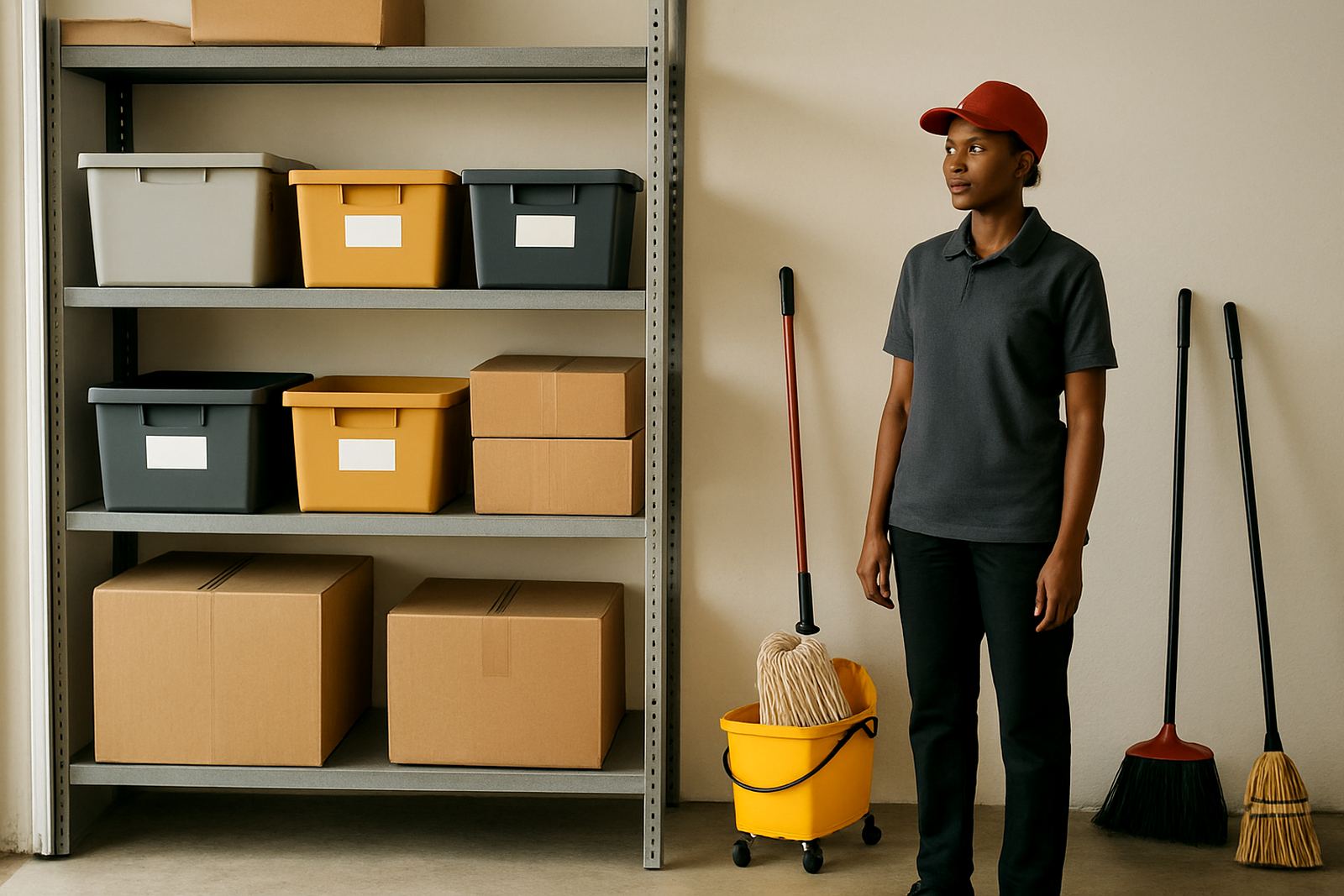
Cleaning chemicals should never sit beside food, packaging or cookware. They need their own locked or clearly restricted section, ideally with spill control and a shelf setup that keeps heavy containers low down. In some kitchens the cleaners are stored wherever there is a gap, but that is risky and messy. Mixing cleaning stock into the main store also makes it harder to monitor usage and can lead to waste or confusion when new staff are on duty.
Keep brooms, mops, cloths, sanitiser, gloves and spare buckets together, but separate from concentrated chemicals. If a product leaks, the area should be easy to clean and not damage shelving. In areas where water pressure drops or load-shedding interrupts routine cleaning, staff often end up doing rushed mop-ups at odd hours. A sensible stock room layout helps them work safely even when the schedule changes. It also makes compliance checks easier when managers or health inspectors come through.
- Store chemicals in original containers with labels intact.
- Keep absorbent materials nearby for spill response.
- Use a signed-out system for restricted items.
- Never place cleaning stock above food or clean equipment.
Build the room for Durban conditions and daily deliveries
Stock rooms in Durban and surrounding areas have to deal with coastal humidity, heat, and the odd supply delay. That means the room needs practical finishes, not decorative ideas. Good ventilation, washable surfaces and shelving that stands up to moisture are worth far more than a crowded room with extra boxes stacked in the aisle. Where power cuts affect cold rooms or adjacent prep areas, stock should still be able to sit safely for short periods without blocking access or putting pressure on other departments.
For kitchens in Glen Anil, Umhlanga, Pinetown or Ballito, a stock room also needs to work with the building itself. Some sites have narrow lifts, tight loading areas or old service passages that affect how goods are received. If the store is planned around these limits, staff can move stock quickly without damaging packaging or holding up the kitchen. In Pietermaritzburg, where some sites have more space but longer internal travel, the priority is often reducing walking distance between the store and the prep line.
A good stock room saves time, waste and arguments
When the stock room is ordered properly, everyone feels the difference. Buyers can see what is running low, chefs can find what they need, and cleaners are not guessing where chemicals were left. That makes audits easier too, because missing items and over-ordering stand out quickly. In one Durban canteen we worked around, a simple change in shelf zoning and label placement cut the morning stock search time from a scramble to a five-minute check. Nothing fancy, just clear sections and proper sign-off.
The real gain is consistency. Staff changes, busy weekends and supplier delays all happen. A stock room that is planned properly still holds its shape through those pressures. If you are setting up a new store or reworking an old one, start with the daily path of the staff who use it most. When the room suits that rhythm, order lasts longer and the kitchen runs better.