Why cold chain habits matter before the door closes
Most refrigeration problems in commercial kitchens start before the equipment has a chance to do its job. If chilled goods arrive warm, if doors are left open too long, or if product is packed against the wall of a fridge, the system works harder and the food stays in the danger zone for longer. That means higher power use, more wear on compressors and a greater chance of product loss.
In Durban, this is not theory. A delivery can sit on a loading bay in 30 degree heat while the receiving team checks invoices or waits for a trolley. In a busy canteen at lunchtime, half a minute with a door open can happen ten times in a row. Add coastal humidity and power interruptions, and the margin for error gets smaller.
The cold chain starts at receiving, not in the fridge. That is the point where a good kitchen either protects its stock or lets the temperature creep up. Keep this in mind: refrigeration is designed to hold temperature, not rescue badly handled stock.
Receiving stock the right way in Durban heat
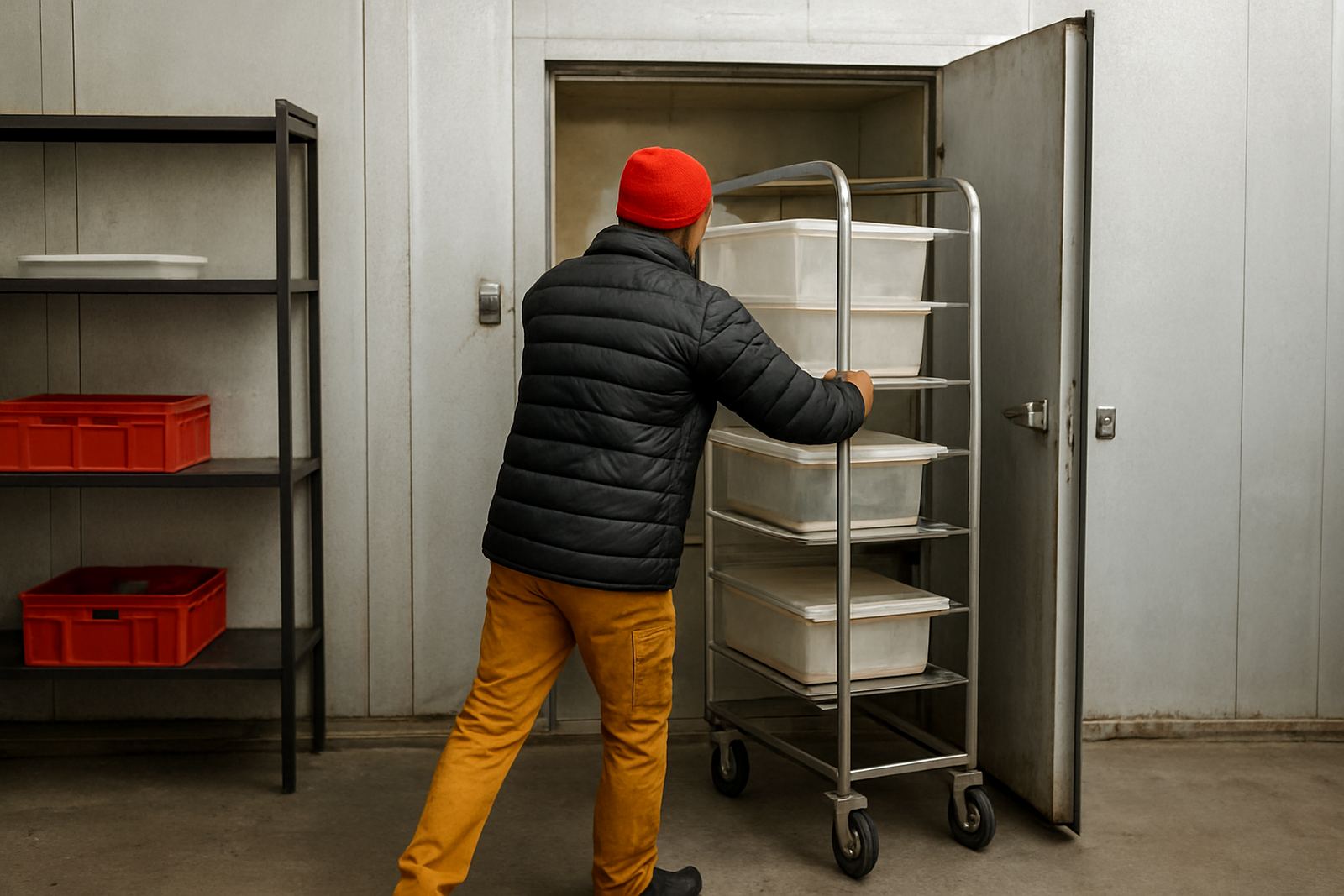
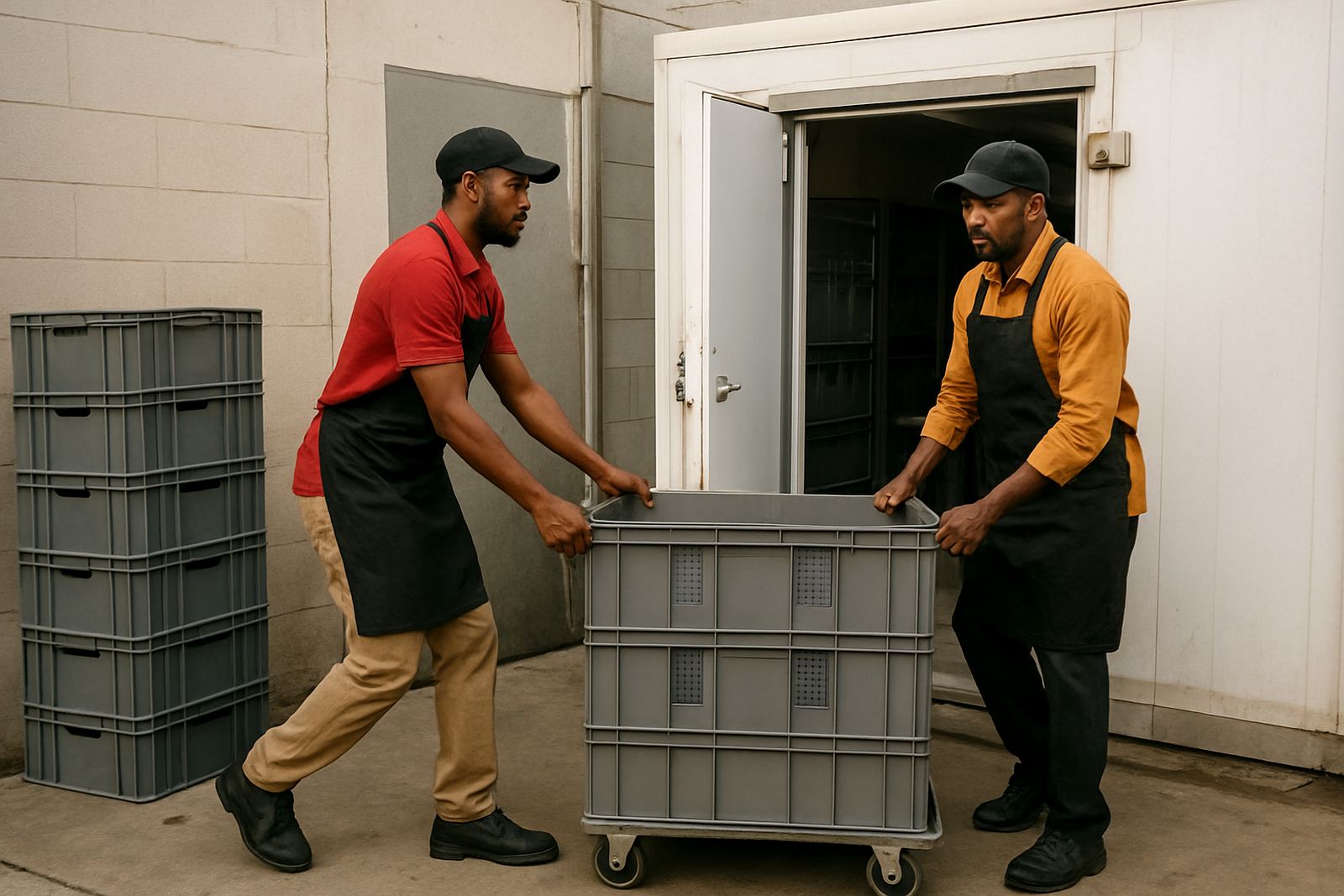
Receiving should be organised so that chilled and frozen goods are checked and moved first. If the kitchen has one entrance for goods and waste, make sure the path is clear and the receiving team knows which items must go straight to cold storage. A simple rule helps: the shorter the time on the floor, the better the shelf life.
- Check delivery times and reject stock that arrives with broken seals, damaged cartons or obvious thawing.
- Use a probe thermometer on random items, especially dairy, meat, poultry and prepared meals.
- Put cold goods away before counting dry stores or signing paperwork.
- Do not leave cartons blocking the fridge door while you sort stock.
In many KwaZulu-Natal kitchens, the receiving area is also the prep area. That makes discipline even more important. A crate of chilled chicken left under prep lights for 20 minutes can raise the product temperature enough to affect the rest of the day. Staff training here pays off quickly because it protects both food safety and refrigeration performance.
Storage layout that helps the equipment, not fights it
Cold rooms, upright fridges and undercounter units all need space to breathe. If air vents are blocked by boxes, if shelves are packed too tight, or if food is pushed against the back panel, cold air cannot circulate properly. The machine then cycles longer, which can lead to uneven temperature, icing and early breakdowns.
Good storage layout is not complicated. Use clear zoning, keep food off the floor and leave service space around the equipment. In a hospital kitchen, this is also a hygiene issue because stock must be easy to rotate and clean around. In a restaurant, it is about speed. When chefs can find items quickly, doors stay open for less time.
- Leave at least 75 mm to 100 mm clear space around vents and fan grilles where possible.
- Store high-turn items at easy reach, and rarely used stock lower or higher.
- Keep raw and ready-to-eat foods separate to reduce contamination risk.
- Label shelves with dates so stock rotation is visible at a glance.
Humidity near the coast can also cause condensation on doors and shelving, so wipe-down routines matter. Wet surfaces encourage rust on poor-quality fittings and can make packs slip when staff are moving fast. Stainless shelving and proper door seals help, but only if the storage habits are sound.
Prep-room behaviour that protects holding temperatures
Food prep is where refrigeration often gets tested the hardest. Ingredients come out of storage, sit on worktables, get portioned, and then wait to go back into a fridge or onto a hot line. If the prep flow is not planned, cold food can spend too long in the open. That affects quality and can force the refrigeration plant to recover from repeated warm-ups.
Plan prep in batches small enough to keep product cold. Use lidded gastronorm pans where suitable, and return unused stock to the fridge quickly. Do not stack warm containers directly into a cold cabinet, because one hot pan can raise the air temperature and make the unit work harder for hours. Let cooked food cool correctly before storing it, and make sure the cooling area is separate from raw prep.
In a busy Pietermaritzburg canteen serving several hundred meals, that kind of routine saves time later. It also keeps the team from opening the fridge every few minutes for a fresh handful of ingredients. Small habits like that make a measurable difference to compressor load and food quality.
Load-shedding, back-up planning and temperature control
When power cuts happen, the cold chain depends on preparation. A well organised fridge can hold temperature longer than an overfilled one that is opened often. Staff should know which doors stay shut, which items move to a back-up unit, and what to do if the outage goes on longer than expected.
For Durban kitchens, this is especially important because short outages can happen several times a week. If a generator or inverter is available, it still needs load planning. Not every unit can start at once. Condensers, freezer packs, alarm systems and lights all place demand on the supply. A practical plan avoids guessing during a cut.
- Keep fridge doors closed during outages unless stock must be moved.
- Write down safe holding times for chilled and frozen goods.
- Use thermometers with visible readings so staff do not have to open doors to check conditions.
- Service seals, fans and condensers regularly so the unit recovers faster after power returns.
A common mistake is to chase the problem with more product inside the fridge. Overfilling after a power cut can trap warm pockets and slow recovery. It is better to split stock across units, even if it means a little extra walking for the team.
When equipment size and layout are the real issue
If a kitchen keeps struggling with temperature swings, the answer is not always a bigger compressor. Sometimes the receiving area is too small, the prep table is in the wrong place, or the fridge doors open into a hot pass. A poorly planned layout forces staff into slow, awkward movements that break the cold chain all day.
At KZN Catering Equipment, we see this often in older Durban sites where a restaurant, clinic or school kitchen has grown around the original room. New fridges get added one at a time, but the workflow never changes. That is when equipment starts to look faulty even when the root cause is process.
A proper site survey can show whether the kitchen needs a different storage plan, better extractor placement, more suitable refrigeration sizes or a better route from receiving to prep. In some cases, a simple change like moving the prep station closer to cold storage reduces door openings enough to improve performance straight away. In one Glen Anil project, a canteen was losing product every second week because chilled deliveries waited beside a dishwash area. After the receiving route was changed and the storage order was reworked, the problem dropped away almost at once.
Simple checks to keep the cold chain steady
Cold chain management is a daily habit, not a once-off fix. A kitchen that checks temperatures, keeps doors shut and trains staff properly will get better life from its refrigeration equipment and fewer surprise repairs.
- Record fridge and freezer temperatures at set times each day.
- Clean door seals, drains and condenser areas on a schedule.
- Review receiving times, especially after late deliveries or heavy traffic delays.
- Train new staff on what must go straight into storage and what can wait.
For businesses in Glen Anil, Durban North, Umhlanga, Pinetown, Ballito and Pietermaritzburg, these basics are practical insurance. The less time food spends out of control, the less pressure on the equipment and the lower the chance of waste. A good cold chain is not only about keeping things cold, it is about keeping the whole kitchen moving in the right order.