Why oven loading affects the finish on every tray
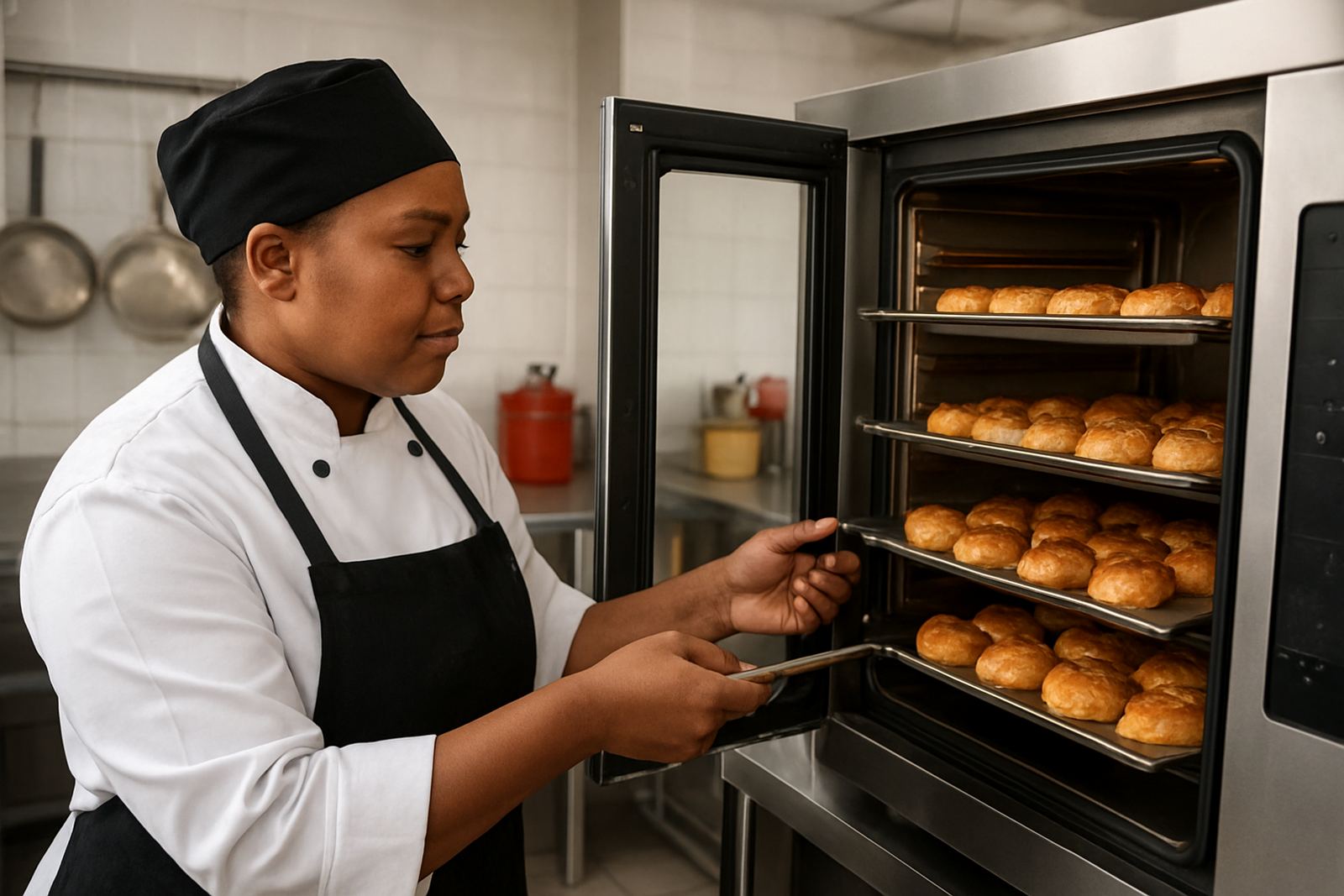
In a commercial kitchen, an oven is not just a hot box. It depends on airflow, heat recovery and tray position to cook food evenly. If the oven is packed too tightly, the hot air cannot move around the product properly, so one tray browns faster while the next stays pale in the middle. That usually leads to extra checking, more door opening and a longer service.
In Durban kitchens, where humidity and coastal air can already affect product handling, loading habits matter even more. A tray of chicken portions, pastries or prepped vegetables needs space around it so heat can reach all sides. If the oven is used for different items in the same service, good loading also helps reduce flavour transfer and uneven finish.
Set tray spacing before the rush starts
Tray spacing should be planned as part of the kitchen layout, not sorted out on the fly when orders pile up. If your oven racks are too close together, the top trays can shield the lower ones from heat. On the other hand, if there is too much space and the oven is only half used, you may waste energy and still get patchy results because the load is uneven.
- Leave enough gap for air to move around each tray, usually at least one rack space where possible.
- Do not push trays against the rear wall or the side panels.
- Use the middle shelves for most items, unless the recipe calls for a top or bottom heat bias.
- Keep heavier dishes on lower racks so the load stays balanced and safe to remove.
A practical rule is to load by product type and cooking time. Fast items should not sit under slow items that need longer and more even heat. If the oven is constantly opened to remove one tray at a time, the temperature drops and the rest of the load takes longer to recover.
Load from lightest risk to heaviest output
How you load the oven can be just as important as what you load. Start with the trays that are most sensitive to colour and texture, then build the rest of the schedule around them. Pastries, frozen-to-bake items and delicate fish portions often need more careful shelf placement than casseroles or roasted vegetables.
For many canteens and hospitals, batch cooking is the main issue. Food is often prepared in larger volumes and held for service, so the oven has to perform consistently from the first load to the last. That means following the same loading order every day, not changing it because a staff member is in a hurry. It sounds simple but it prevents a lot of waste.
- Put evenly sized items together on the same rack.
- Separate wet products from dry or crumbed items where possible.
- Rotate trays if the oven has hot spots, especially near the door.
- Use a timer and a written loading sequence so the team follows the same method.
Keep doors, seals and timings under control
Every time the oven door opens, heat escapes and the recovery period starts again. In a busy restaurant or school kitchen, that can add up quickly. A staff member checking trays too often may think they are being careful, but the result is often uneven cooking and a longer service window. Better to check at set times and only open the door when needed.
Door seals, hinges and latches should also be checked during routine maintenance. If the door does not close properly, the oven loses heat at a steady pace and the bottom trays are usually the first to suffer. In coastal areas like Glen Anil, Umhlanga and Ballito, salt air and humidity can speed up wear on metal parts, so regular inspections make sense.
- Check the seal for cracks, flattening or loose sections.
- Make sure shelves and runners are level and secure.
- Keep the area around the oven clear so trays can be loaded fast.
- Do not overload the door with trays while changing product.
Match the oven to the workload, not the other way round
If the oven is always overfilled, the issue may not be loading technique alone. It may be the wrong oven size or the wrong style of oven for the workload. A kitchen serving a hospital wing in Pietermaritzburg will have different requirements from a café in Durban North or a canteen in Pinetown. The volume, product mix and service pattern all affect what oven setup will actually work.
That is why kitchen planning should include equipment specification, not just a purchase list. When the oven is matched to the menu and the peak service time, loading becomes easier and the results are more consistent. It also helps with electricity planning during load-shedding and recovery periods, because a kitchen that relies on steady batch production cannot afford unnecessary downtime.
Train the team to load the same way every shift
Good oven loading should be a habit, not a guess. If three different staff members use three different methods, the kitchen will never get repeatable results. The team needs to know which rack is used for which product, how full the oven may be, and when trays are rotated or swapped. Short staff training sessions make a real difference because they cut down on avoidable errors.
For a Durban operation, this can be the difference between passing a busy lunch service and dealing with burnt edges, raw centres and wasted stock. Once the loading pattern is set, it should be written into the kitchen routine and followed every shift, even when the rush starts. Consistency is what gives you even cooking, not luck.
- Show the team the preferred loading pattern for each menu item.
- Keep a simple chart near the oven for shelf use and rotation times.
- Review common faults after service, such as overbrowning or slow centre heat.
- Adjust loading habits when menu volumes change seasonally.