
Start with the scope, not the shopping list
The fastest way to blow a budget is to price loose items before you have a clear scope. Start by listing what the kitchen must do each day, how many meals you must produce, and whether the space is for cooking, holding, wash-up, cold storage or all four. A 60-seater café in Durban North will need a very different setup to a 250-bed hospital kitchen in Pietermaritzburg.
Once the output is clear, the budget can follow the work flow. That means checking where raw food comes in, where prep happens, where hot food leaves the pass, and how waste moves out. It also means allowing for local matters like extractor routes, grease management and any landlord or municipal requirements. A neat budget starts with measurements, not guesses.
- Daily meal numbers
- Menu type and cooking method
- Space available in metres
- Power, water and drainage points
- Load-shedding backup needs
For many projects, the first site visit saves more money than it costs. A good survey can show that one store room needs to be moved, a floor drain is in the wrong place, or the extractor duct will need a longer run. Those changes affect budget early, and it is better to know that before equipment is ordered.
Separate equipment cost from project cost
Equipment pricing is only one line on the budget. The real project cost also includes delivery, rigging, installation, stainless work, electrical or plumbing changes, and commissioning. A kitchen can look affordable on paper and still run over once the hidden items are added. That is why each line should be priced separately.
For example, a refrigeration unit may be straightforward on its own, but if the site has weak ventilation, poor drainage or a coastal corrosion risk, the support items rise. In Glen Anil, Durban North and Umhlanga, humidity and salt air can shorten the life of exposed parts, so the specification should reflect that from day one.
- Cooking equipment
- Refrigeration and cold rooms
- Preparation tables and sinks
- Extractors and ducting
- Electrical, plumbing and gas connections
- Delivery, offloading and positioning
When comparing options, ask what is included and what is not. A cheaper unit without proper support may cost more over 12 months if it needs extra repairs or uses more power during load-shedding interruptions.
Allow for stainless fabrication and site work
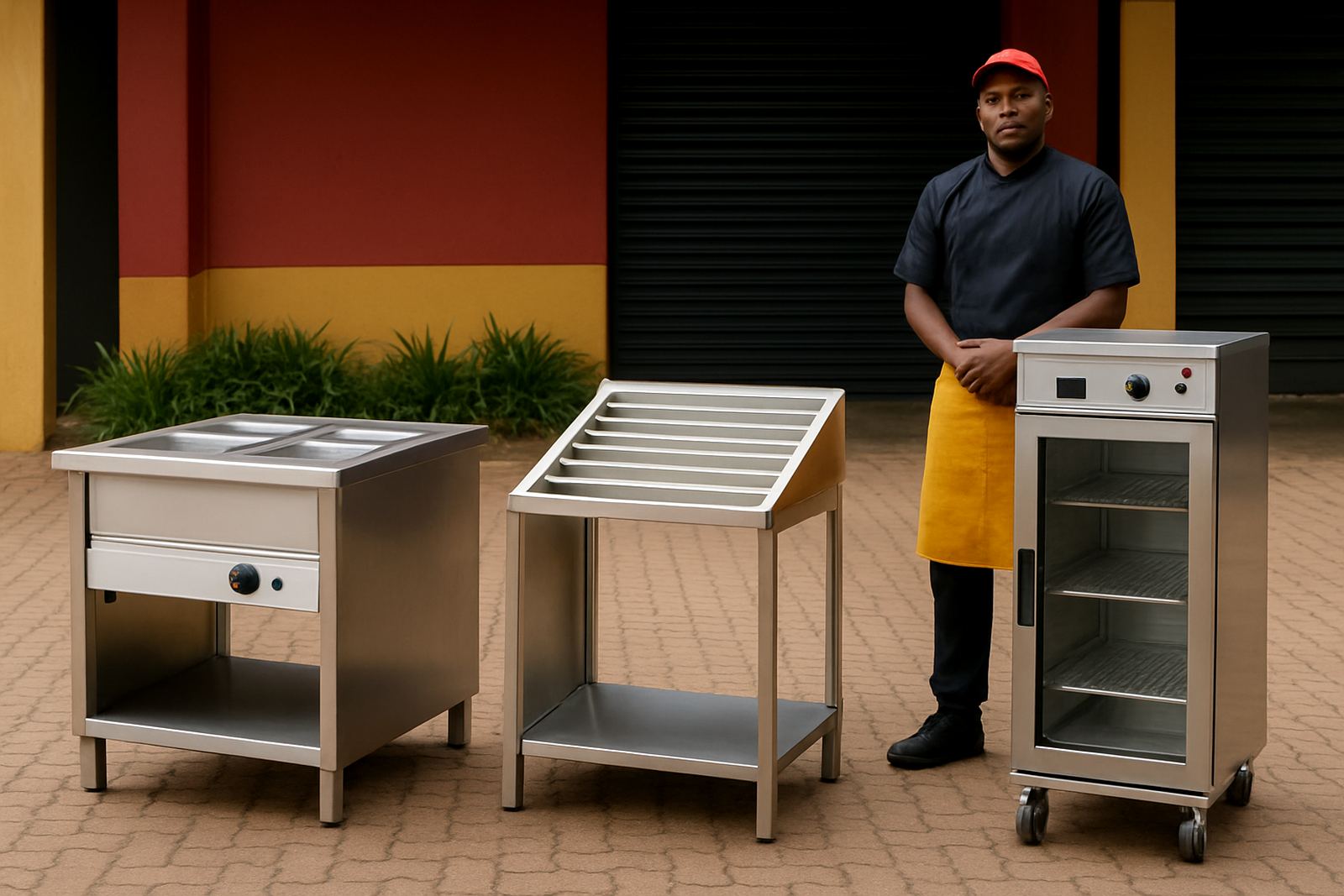
Many kitchen projects need custom stainless steel work to fit the room properly. This can include worktables, wall shelves, splash backs, sink runs, pot racks, trays, service counters and extractor canopies. Fabrication is often the part that makes the kitchen usable, so it should never be left as an afterthought.
Budget for the actual site conditions. If the floor is uneven, if there are columns in the way, or if the kitchen must fit an old shell in Pinetown or Ballito, the drawings may need changes during the build. Small changes in dimensions can affect fit, finish and labour time.
- Measure the room accurately
- Confirm wall finishes and floor levels
- Check door widths and delivery access
- Allow for civil or builder’s work
- Include a contingency for site changes
Stainless fabrication should also consider cleaning. Hospitals and canteens need surfaces that can be washed down properly, with no hidden dirt traps. Better access for cleaning can save labour every week, so it is worth spending carefully here.
Plan for installation, commissioning and training
Installation is not just about placing equipment in the room. It includes levelling, connecting services, checking clearances, testing heat, confirming extraction and making sure each item works as intended. A proper handover is part of the project cost, not a free extra.
Commissioning is where many kitchens either start well or start with problems. If a fridge is switched on too early, if gas burners are not tested under full load, or if extractors are not balanced, the team loses time on opening day. That can be costly in a restaurant, but even more serious in a hospital or school feeding kitchen.
- Positioning and fixing equipment
- Testing electrical, gas and water connections
- Checking extractor airflow
- Trial runs under working conditions
- Staff training on daily use and cleaning
Training should cover safe operation, cleaning routines, shutdown procedures and what to do during power cuts. In KwaZulu-Natal, where some sites still face load-shedding or unstable supply, staff need to know which equipment can restart immediately and which items must be left to recover properly.
Build in maintenance and breakdown support from day one
A project budget should include support after handover. Equipment that is not maintained will cost more later, especially where kitchens run long hours or in coastal areas with moisture and corrosion. Preventive maintenance is cheaper than emergency repairs, and it helps avoid downtime during busy service periods.
Set aside a budget line for service visits, replacement parts and emergency call-outs. A canteen in Durban or Pietermaritzburg may need different support intervals depending on usage, but the principle is the same. If a fridge fails over a weekend or an extractor stops before a lunch rush, the loss is not only the repair bill, it is the food and trade you miss.
Good budgets include a simple service plan:
- Monthly cleaning and checks for staff
- Quarterly inspections on high-use equipment
- Annual servicing for refrigeration and extraction
- Emergency breakdown response allowance
- Spare parts for wear items
Use a simple budget checklist before you approve the order
Before signing off, run through the full project list and make sure nothing has been left out. It is easier to adjust the scope now than to pay for changes after fabrication or installation has started. A clear checklist also helps directors, finance teams and kitchen managers stay on the same page.
Ask these questions in order: does the equipment suit the menu, does the room suit the equipment, and does the budget suit the full project, not just the product list? If the answer is no to any of those, it is better to revise the plan now.
- Are all equipment items listed with sizes and quantities?
- Have fabrication and ducting been included?
- Are installation and commissioning allowed for?
- Is contingency included for site changes?
- Have maintenance and breakdown costs been considered?
- Does the layout meet local service and safety needs?
A proper budget gives you control. It shows where to spend, where to save, and where a false saving will create trouble later. That is the aim of good project planning: a kitchen that works on day one and keeps working.