Start With the menu and hourly output you need
Before you look at litre sizes or burner ratings, count what you will fry in a normal trading hour. A chicken shop in Durban North has very different needs to a canteen in Pinetown or a hospital kitchen in Pietermaritzburg. Chips, samoosas, fish, crumbed chicken and vetkoek all behave differently in hot oil, and each item affects recovery time, basket loading and final texture.
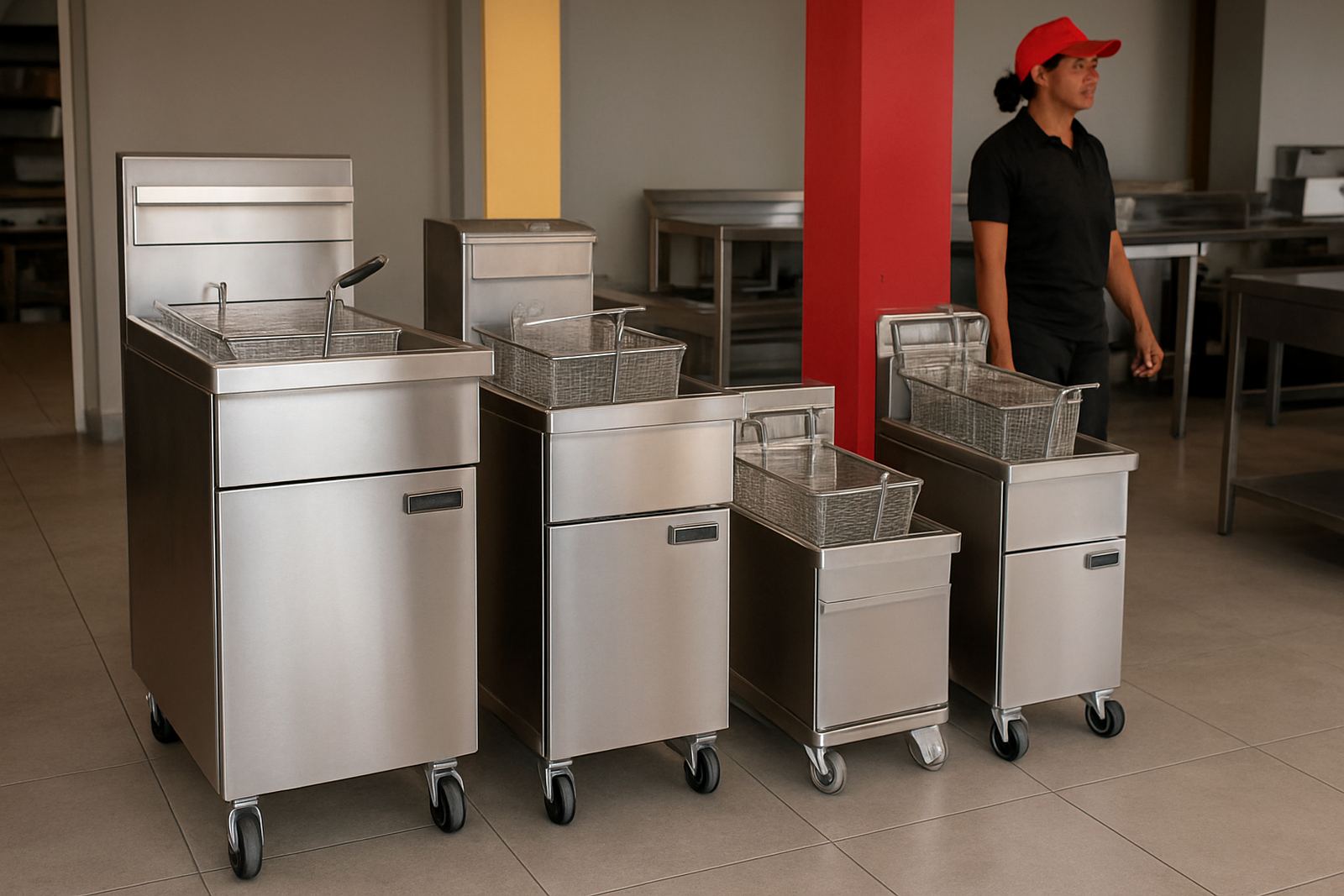
As a rule, choose for your busiest 60 minutes, not your quietest. If the fryer cannot recover heat fast enough, food soaks up oil and service slows down. That is where output becomes more important than just pan size. For a small operation, a single tank may be fine. For a higher volume line, twin tanks or multiple fryers help you split products and avoid flavour transfer.
- List your top 5 fried items and peak quantities per hour.
- Separate light-duty snacks from heavier battered products.
- Check whether the fryer will sit on a cookline or work as a stand-alone unit.
- Allow space for draining, landing and safe basket movement.
Gas or electric: match the fryer to your service conditions
Fuel type should suit the building as much as the kitchen. Gas fryers are often preferred where there are frequent load-shedding interruptions, because you are not tied to the power supply in the same way. They also suit sites with higher frying demand, provided the gas line, ventilation and flame failure protection are done properly.
Electric fryers can be easier where gas is not practical, but they need enough electrical capacity and correct isolation. In older buildings, especially around coastal Durban and the north coast, it is worth checking the condition of boards, cabling and the backup plan before you buy. If your site already struggles with compressors, extractors and cold rooms starting up together, the fryer should not be another strain on the supply.
For coastal areas, also think about corrosion and maintenance. Salt air can shorten the life of exposed parts if cleaning is neglected. A simple, well-built fryer that is serviced regularly will usually outlast a bigger unit that is abused and left dirty.
- Confirm available fuel points and safe shut-off valves.
- Ask how long the unit takes to recover between baskets.
- Check that the kitchen ventilation can handle heat and grease vapour.
- Plan for outages, especially where lunch trade cannot stop.
Tank shape, oil capacity and cold zone matter more than people think
The best fryer for your kitchen is not always the biggest one. Oil capacity must be large enough to hold heat when food goes in, but not so large that you waste oil every time you filter or replace it. Deep vats can look impressive, yet if the tank is wrong for the product, the oil breaks down quicker and your food quality suffers.
Cold zone design is important. A proper cold zone helps crumbs and flour sink below the hot area, which slows burning and keeps oil cleaner for longer. This makes a real difference when you fry crumbed items or flour-coated products. Ask about the drain point, basket support and how easy it is to remove sediment. If the fryer has awkward corners, cleaning takes longer and staff tend to skip it.
In kitchens that run all day, a fryer with good recovery and a practical drain path is often better than a unit with extra bells and whistles. Keep the design simple and make sure the fryer suits the product mix. That choice can save litres of oil every month, and the saving is not small.
Cleaning access and hygiene checks for busy kitchens
If a fryer is difficult to clean, it will not stay clean for long. That is a hygiene issue and also a cost issue, because burnt residue shortens oil life and gives food a stale taste. Look for removable baskets, a proper drain valve, access to the burner or element area and smooth stainless surfaces that can be wiped down quickly at the end of service.
Hospitals, schools and contract canteens often have stricter cleaning routines, so the fryer should support daily washdown without awkward lifting. If staff have to drag the unit around to reach the back panel, cleaning will suffer. In Durban kitchens where humidity is high, trapped grease and moisture can also lead to odours and premature wear, so good access matters.
- Can the tank drain fully without tipping the unit?
- Is there room to clean behind and under the fryer?
- Are basket handles and touch points easy to sanitise?
- Does the design allow for safe oil filtering and disposal?
It helps to choose a fryer that matches your cleaning team as much as your cooks. If the layout is practical, the equipment is more likely to be cared for properly.
Safety, extraction and installation rules in real kitchens
A fryer should never be bought in isolation. It needs to fit the layout, extraction plan and fire safety approach for the site. In many Durban and KwaZulu-Natal kitchens, the fryer sits near prep, plating and the pass, so heat control and grease extraction are important. If steam and oil vapour are not moved out properly, the kitchen becomes uncomfortable and slippery.
Check the clearances around the fryer, the floor finish, and whether there is enough space for staff to move without crossing hot oil paths. Gas units require correct placement, line sizing and shut-off points. Electric units need proper cable routing and isolation. For any commercial kitchen, the installation should be done neatly, tested fully and handed over with staff shown how to start, stop and clean the machine.
We often see problems where a fryer was purchased first and the layout sorted later. That can lead to poor working space, blocked access and unsafe movement. It is better to plan the fryer into the kitchen line, then size the extractor and services around it.
Daily buying checklist before you sign off
Once you have narrowed your options, use a simple checklist and compare units on the same basis. Price alone is not enough. A cheaper fryer that uses more oil, breaks down often or is hard to clean can cost more within a few months.
- Does the fryer suit your food volume and service times?
- Is the fuel type practical for your building and backup plan?
- Is oil capacity right for your menu without wasting product?
- Can the staff clean, drain and filter it safely every day?
- Will the unit fit the kitchen with enough working space around it?
- Are spares, service and maintenance available locally?
Also check the warranty terms, delivery route and whether the unit can be commissioned on site. In many cases, the handover matters as much as the fryer itself. If your team knows how to use it properly from day one, you will get better output and fewer call-outs.
How KZN Catering Equipment helps you choose the right fryer
At KZN Catering Equipment in Glen Anil, Durban, we help restaurants, hospitals and canteens choose fryers that fit the menu, the building and the daily workload. Our team handles kitchen layouts, equipment specification, extractor planning, stainless fabrication, installation, commissioning and preventive maintenance, so the fryer is considered as part of the whole kitchen and not as a separate box.
We work across Durban North, Umhlanga, Pinetown, Ballito and Pietermaritzburg, and we know the local conditions that affect fryer performance, from coastal humidity to load-shedding and municipal compliance. If you need a practical recommendation, send your menu, expected output and site details through our contact form and we can guide you on size, fuel type and installation needs.