
What a display fridge does on a busy service counter
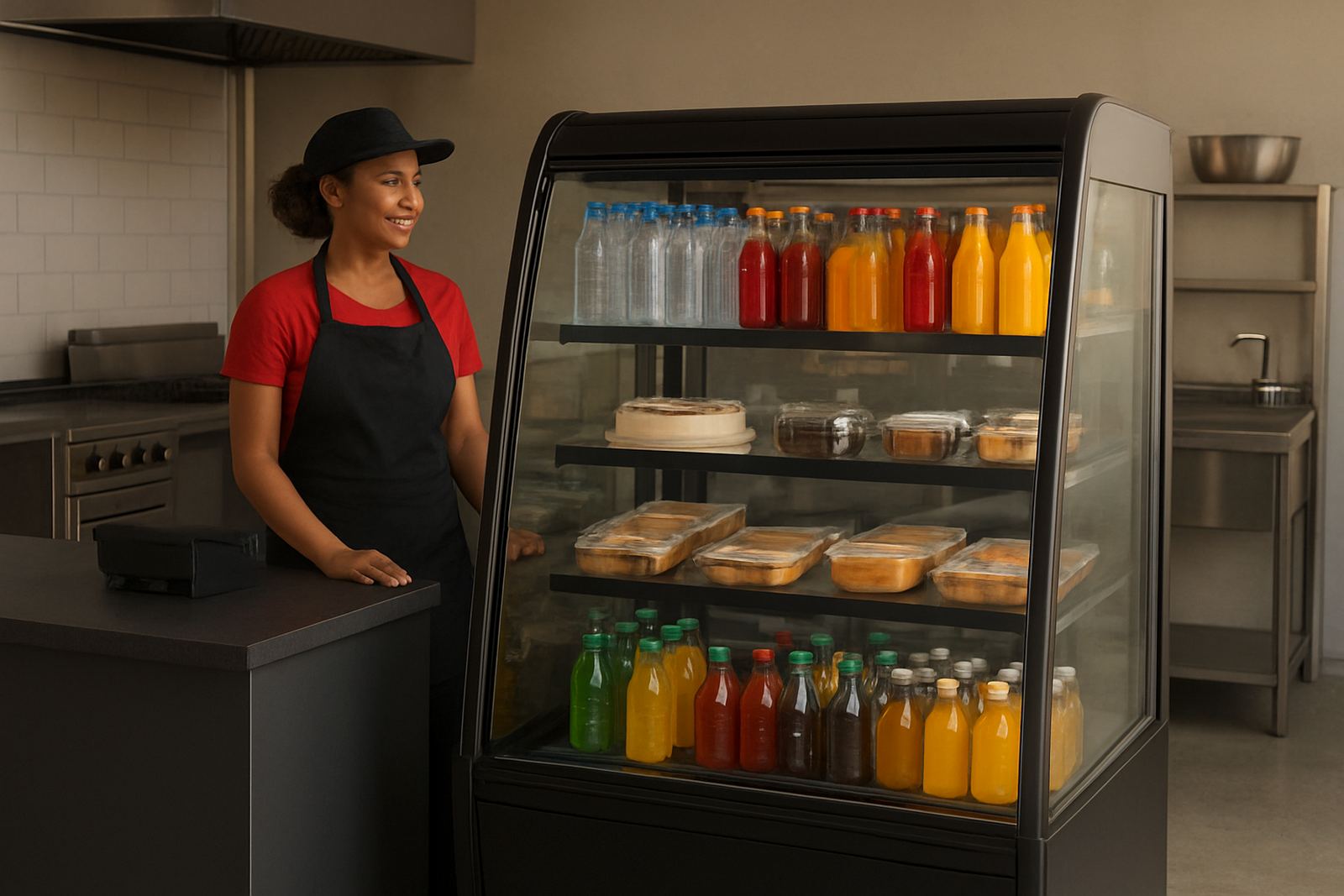
A display fridge keeps products cold while presenting them clearly to customers and staff. It is used for grab-and-go meals, bottled drinks, dairy items, cakes, puddings and plated items that need short-term chilled holding. In a restaurant or canteen, it helps speed up service because the item is visible, labelled and easy to reach without opening a cold room or main storage fridge every few minutes.
Most units use glass at the front and sides, with shelving that can be adjusted for tall bottles, lunch packs or shallow dessert trays. Some are upright for self-service areas, while others are counter-top units for tills, coffee stations and bakery service. The right model depends on what you want to show, how much stock you move in a day, and how much floor space you have near the serving point.
Sizes and display options we supply
Display fridges are available in compact counter models right through to tall multi-shelf cabinets for higher volume service. In Durban kitchens and shops, we often look at width first, then usable shelf depth and door access, especially where passage widths are tight or the unit must fit beside a till point.
- Counter-top units: ideal for 600 mm to 900 mm runs, with 2 to 4 shelves for desserts, deli packs or drinks.
- Single-door upright units: good for smaller sites that need around 300 L to 500 L of chilled display space.
- Double-door upright units: suitable for busier operations, often 700 L to 1 200 L or more.
- Open-front chilled display: used where fast access matters, but these need tighter control of room temperature and traffic around the unit.
Glass style, LED lighting, shelf pitch and door type all affect how well the products show. For desserts and plated meals, clear viewing at eye level matters. For drinks, strong shelf loading and easy door opening are usually more important.
Best fit for restaurants, hospitals, canteens and bakeries
These fridges suit sites that need quick access to chilled stock and clean presentation at the same time. In hospitals and care facilities, they are often used for pre-packed meals, yoghurt, fruit cups and sealed drinks at controlled serving points. In school canteens and staff dining rooms, they work well for bottled water, juices, sandwiches and desserts. Bakeries use them for slices, cheesecakes and cream-based items that must stay cold but still look good.
On the coast, humidity and frequent door opening can be hard on displays, so cabinet insulation and door seals matter. If the unit sits in a warm dining area, near a coffee machine or beside a sunny window, it may need a stronger refrigeration system than a unit in a cool prep room. We also take into account load-shedding, because repeated power interruptions can affect product quality and compressor life if the cabinet is undersized.
- Use for sealed food items with limited handling
- Place away from direct sun, ovens and hot pass lines
- Allow enough front access for cleaning and restocking
- Keep stock rotated so older items move first
Power, ventilation and installation checks
Most display fridges run on standard single-phase electrical supply, but the exact load depends on cabinet size, compressor type and whether the unit is ventilated at the base or top. We check the available socket position, isolator access and cable route before installation, especially where the unit forms part of a fitted counter or servery line.
Good airflow around the condenser is important. If a fridge is pushed tight against a wall or boxed into a joinery surround without space to breathe, it will run hot and use more power. In Durban’s warmer months that can become a real issue. For some sites, a small dedicated circuit is better than plugging the fridge into a shared line with kettles, toasters or bain maries.
- Provide level flooring and a firm base
- Leave space for rear or top ventilation as specified
- Check door swing and shelving access before final positioning
- Confirm power point location, plug type and circuit load
How to keep a display fridge cold and presentable
These units need regular cleaning because they are on show all day and often handle many open-and-close cycles. Shelves, door seals, drainage channels and interior panels should be cleaned with food-safe products. Glass should be wiped daily so the display stays clear and customers can see the stock without condensation marks or fingerprints.
Servicing should include temperature checks, fan inspection, gas pressure checks where relevant and condenser cleaning. If the cabinet is struggling to hold temperature, frosting up or making unusual noise, it should be checked before stock is affected. We handle preventive maintenance and breakdown repairs for sites across Glen Anil, Durban North, Umhlanga, Pinetown, Ballito and Pietermaritzburg, and can plan after-hours work where service hours are tight.
- Clean condenser coils to prevent poor cooling
- Inspect door seals for cracks and gaps
- Check thermostat accuracy and defrost cycle
- Keep product trays arranged for good air circulation
What to check before you place an order
The best display fridge is the one that matches your menu, foot traffic and floor space. Before ordering, count how many items you want displayed at one time and whether they are deep trays, bottles, boxed meals or small desserts. A fridge that looks large on paper may not suit if the shelf spacing is wrong or the door opening blocks the service path.
We also recommend checking cleaning access, delivery route and whether the unit must pass through narrow doors or lifts. For fitted kitchens, measure the counter opening twice and allow for ventilation gaps. If you need the unit to match a serving line, we can advise on stainless surrounds and practical set-out, not just the cabinet itself. It saves time later and avoids the common problem of a fridge that fits in the plan but not in the room.
- Product type and daily stock volume
- Width, depth and height available on site
- Power point position and supply rating
- Temperature range needed for your items
- Whether the unit will be self-service or staff-served
KZN Catering Equipment support from design to service
KZN Catering Equipment has been working from Glen Anil, Durban since 2007 and supports commercial kitchens across KwaZulu-Natal. Our team handles kitchen layouts, equipment specification, site surveys, extractor planning, stainless fabrication, installation, commissioning, maintenance and training. That means we can supply a display fridge as part of a full food-service set-up, not just as a stand-alone item.
If you are fitting out a new counter in Durban, upgrading a canteen in Pinetown or replacing an old cabinet in Ballito, we can help select a display fridge that suits the products, the power available and the way your staff work. For pricing, lead times or a site visit, use our contact form.
Key facts
| Product type | Chilled display fridge for food and drink merchandising |
|---|---|
| Typical temperature range | 2 C to 8 C, depending on model and load |
| Common sizes | Counter-top, single-door upright and double-door upright |
| Capacity range | About 300 L to 1 200 L plus, model dependent |
| Power needs | Single-phase electrical supply, final load confirmed per unit |
| Typical use | Grab-and-go meals, desserts, dairy, bottled drinks and sealed snacks |