
Tall chilled storage for busy kitchen lines
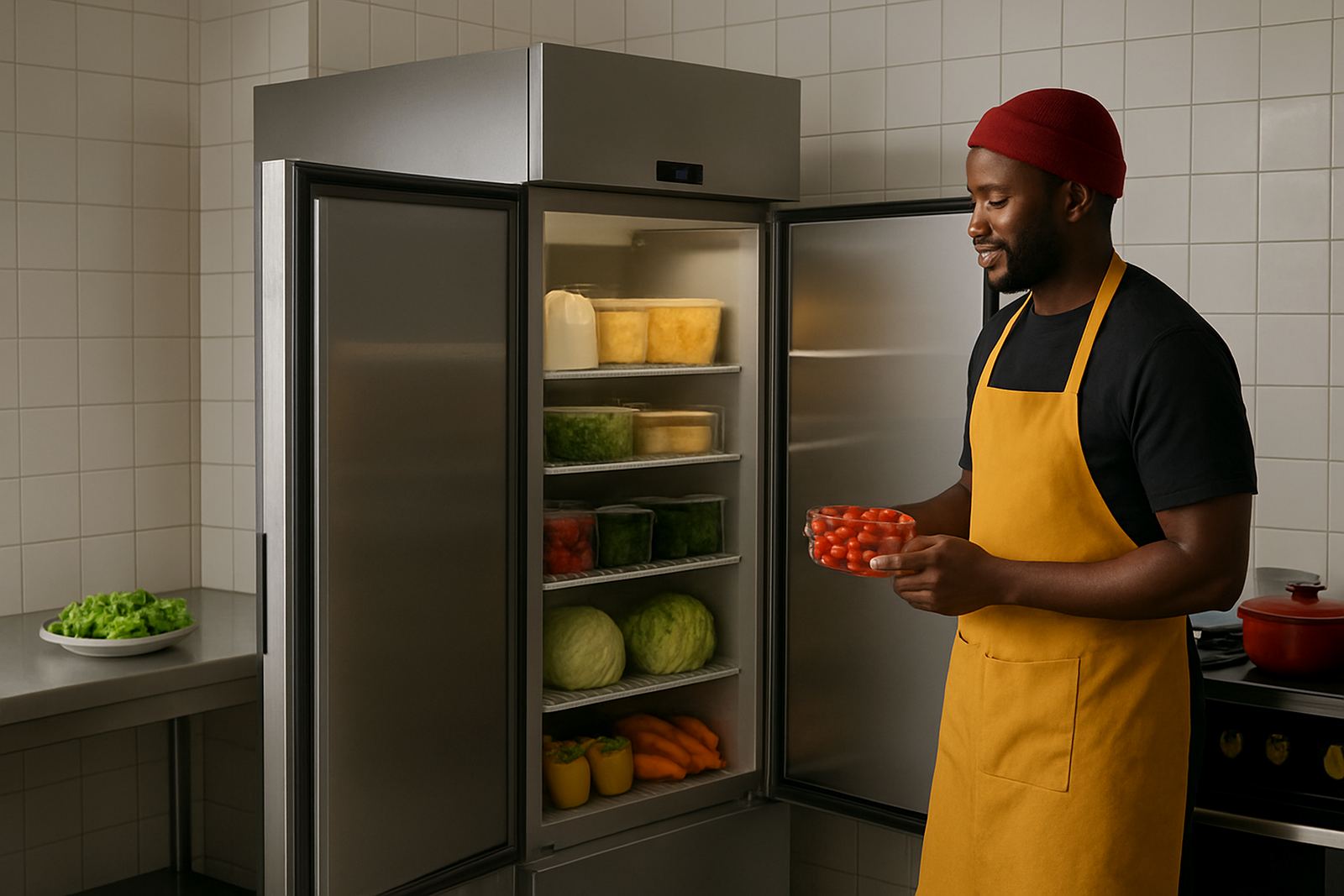
An upright fridge is a vertical refrigerated cabinet used for safe chilled storage in commercial kitchens. It keeps ingredients at the right temperature without taking up the floor space a chest unit would need, which matters in Durban kitchens where every metre has to work hard. Single-door models suit smaller prep areas, while double-door units are better where stock turnover is high and staff need quick access through the day.
We supply upright fridges for restaurants, hotels, hospitals, school kitchens and staff canteens across Glen Anil, Durban North, Umhlanga, Pinetown, Ballito and Pietermaritzburg. In coastal areas the cabinet finish, door seals and hinge quality matter because humidity can work on metalwork and insulation over time. For sites with frequent door opening, a well sized upright unit helps keep food safer and cuts down on temperature recovery time.
Single-door and double-door options, with practical size choices
Upright fridges are usually chosen by capacity and footprint. Single-door units are common where the kitchen has limited space or the chilled load is moderate. Double-door units give more shelf area and are often used in production kitchens, hotel stores and institutional cook lines. Many models are available in stainless steel or coated finishes, with solid doors for maximum insulation or glass doors where stock visibility is useful in a prep store.
- Typical single-door capacity: about 600 to 800 litres
- Typical double-door capacity: about 1 100 to 1 400 litres
- Common external widths: 700 mm to 1 400 mm
- Typical depth: 800 mm to 900 mm
- Typical height: 1 900 mm to 2 100 mm
- Temperature range: 0 C to 5 C for chilled storage
Adjustable shelving is important because food service stores are never the same from one site to the next. A hospital pantry may need more shallow shelf spacing for trays and dairy, while a canteen may need deeper shelf spacing for bulk produce and batch-prepped containers. If you are replacing an older fridge, check the door swing and whether the unit can pass through service corridors and lift lobbies before ordering.
Where an upright fridge suits best in local food service
These fridges work well in back-of-house areas where staff need fast, repeated access to chilled ingredients. They suit salad prep, sandwich stations, pastry stores, butcher prep rooms, cold ingredient holding and plated meal staging. In hospitals and old-age facilities, upright refrigerators are often used for bulk dairy, sauces and controlled stock rotation, while restaurants use them for mise en place and service refills.
For sites in Durban and along the North Coast, heat and load-shedding both need thought. A fridge that is opened every few minutes during service must recover temperature quickly, and if the kitchen power is affected by outages it helps to plan the fridge around the building backup supply or generator circuit. Place the unit away from ovens, fryers and direct sunlight where possible, because hot ambient conditions make the compressor work harder. The aim is steady holding, not overworking the machine all day.
In schools and canteens, a tall fridge also helps with stock control because shelves are easier to label and rotate. Smaller kitchens often find that one upright fridge is more practical than several undercounter units, especially when deliveries come in bulk twice a week rather than daily.
Installation, power supply and site checks
Upright fridges are generally plug in appliances, but the electrical supply still needs to be checked properly. Most commercial units run on standard 220 V supply, with a dedicated socket preferred and proper earthing in place. Avoid long extension leads and shared plug points with kettles or grills. If the site uses a generator or inverter, ask us to confirm the start-up load and the running load so the fridge is matched to the supply.
Good airflow around the cabinet is essential. Leave clear space at the rear and top for heat dissipation, and do not push the fridge tight against a wall unless the manufacturer allowance allows it. On tiled kitchen floors, make sure the unit sits level so the doors close properly and drainage works as it should. In coastal buildings, check for salty air and corrosion on exposed components, because small rust points can become bigger service issues later on.
- Check door swing direction before delivery
- Confirm the unit passes through access doors and service lifts
- Provide a level floor and proper ventilation space
- Use a dedicated plug point with correct protection
- Plan for load-shedding or backup power where needed
Our team in Glen Anil handles kitchen layouts, site surveys, equipment specification and installation, so the fridge can be placed where the workflow actually needs it. That saves rework later and helps avoid poor positioning next to heat sources or wash-up areas.
Care, cleaning and breakdown prevention
Regular care keeps an upright fridge working properly and reduces spoilage. Clean the inside with food-safe detergent, wipe up spills quickly and keep shelves clear of blocked air paths. Door gaskets should be checked for damage or dirt because a weak seal lets cold air escape and raises running costs. Condenser coils also need cleaning on a planned basis, especially in kitchens with flour dust, steam or grease in the air.
Staff training helps a lot here. If the team is shown how to load the fridge without overfilling it, how to close the door properly and how to report temperature changes early, you avoid many callouts. In busier kitchens it is worth keeping a simple log of temperature checks morning and afternoon. If the cabinet starts cycling too often, makes new noise or struggles in hot weather, it may need a service before a breakdown becomes a bigger issue.
We offer preventive maintenance and breakdown repairs for commercial refrigeration, and that matters where stock loss is expensive. A small seal problem or a blocked drain can be sorted quickly if it is picked up early, but left alone it can lead to water inside the cabinet and uneven cooling.
What to confirm before you order
Before ordering an upright fridge, it helps to confirm exactly what the kitchen will store and how the team will use it. The right unit is not just about litres, it is about how the shelves, doors and internal layout match your stock patterns. If the fridge will hold trays, gastro pans or tall ingredient tubs, say so at the start. If the site has narrow doorways or tight passages, measure the route from receiving bay to final position.
- Required capacity and number of doors
- Whether the cabinet should be solid door or glass door
- Temperature range required for the stock type
- Power point location and backup power arrangement
- Footprint, height and access route on site
- Shelf count, shelf type and internal spacing
It also helps to confirm whether you need new equipment only, or a full chilled store as part of a wider kitchen project. KZN Catering Equipment has been based in Durban since 2007 and we continue to support food service facilities across KwaZulu-Natal with specification, supply, installation and after-sales service. If you are fitting out a new kitchen or replacing older chilled storage, we can help select a unit that suits the building, the team and the daily workload.
Key facts
| Product type | Commercial upright refrigerator |
|---|---|
| Door options | Single door or double door |
| Capacity range | About 600 L to 1 400 L |
| Temperature range | 0 C to 5 C chilled holding |
| Power supply | 220 V single phase, dedicated outlet preferred |
| Common finish | Stainless steel or coated cabinet, solid insulated doors |