
What a commercial food slicer does in daily service
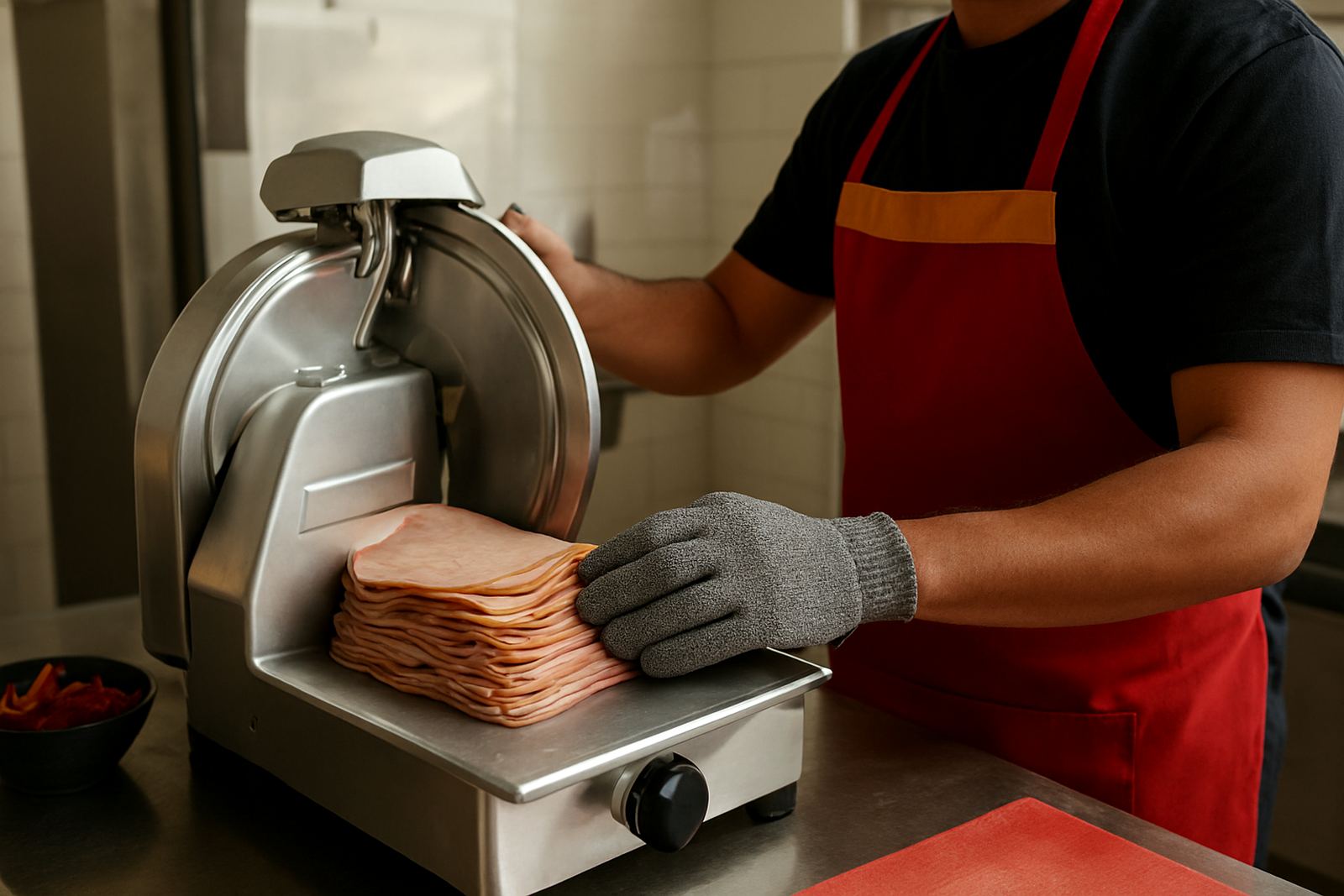
A commercial food slicer uses a carriage and gravity feed to move product across a rotating blade at a steady angle. That gives cleaner cuts than hand slicing and helps with portion control, presentation and yield. In a restaurant, hotel pantry, deli counter, school kitchen or hospital cold room, it saves time when you are slicing ham, pastrami, biltong, salami, roast meat, cheese or cooked vegetables for cold prep.
For kitchens working long hours, the main benefit is consistency. When the slice thickness stays the same, sandwich prep is quicker and stock goes further. It also helps during service where you need the same slice size for plated meals or bulk packing. A slicer is not for frozen product or bone-in meat, and it should be used by trained staff only.
Sizes, blade options and practical specs to compare
Food slicers are usually chosen by blade diameter, motor size and build type. Smaller machines suit light to medium duty prep, while larger units are better when the kitchen handles heavier daily volumes. For most KwaZulu-Natal kitchens, the right choice depends on how often the machine is used, the size of the product and how much room you have on the prep line.
- Blade sizes commonly range from 220 mm to 350 mm
- Cut thickness is usually adjustable from 0 mm to around 15 mm
- Gravity feed helps reduce operator effort
- Stainless steel and anodised finishes are easier to clean in humid coastal areas
- Tabletop units need a stable counter and enough side clearance for product movement
- Some models include built-in sharpeners, blade guards and carriage safety locks
In Durban and the North Coast, corrosion resistance matters because salt air can shorten the life of cheaper finishes. If the slicer sits near washing points or in a prep area with regular steam, ask for a model with good surface protection and simple strip-down cleaning.
Where a slicer fits best in KZN kitchens
We see the best use of food slicers in restaurants, hotel kitchens, butchery prep rooms, sandwich bars, hospital foodservice areas, school tuck shops and canteens. They are also useful in central production kitchens where staff need to portion ingredients for several outlets. In Pietermaritzburg and Pinetown, many kitchens use a slicer for prep before the rush, then store sliced items in chilled trays for service.
A slicer works well where there is a defined cold-prep station and regular use through the week. If your team prepares small daily volumes, a compact model may be enough. If you do large breakfast runs, deli packs or banquet prep, choose a heavier machine with a bigger carriage and stronger drive system. It is worth matching the slicer to the real workload, not just the menu on paper.
- Cold kitchens and deli counters
- Restaurant prep areas and hotel banqueting
- Hospitals, care homes and institutional kitchens
- School and staff canteens
- Bulk food prep rooms and central production kitchens
Power supply, placement and installation notes
Most commercial slicers run on standard single phase electricity, which makes them straightforward to install in many kitchens. We check the available supply, plug point position and bench height before placing the machine. A slicer should stand on a level surface with enough room for loading product, catching slices and cleaning around the blade. If the prep line is tight, the layout must be planned so staff are not reaching across other equipment.
There is no gas connection needed for a slicer, but the machine should still be tied into the kitchen flow correctly. That means a safe position away from the main hot line, easy access for cleaning and a nearby washing point for food-contact hygiene. For sites affected by load-shedding, it is best to plan the slicer as part of the cold-prep area so staff can keep working when power returns, without redoing the setup each time.
On new installs, we can include equipment positioning, site surveys and practical advice on safe cable runs and bench clearances. Where required, we also coordinate with the rest of the kitchen layout so the slicer works with the fridge line, prep tables and storage, not against them.
Cleaning, sharpening and servicing that keeps cuts even
Food slicers need regular cleaning because residue builds up around the blade carriage, food guide and guard plate. In busy kitchens, staff should clean after each shift and check that the blade area is free of film and grease. Do not leave cheese or fatty meats on the machine for long periods, especially in warm Durban kitchens, as residue becomes harder to remove and can affect hygiene.
Sharpening must be done correctly and only with the built-in sharpening system if the model has one. A blunt blade puts pressure on the product, gives rough slices and can strain the machine. Our service team handles preventive maintenance, breakdown repairs and on-site support for equipment that starts cutting unevenly, makes noise or shows wear on the carriage and guide parts.
- Daily wipe-down of food-contact surfaces
- Check blade guard and safety lock before use
- Inspect power lead and plug regularly
- Lubricate moving parts only where specified
- Schedule routine servicing for heavy-use sites
What to confirm before you place an order
Before ordering, it helps to know exactly what the slicer will be used for and who will use it. Tell us whether you are slicing soft cheese, firm cheese, cooked meats or mixed cold cuts, because that affects blade size and motor choice. Also confirm how many portions you need per hour, the space available on the counter and whether the unit will sit in a dry prep room or a busier kitchen with more steam and washing nearby.
Please check the points below so we can spec the right unit first time.
- Product type and average slice thickness needed
- Daily volume and peak service periods
- Available counter space and bench height
- Power point location and electrical supply
- Need for built-in sharpener, carriage size or safety extras
- Whether the site needs installation, training or service cover
If your team is in Glen Anil, Durban North, Umhlanga, Ballito, Pinetown or Pietermaritzburg, we can help with specification, delivery and fitment for the kitchen. That makes it easier to match the slicer to the rest of your prep line and keep staff moving without waste.
Local supply, fitting and support across Durban and KZN
KZN Catering Equipment has been supplying commercial kitchens from Glen Anil since 2007, with work across Durban and KwaZulu-Natal. Our team handles kitchen layouts, equipment specification, stainless fabrication, installation, commissioning, preventive maintenance and training. For a slicer order, that means we can assist from the first call through to handover and after-sales service.
If you need a food slicer for a new kitchen or you are replacing an older machine that no longer cuts evenly, we can help select a practical option that suits the site, the duty cycle and the type of food you handle. Send a message through our contact form for product advice, pricing and supply in your area.
Key facts
| Product type | Commercial gravity food slicer |
|---|---|
| Typical blade sizes | 220 mm to 350 mm depending on duty |
| Cut thickness | Approx. 0 mm to 15 mm adjustable |
| Power | Single phase electric on most models |
| Main materials | Stainless steel, anodised alloy and food-safe polymer parts |
| Best use | Cold meats, cheese, deli prep and portion control |